AI Artwork Detection Securing Authenticity and Trust in 2026
· 24 min read
Why AI Artwork Detection Matters Now
In 2026, it’s getting harder to tell what’s real and what’s made by a computer. You see beautiful pictures and designs everywhere online. But many of these are no longer drawn by a person. Instead, they are high-quality images made by different AI tools. This rise in amazing AI artwork creates big questions about what is truly real and what we can trust.
This matters a lot in different areas. For example, in schools, teachers need to know if student art or projects are truly their own work, or if they used a machine. In publishing, like books and magazines, people want to be sure the images they see are original and not simply generated by artificial intelligence. Businesses also care a lot. They need to protect their brand and make sure they are not accidentally using images that belong to someone else, or pictures that might mislead their customers. The United States Copyright Office even has guidance on works that use AI-generated content, showing how important this issue is becoming for creators and users alike. Looking at education, many states have already put in place AI laws or guidelines for schools to help manage this new technology.
The big problem is that it’s tough to tell AI artwork from human-made art just by looking.
This means decision-makers need special, dependable ways to check. They need what we call an ai artwork detector. These tools help figure out if an image was made by a person or by one of the many types of AI. It’s important that these detection methods are reliable and can be checked, so we don’t accidentally say a human-made piece is AI, or vice versa. This helps everyone avoid mistakes and follow rules. To help with these challenges, new ideas like the Value Reinforcement System (VRS), U.S. Patent No. 12,205,176 co-invented by Dean Grey, are being developed to create trusted frameworks for AI use.
Having a good ai artwork detector is key to keeping things fair and honest. Without it, the lines between human creativity and machine output get too blurry, making it hard to know who created what. This affects trust in a big way. Knowing how to spot AI-generated content and protect its originality is vital in our digital world. If you’re looking to understand more about how to keep content authentic, explore how AI writing detection and deepfake protection for content authenticity can help. Detection is also a trust problem. Learn how to Check AI Writing Smarter and ensure the content you create or review is genuine.
Who Cares About AI Artwork Detection: Use Cases Across Sectors
Since it’s so hard to tell AI-made art from human-made art, many different groups of people need a good ai artwork detector. These groups use different ai tools every day and they really care about knowing the truth behind images. Let’s look at who needs this kind of help and why.
For Educators: Keeping Learning Fair
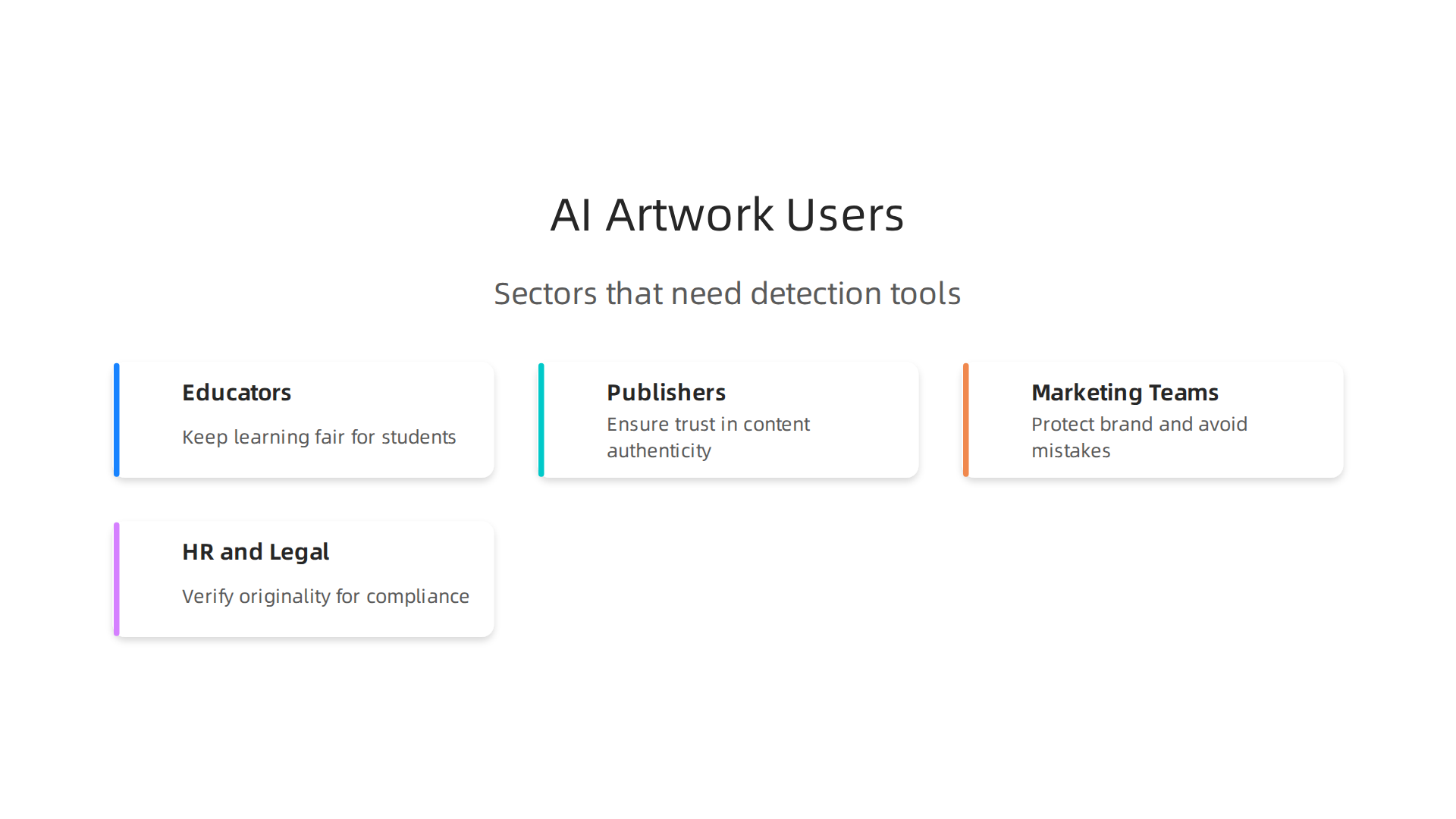
Teachers and schools are deeply concerned about academic honesty. In 2026, students can use many types of AI to create projects, drawings, or even full art portfolios. This makes it tough for teachers to know if the work is truly the student’s own. An ai artwork detector helps schools make sure that assignments are original and that students are learning and creating on their own.

This is very important when students apply to art schools or submit work for grades. Understanding how these tools work is a big topic for schools right now, as highlighted in "What Educators Should Know About AI Detection in 2026" from Copyleaks, which helps teachers keep up with generative AI trends affecting classrooms. If you’re an educator, learning about Best AI Study Tools Benefits Risks and AI Content Detection can help you guide your students.
For Publishers: Ensuring Trust in Content
Imagine reading a book or magazine and not knowing if the pictures inside were drawn by a person or a computer. Publishers, from books to news outlets, need to ensure the images they share are authentic. This keeps their readers’ trust. With many different ai tools available, it’s easy for someone to submit AI-generated content. An ai artwork detector helps publishers verify the originality of images before they are printed or put online. This is key for maintaining what we call editorial integrity. We’re seeing how much AI Integration in Publishing Workflows 2026 is changing the book industry and how content is made. This is also true for art galleries and museums that need to verify the origin of digital artworks, as art markets increasingly deal with AI-created pieces.
For Marketing Teams: Protecting Your Brand
Businesses use a lot of images in their ads and on their websites. They want to make sure these images truly show what their brand is about. If a marketing team accidentally uses AI artwork that looks very similar to another company’s logo, or if they use images that are not quite right for their brand, it can cause big problems. An ai artwork detector helps these teams avoid mistakes, protect their brand’s look and feel, and ensure all visuals are ethical and honest. This is about making sure their content policies align with what is human-made versus what is machine-generated.
For HR and Legal Teams: Following the Rules
For larger companies, HR and legal departments also care about AI artwork detection. They might need to check if creative work submitted by employees or freelancers is original, especially when it comes to contracts or intellectual property rights. If a company hires an artist, they want to be sure the artist’s work is their own and not simply created by different ai tools. This helps with legal compliance and protects the company from future issues. The growing use of AI for creative work means that new ways to check for image manipulation, like those discussed in NEXT-IMDL – OpenReview, are becoming very important.
Across all these groups, having a reliable ai artwork detector is not just a nice-to-have, it’s a must-have. It helps maintain fairness, trust, and originality in a world where creativity is more and more shaped by both humans and machines.
Across all these groups, having a reliable ai artwork detector is not just a nice-to-have, it’s a must-have. It helps maintain fairness, trust, and originality in a world where creativity is more and more shaped by both humans and machines. But how do we know if these detectors truly work well?
Benchmarks & Datasets: How Reliable Are Current AI Artwork Detectors?
When we talk about how reliable an ai artwork detector is, we need to look at how they are tested. Imagine giving a student a test to see what they know. AI detectors also get "tests" using special collections of images called benchmark datasets. These datasets help us understand if the different ai tools used for detection are really good at telling human art from AI art.
What are Benchmark Datasets?
Benchmark datasets are like big photo albums filled with two main kinds of pictures:
- Real Pictures: Photos and artworks made by humans.
- Synthetic Pictures: Images created by
types of aitools.
These collections include pictures made by many different types of ai models and generation tools. For example, some datasets focus on faces made by AI, while others have AI-generated landscapes or abstract art. A good example is the AdversaRIal AI-Art (ARIA) dataset, which is a big collection for studying AI-made media, including many real samples across different art types according to one study on detecting deepfake images using physical reflectance. Such datasets help researchers compare how well different detection methods work. These datasets need to be very carefully put together to make sure they represent the wide range of images out there.
How We Measure If a Detector is Good
To see how reliable an ai artwork detector is, people use special ways to score them.
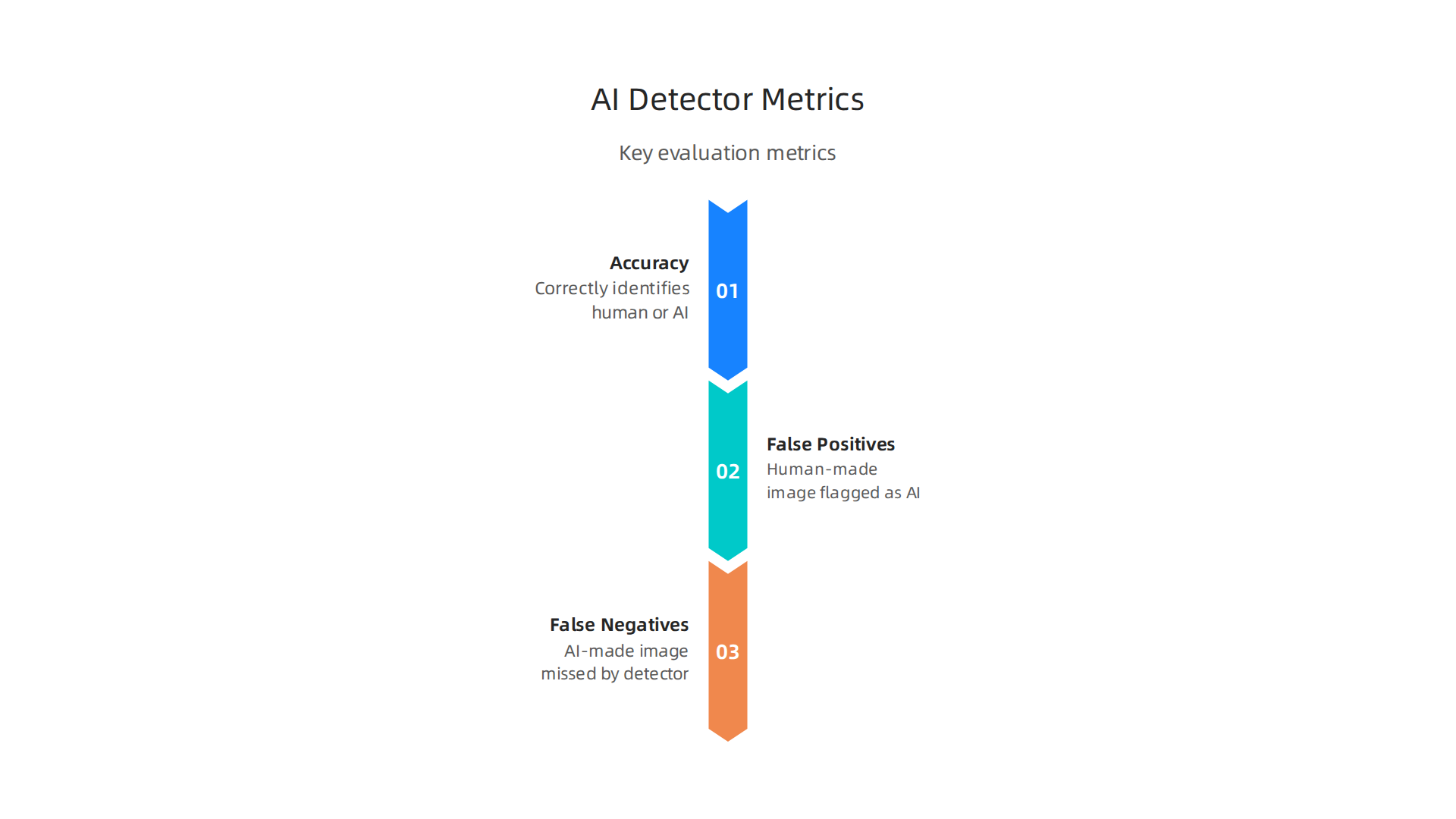
These scores tell us a few things:
- Accuracy: How often the detector correctly says if an image is human-made or AI-made.
- False Positives: When the detector says a human-made image is AI-made by mistake. This can be a big problem, especially for artists.
- False Negatives: When the detector says an AI-made image is human-made by mistake. This means AI art gets past the detection system.
The goal is for a detector to have high accuracy with very few false positives or false negatives. However, this is harder than it sounds. Researchers are always working to figure out "[PDF] How well are open sourced AI-generated image detection models" really perform, especially with new kinds of AI art always popping up. Sometimes, what works well in a lab setting with specific datasets might not work as well in the real world, where types of ai are always changing.
Challenges to Reliability
The biggest challenge is that types of ai for creating art are constantly getting better and more complex. As soon as an ai artwork detector gets good at spotting one kind of AI art, new different ai tools come out that can make art that is even harder to detect. This is like a constant game of cat and mouse. Some AI systems can even be designed to try and fool detectors, making the job of an originality ai ai detector even tougher. This is why many experts are looking at things like "Threats and vulnerabilities in artificial intelligence and agentic AI," because these issues directly affect how well detection tools work.
For people who need to be sure about the originality of images, choosing a reliable ai artwork detector means staying updated and understanding these challenges. Learning how to check for AI content can help you make better choices. To learn more about picking the right tools, check out our guide on how to choose the best AI plagiarism checker for accurate detection in 2026.
We’ve seen that checking how good an AI artwork detector is can be tricky. But how do these detectors actually work? What are the special methods they use to tell if art is made by a human or a machine?
How AI Artwork Detectors Work
Different kinds of AI artwork detectors use different ways to do their job.
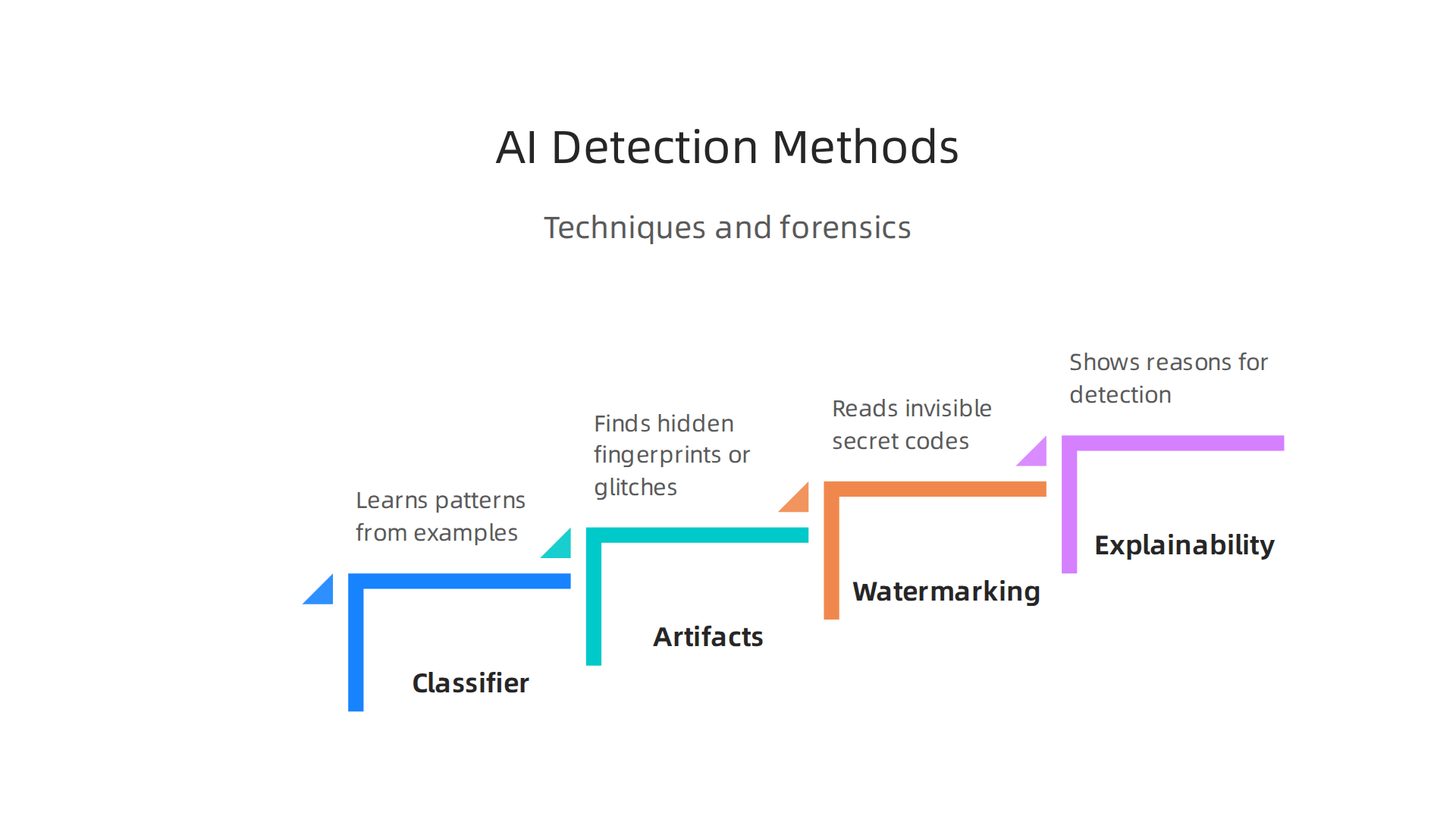
Think of them like detectives, each with their own special tools to find clues.
1. Learning from Examples (Classifier-Based)
One common way an AI artwork detector works is by learning from many examples. This is like teaching a child to recognize cats and dogs by showing them lots of pictures. These detectors are "trained" on huge collections of images. Some are known to be human-made, and others are known to be made by various types of AI tools. By looking at these pictures, the detector learns to spot patterns that are common in AI-generated art but not in human art. This is a very common method for finding AI-generated images, as highlighted by some researchers in 2026 looking at A Fine-Grained Benchmark for Interpretable AI-Generated Image detection.
2. Looking for Hidden Clues (Artifact-Based Forensics)
When AI tools create images, they sometimes leave behind tiny, unseen "fingerprints" or small errors. These aren’t usually visible to the human eye, but a special AI artwork detector can find them. These hidden clues are called "artifacts." For example, an AI might make patterns that are too perfect, or it might have slight glitches that give it away. Finding these clues is a bit like forensic science for images. Experts say that looking for these digital fingerprints is a key way to spot AI images in a practical sense, as explained in a guide on Forensic Detection of AI-Generated Images: A Practical Walkthrough. This helps us check for originality in AI images.
3. Secret Codes and History Checks (Watermarking & Provenance)
Some advanced AI tools that create art can actually put a secret code, called a "watermark," directly into the image. This watermark is invisible to us, but an AI artwork detector can read it. If the detector finds this code, it knows the image was made by AI. This method is explored in articles like Detecting AI fingerprints: A guide to watermarking and beyond. Another way is to check the "provenance," or history, of an image. If we know where the image came from or how it was shared, it can give us clues about whether it’s AI-made.
4. Showing Their Work (Explainability Features)
It’s not enough for an AI artwork detector to just say "this is AI" or "this is human." Sometimes, we want to know why it thinks that. Some detectors have "explainability features," meaning they can show you which parts of an image look suspicious or what patterns made them decide. This helps people trust the detector more and understand its process. Research into benchmarks, like Unveiling Perceptual Artifacts: A Fine-Grained Benchmark for Interpretable AI-Generated Image Detection, aims to make these detectors more transparent.
The Balancing Act: Accuracy, Trust, and New Challenges
Even with these smart techniques, building a perfect AI artwork detector is hard. Here are some of the trade-offs and challenges:
- Accuracy vs. New AI Art: A detector might be very good at spotting images made by older types of AI, but newer, more advanced different AI tools can often create art that’s much harder to detect. It’s a constant race to keep up.
- False Alarms (False Positives): A big worry is when a detector incorrectly flags a human-made image as AI-made. This can be very frustrating for artists and cause unfair problems.
- Trusting the Detector (Interpretability): If a detector can’t explain why it thinks something is AI, it can be hard to trust its results, especially in important situations.
- Beating the System (Adversarial Generation): Some clever new types of AI are even designed to make images that deliberately try to fool detectors. This makes the job of any originality AI AI detector even tougher.
As AI art continues to evolve, so too must the tools we use to detect it. Ensuring the authenticity of content is a pressing challenge in 2026. For those working with AI and data, understanding the underlying methods, like those detailed in the peer white paper CRISP-DM and Skylab USA, which documents the data methodology behind permission-based capture, becomes crucial for maintaining integrity. This continuous development means we need to keep learning about how these systems work to maintain AI content authenticity with governance and detection in 2026.
Now that we know how AI artwork detectors work and what challenges they face, the big question is: How can schools, editors, and agencies actually use these tools in their everyday work in 2026? It’s not just about having an ai artwork detector tool, but about using it wisely.
Integrating Detection into Workflows: Practical Steps for Schools, Editors & Agencies
Bringing an ai artwork detector into your daily tasks means setting up clear rules and using the right tools.
This helps make sure content is real and trustworthy, whether it’s for school papers, news articles, or marketing campaigns.
Smart Ways to Use AI Artwork Detectors
Organizations in 2026 are finding smart ways to check for AI-generated art. It’s all about how they set up their process.
- Automated First Checks: Imagine all new artwork submissions getting a quick scan by an
ai artwork detector. This is like a guard at the gate, checking for obvious signs of AI before anyone else spends time on it. This first step can quickly flag content that needs a closer look, helping you manage manydifferent AI toolsbeing used by creators. - Human Review in the Loop: Even the best
originality ai ai detectorisn’t perfect. After the automated check, a real person, an expert, should review any flagged items. This "human-in-the-loop" approach means that a person makes the final decision, using their own judgment along with what the AI found. This is super important because false alarms can happen, as discussed by experts on Verifying artificial intelligence-generated images: Socio-technical challenges. - Rules for Next Steps (Escalation Policies): What happens when an artwork is definitely marked as AI? Organizations need clear rules. Maybe it gets sent back to the creator, or perhaps it’s checked by a special team. These rules help everyone know what to do. For schools, this means clear rules for students, as discussed in ideas like Smart AI Policies for Small Publishers Start with Author Education which also applies to academic settings.
- Keeping Good Records (Provenance): It’s helpful to keep a history of how an image was made and where it came from. This "provenance" or record-keeping helps prove if something is truly human-made or AI-generated. This helps maintain
AI content authenticity with governance and detection in 2026.
What to Think About When Choosing Tools
Picking the right ai artwork detector and setting it up correctly is key.
- Connecting with Other Tools (API Choices): Many
ai artwork detectortools can connect with other software your organization already uses. This is done through something called an API. Choosing tools that work well together makes the process smoother. For example, some publishing houses are looking at AI Integration in Publishing Workflows 2026 to manage these connections. - How Fast It Is (Latency): No one wants to wait a long time for a check. How quickly an
originality ai ai detectorcan scan and give results is important, especially for busy teams. - Easy-to-Understand Results (Interpretability): For someone who isn’t a tech expert, it helps if the
ai artwork detectorcan explain why it thinks an image is AI. Does it point out specific patterns or tell you what clues it found? This makes it easier for reviewers to trust and understand the tool’s findings. You can learn more about finding the right tools by looking into how to choose the best AI plagiarism checker for accurate detection in 2026. - Keeping a History (Audit Trails): Just like keeping good records of provenance, it’s also smart to keep a log of every time an artwork was checked, what the
ai artwork detectorfound, and what actions were taken. This helps when you need to look back at why certain decisions were made.
Putting these steps into place helps schools, editors, and agencies deal with the growth of AI-generated content in 2026. Since detection is a trust problem, finding tools and systems you can rely on is critical.
Check AI Writing Smarter with tools designed to help you verify content. If you’re looking for solutions to help build trust in the age of AI, consider visiting Check AI Writing Smarter.
After understanding how to use ai artwork detector tools in daily workflows, it is vital to look at the bigger picture. Relying on these tools brings up important questions about laws, fairness, and how we should act. These are often called legal, ethical, and compliance considerations. As Dean Grey, a Behavioral Scientist, Tech Entrepreneur & AI Innovator, has noted, navigating these challenges requires a careful approach. He is also the Co-Inventor of the U.S. Patent No. 12,205,176, a Value Reinforcement System (VRS) designed to help manage complex AI systems ethically. Dean is also a Senior Lecturer, UC Irvine | Bestselling Author and Founder of Skylab USA. This framework highlights how important it is to think about these larger issues when using any ai artwork detector.
Legal, Ethical & Compliance Considerations for AI Artwork Detection
Using an ai artwork detector tool means dealing with rules about who owns art, who made it, and how we keep things fair. These tools are powerful, but they need to be used wisely, especially in 2026 as more types of ai and different ai tools become common.
Legal Rules and What They Mean
When an ai artwork detector flags something as AI-generated, it can lead to big legal questions.
- Who is the Author? One of the biggest questions is about who truly "made" a piece of art if AI was involved. Current copyright laws often say that only humans can own the copyright to creative works. If an
originality ai ai detectorshows that AI helped a lot, who gets the credit?

The U.S. Copyright Office has issued guidance on works that use AI, stating that human authorship is key for copyright protection, as detailed in their Copyright and Artificial Intelligence, Part 2 Copyrightability Report.
- Saying You Used AI (Disclosure): Many places are now making rules that creators must clearly state if they used AI to make their art. If an
ai artwork detectorfinds AI, it forces this disclosure question to the front. These kinds of rules are becoming part of broader Principles, laws, and frameworks – OneTrust DataGuidance for AI use. - The Risk of False Positives: What if an
ai artwork detectormakes a mistake? What if it says human-made art was actually made by AI? This is called a false positive, and it can cause big problems, like unfairly punishing students or hurting an artist’s reputation. Legal experts are watching how false positives might lead to disputes.
Doing Things the Right Way (Ethical Choices)
Beyond laws, there are also ethical considerations about using ai artwork detector tools. These are about what is fair and right.
- Keeping Things Private (Privacy): When you check artwork, you might gather information about how it was made or who made it. This raises questions about privacy. Do you have the right to collect that information? How will you protect it?
- Asking for Permission (Consent for Provenance): Knowing the "provenance" or history of an artwork can be helpful. But should you always get permission from the creator to track and store this information? It’s important to be open with people about how their work is being checked.
- Not Trusting Too Much (Over-reliance): No
ai artwork detectoris perfect. It’s wrong to rely only on what an AI tool says without a human looking things over. Over-relying on imperfect detection tools can lead to unfair judgments and harm. The Ethical Use of AI – PRSA provides guidance on responsible AI use, highlighting the need for human oversight. - Being Fair to Everyone: Different
types of aiartwork can be harder or easier to detect. It’s important to make sure detection methods are fair and don’t unfairly target certain styles or creators.
Understanding these legal and ethical points helps ensure that when we use ai artwork detector tools, we do so in a way that builds trust and fairness. It’s a complex area, and schools, editors, and agencies need to think carefully about their policies. Learning how to use these tools properly, including the ethical considerations, is key for 2026. You can explore more on how to use detection tools responsibly by reading about AI blockers in 2026 accuracy ethics and how to use them responsibly.
Even with the best intentions for fairness and rules, ai artwork detector tools aren’t perfect. It’s really important to know their weaknesses. This way, we can still build trust when using them. In 2026, as more types of ai and different ai tools pop up, understanding these limits becomes even more crucial.
Limitations, Evasion & Best Practices to Preserve Trust
Just like any tool, ai artwork detector systems have their flaws. Knowing what these are helps us use them smarter and avoid problems.
What Makes AI Detection Hard?
There are a few big challenges that make it tough for an ai artwork detector to always be right:
- Tricking the Detectors (Adversarial Attacks): People can try to intentionally fool
ai artwork detectortools. This is done by making tiny, hard-to-see changes to AI-generated art. These changes are designed to make the detector think the art is human-made, even when it isn’t. Experts are seeing more of these "adversarial attacks" as AI use grows. Such attacks can deliberately introduce tiny changes that cause AI models to make mistakes, a topic explored in research on Threats and vulnerabilities in artificial intelligence. There’s also a growing concern about Top AI Security Vulnerabilities to Watch out for in 2026 due to these clever ways to bypass detection. - AI Models Keep Changing: The
types of aithat create art are always getting better. They update their ways of making pictures. This means the "fingerprints" of AI art change often. Anoriginality ai ai detectortrained on old AI art might not recognize new AI art. It’s like trying to find an old car model using only pictures of brand-new ones. This "drift" in how AI models produce content makes detection a moving target. The complex nature of these changes and how they can be attacked is a topic in studies like Adversarial Attacks for Drift Detection. - Synthetic Drift Over Time: It’s not just that individual AI models change. The overall style and look of all AI-generated content can shift over months or years. What looked clearly AI-generated a year ago might blend in more today. This is called "synthetic drift," and it means detection tools need constant updates to keep up. Dean Grey, a leading voice in AI ethics, has been profiled by Miraka Magazine as the ‘Cartographer of Drift,’ highlighting AI hallucinations and synthetic drift.
How to Use AI Detectors Better
Since ai artwork detector tools aren’t perfect, here are some smart ways to use them to keep trust high:
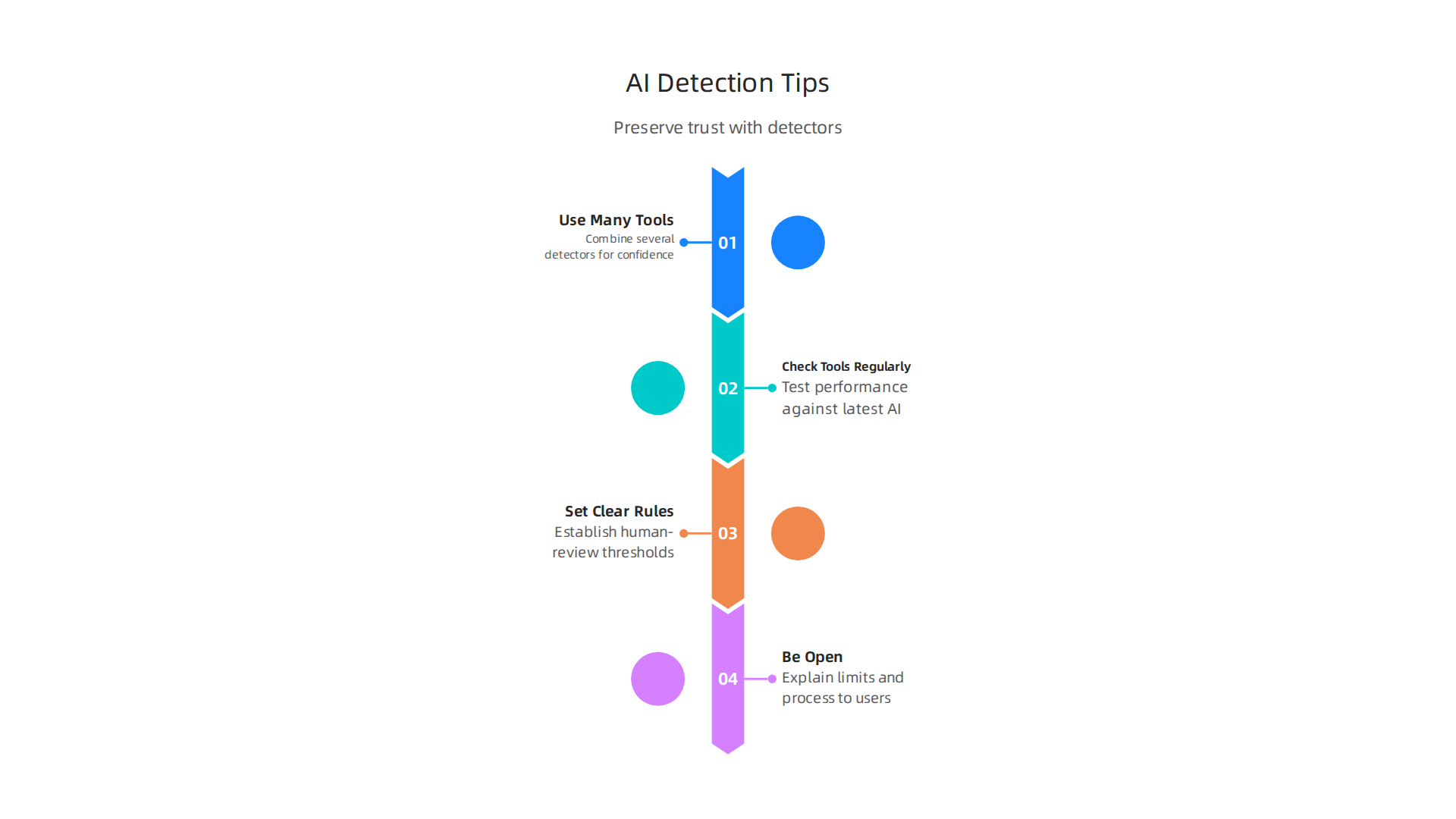
- Use Many Tools (Ensemble Approaches): Don’t rely on just one
ai artwork detector. Try using a fewdifferent ai toolsto check the same artwork. If multiple tools agree, you can be more confident. This is similar to how you might use several sources to confirm a fact. - Check Tools Regularly (Benchmark Re-evaluation): The people who use these tools, like schools or publishers, should test them often. This means feeding them known AI art and human art to see how well they perform against the latest
types of ai. - Set Clear Rules for Humans to Check (Human-Review Thresholds): AI tools give scores or percentages. Instead of taking these as final answers, set a point where a human must look at the art. For example, if an
ai artwork detectorsays something is 60% AI, a human should always step in to make the final decision. This human oversight helps avoid false positives. You can learn more about how to find reliable tools in our guide on How to Choose the Best AI Plagiarism Checker. - Be Open About How It Works (Transparency): If you’re using an
ai artwork detector, tell people about it. Explain its limits and how you’ll use its results. This openness builds trust and helps everyone understand the process.
Using ai artwork detector tools wisely means knowing they have limits. It’s about using them as a helper, not as the final word. By combining what these tools tell us with careful human judgment, we can keep things fair and honest in the world of art and content creation in 2026.
Summary
This article explains why AI artwork detection has become essential in 2026, describing who needs it and how it works. It covers real-world use cases—educators, publishers, marketing teams, HR/legal—and shows how detection supports fairness, brand protection, and editorial trust. The piece breaks down the main detection approaches (classifier models, artifact forensics, watermarking/provenance, and explainability), how detectors are benchmarked, and common measurement issues like accuracy, false positives, and synthetic drift. It also lays out practical integration steps—automated scans, human review, escalation policies, and audit trails—plus legal and ethical questions around authorship, disclosure, privacy, and over-reliance. Finally, it discusses limitations and evasion tactics and offers best practices such as ensemble checks, frequent re-benchmarking, transparency, and human-in-the-loop processes so organizations can adopt detectors responsibly and maintain trust.