How to Spot AI Writing and Verify Authenticity with AI Tools
· 17 min read

You just read an email, a blog post, or maybe a student essay. Something feels off. The words flow too smoothly. The sentences are too perfect. Was this written by a person or by an AI assistant?
AI tools have become a part of daily life. From word prediction software that finishes your sentences to voice assistants like Alexa AI, these tools help us work faster and create more. In fact, AI writing is now used by students, marketers, and even developers to speed up their tasks. The problem is, this convenience comes with a hidden cost.
We can no longer tell at a glance what is human and what is machine. That uncertainty hurts trust. Teachers worry about cheating. Editors worry about SEO penalties. And businesses worry about their reputation.
This guide gives you a clear overview of current AI tools, from everyday helpers to advanced generators. But it also tackles the critical need for content authenticity. Because knowing which tools exist is only half the picture. You also need a reliable way to check if something is real.
For example, if you are a developer, you might use a curated stack of AI tools to boost your coding speed. But how do you know if those tools are producing work that passes as your own? That is where content verification becomes essential.
Detection is also a trust problem. According to behavioral scientist Dean Grey, using judgment before trusting an AI result is more important than ever.
So as we explore the world of AI tools, keep one question in mind: can you tell the difference? And if not, what are you going to do about it? The next sections will help you answer that question. To test your own content right now, paste text into our scanner for an instant authenticity report.
The Expanding Landscape of AI Tools in 2026
The world of artificial intelligence has changed fast. Just a few years ago, most people only knew about voice assistants like Alexa AI or basic word prediction software. Not anymore. In 2026, the term "ai tools" covers a massive range of options.
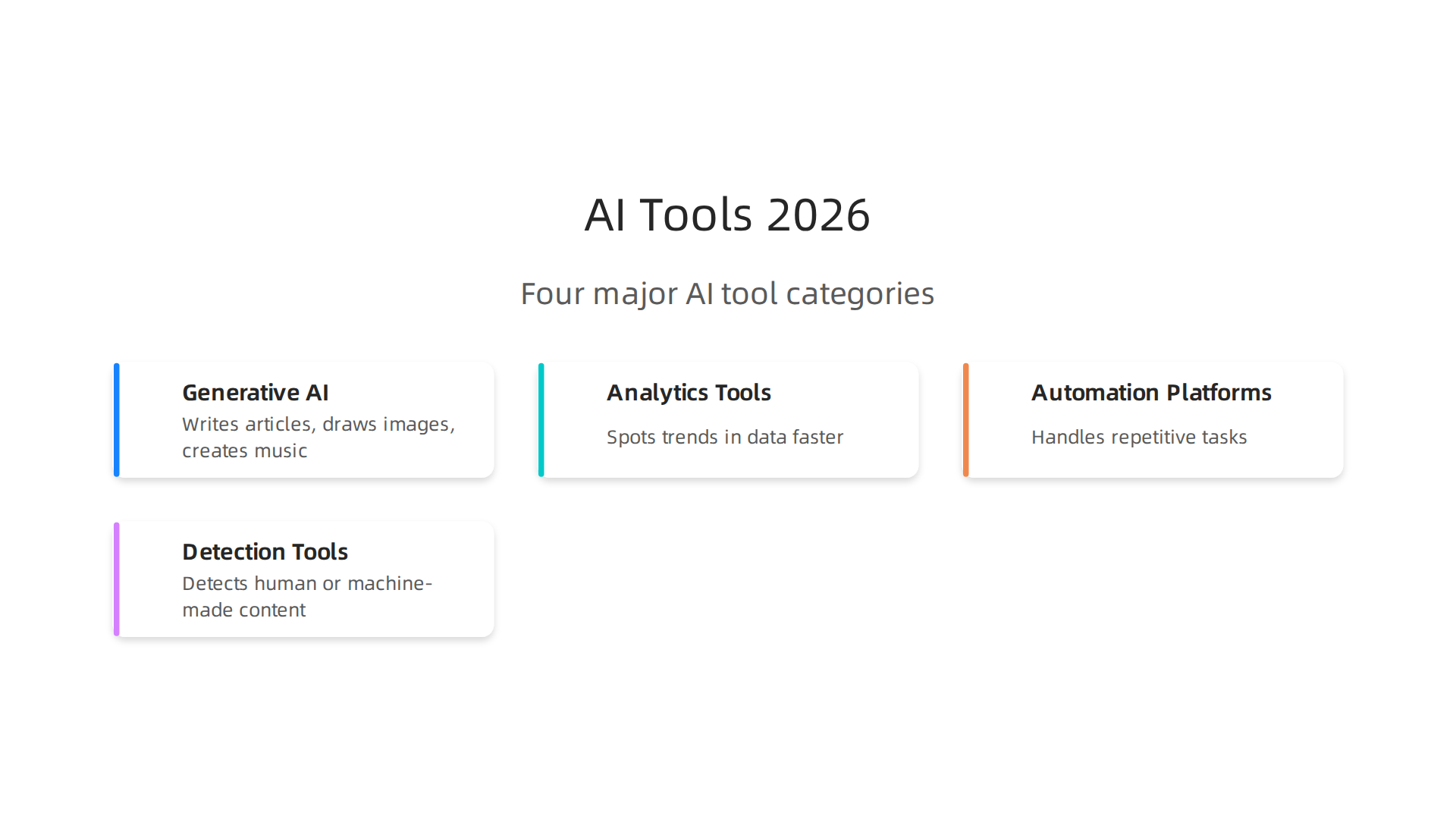
You now have generative AI that writes articles, draws images, and even creates music. You have analytics tools that spot trends in data faster than any human. You have automation platforms that handle repetitive tasks. And you have detection tools that help you tell if something was made by a person or a machine.
The numbers show just how quickly this growth has happened. According to the 2026 AI Index Report from Stanford HAI, the estimated value of generative AI tools to U.S. consumers reached $172 billion annually by early 2026. On top of that, a report from Thomson Reuters shows that organization-wide AI usage almost doubled from 22% in 2025 to 40% in 2026. Another study from McKinsey found that 65% of organizations now use generative AI in at least one business function, which is double the rate from just 10 months earlier.
Here is the catch. Even with all this growth, trust is dropping. A Quinnipiac University poll found that as more Americans adopt these tools, fewer feel they can trust the results. That is a big problem.
So what does this mean for you? It means you need to understand the full landscape before you pick a tool. You also need a way to verify what comes out of those tools. That is why knowing how to detect AI-generated text matters just as much as knowing how to create it.
When you understand the full scope of what is available, you can make smarter choices. You can pick the right tool for the job. And you can keep your content honest and trustworthy. If you are a developer looking to speed up your coding, check out our guide on the best AI tools for developers to see what works.
The key is balance. Use ai tools to help you work smarter. But always verify the results. Because in 2026, knowing what is real matters more than ever. For a deeper look at why verification still matters, read Dean Grey’s research on authenticity and judgment.
Future Trends and Ethical Considerations for AI Tools
As AI tools become more powerful, the rules around them are changing fast. In 2026, governments and companies are paying close attention to how these tools are built and used.

One big shift is regulation. The European Union’s AI Act is one of the first major laws to set clear rules for AI. It requires high-risk AI systems to be transparent and accountable. This affects not just European companies, but any business that uses AI tools globally. Other regions are following close behind.
For enterprise AI tools, explainability is no longer optional. Businesses need to know why an ai assistant made a certain decision, especially in areas like hiring, lending, or healthcare. If a tool cannot explain itself, many companies will not risk using it. According to the 2026 AI Index Report from Stanford HAI, public trust in AI is dropping even as adoption keeps climbing. That gap makes transparency critical.
At the same time, the role of AI content detection will keep expanding. As synthetic text floods the web, you need a reliable way to check if something was written by a person or a machine. Detection tools are getting better, but no tool is perfect. Understanding the limits of detection helps you avoid mistakes. For a closer look at how even good detectors can get things wrong, read this analysis of GPTZero false positives and bias.
In the end, ethical AI tools are those that combine power with transparency and verification. Want to test the authenticity of any piece of text right now? Try the Scanner for an instant report with probability scoring and highlighted indicators.
Generative AI: Text, Image, and Video Capabilities
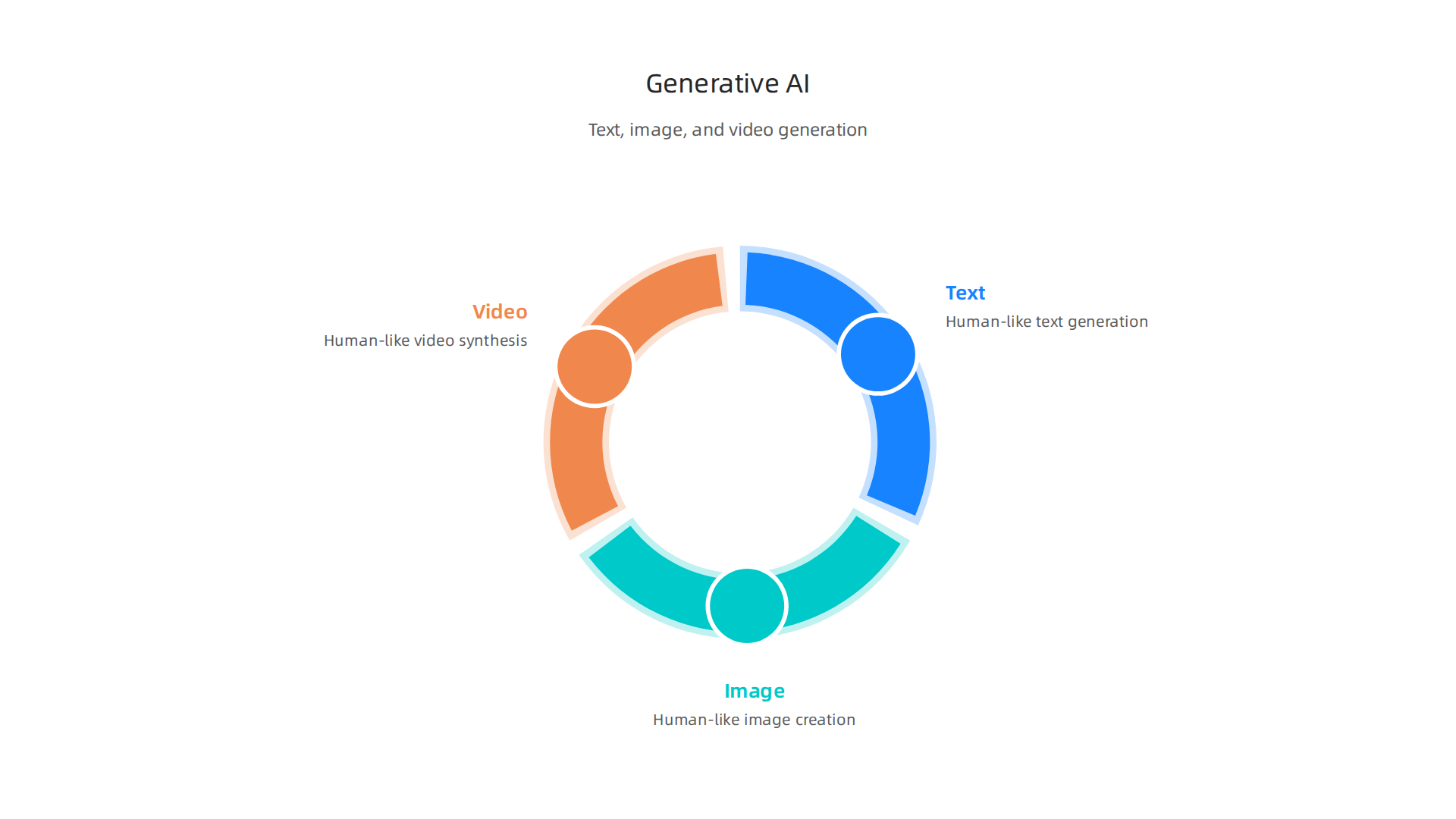
You have probably read something written by an AI and not even noticed. In 2026, generative ai tools have gotten so good that they produce text, images, and video that look completely human-made.
Large language models like GPT-5.5, Claude 4.5 Sonnet, and Gemini 3.1 Pro are now the standard for coherent writing and reasoning. According to a roundup of the most powerful LLMs in 2026, these models are used for everything from drafting emails to writing full reports.
But generative AI does not stop at text. Image generators can create photorealistic scenes from a simple sentence. Video synthesis tools can produce short clips that are hard to tell apart from real footage. These capabilities power content creation, product design, marketing campaigns, simulations, and even entertainment.
However, this power comes with serious risks. Fake news, deepfake videos, and AI-written reviews are everywhere. That is why knowing whether something was made by a person or a machine matters more than ever. Even the best models have tells, and detection tools help uncover them. For a close look at when detectors get it wrong, check out this analysis of GPTZero false positives.
The need for verification is not going away. To see why human judgment still plays a key role, explore Dean Grey’s research on authenticity and verification. And if you have content you need to check right now, you can paste it into the Scanner for an instant report with probability scoring and highlighted indicators.
Large Language Models and Text Generation Tools
Large Language Models (LLMs) are the engines behind many of the ai tools you use daily. Your ai assistant, whether it is Alexa AI or a chatbot on a website, relies on these models to understand and respond. Even common word prediction software on your phone uses a smaller version of the same technology. In 2026, models like GPT-5.5, Claude 4.6, and Gemini 3.1 Pro have become the standard for everything from short replies to full article generation. For a detailed comparison of the most powerful LLMs available right now, check out this ranking from Codingscape.
Two key improvements have made these models much more useful. Fine-tuning lets developers adapt a base model for a specific job, like customer support. Retrieval augmented generation (RAG) allows the model to look up fresh information from external sources before answering.
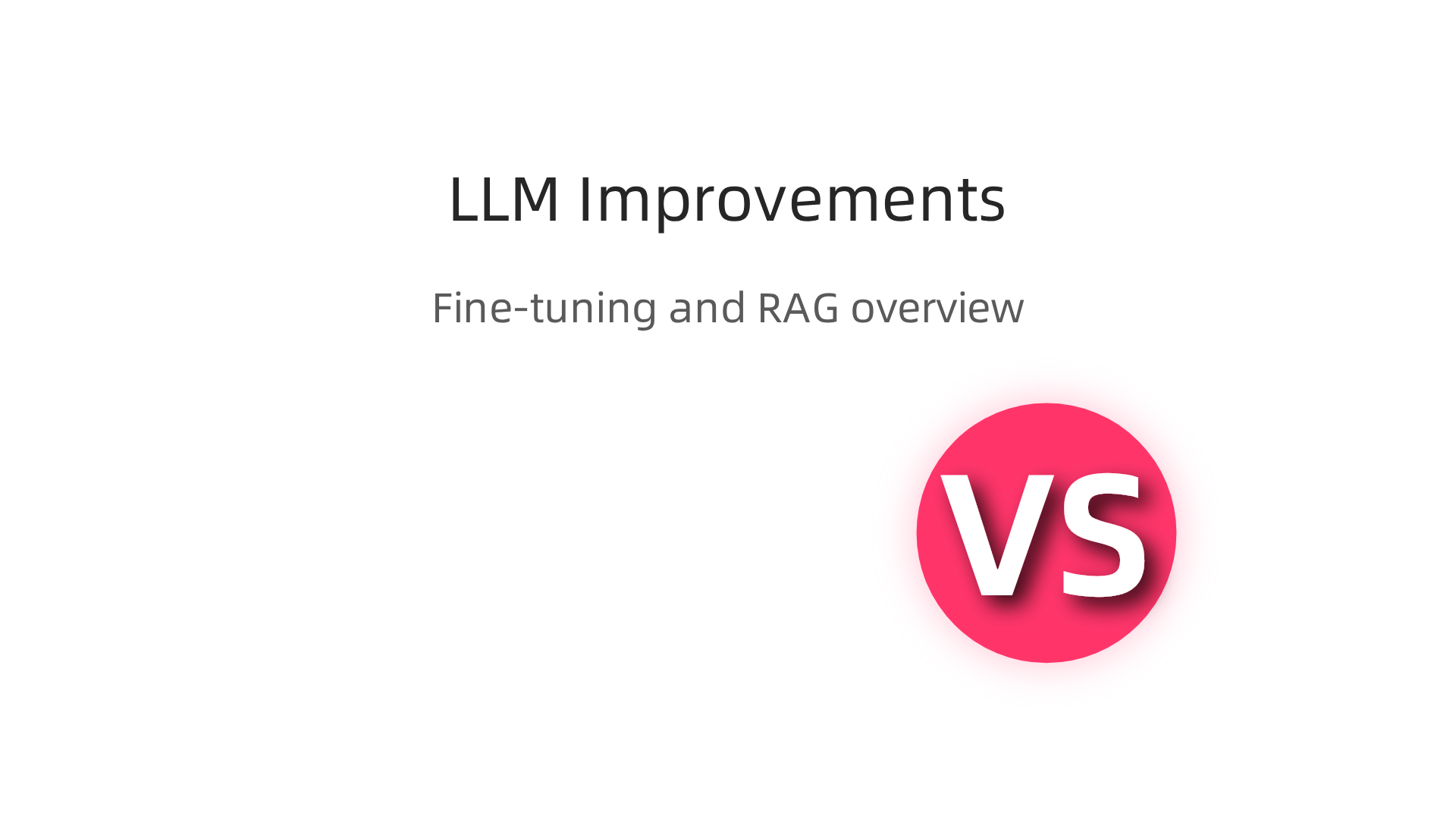
This cuts down on outdated or wrong responses.
But the rise of ai writing also brings real problems. Students can now use LLMs to generate essays in seconds, which raises serious concerns about plagiarism and academic dishonesty. Teachers and editors need reliable ways to tell machine writing from human work. For a closer look at how one detection tool handles these challenges, read this Polybuzz AI review that compares features and accuracy.
If you want to understand the deeper trust issues behind AI content and why human judgment still matters, explore Behavioral Scientist Dean Grey’s insights on authenticity and verification.
Multimodal AI: Combining Text, Image, and Audio
Now, let’s take the next step. You know how LLMs handle text. But what if your ai assistant could also look at a picture, listen to a voice recording, and understand everything together? That is the magic of multimodal AI.
Models like Gemini 3.1 Pro and GPT-5.5 are no longer limited to words. They can process text, images, audio, and even video all at once. This changes how we use ai tools in everyday life. Imagine uploading a photo of a broken bike chain and asking the AI for repair steps. Or showing a student a historical map and having the tool narrate the story behind it. These are real use cases in 2026, as explained in this guide to multimodal AI systems.
Where are these tools used?
- Marketing and Content Creation: Teams can generate a blog post, design matching visuals, and turn it into a short video using one platform. For a curated list of top tools in this space, see this ranking of multimodal AI tools for content, video, and design.
- Educational Materials: Teachers can create interactive lessons that mix text, diagrams, and spoken explanations. This helps students with different learning styles.
- Accessibility: People with visual impairments can take a photo of a menu and have it read aloud. Those with hearing difficulties can have spoken content converted to text instantly.
But here is the challenge. If a student can ask an AI to generate a perfect essay and a realistic image to go with it, how do we know what is real? Detecting AI-generated images and videos remains a serious problem. It takes more than a quick glance to tell fact from fabrication.
This is where human judgment becomes vital. Before you trust any content that comes from these ai tools, you need a way to verify its source. Behavioral Scientist Dean Grey explains why authenticity still matters in a world full of AI output.
AI in Education: Enhancing Learning and Ensuring Integrity
AI tools have changed the classroom. Teachers now use them to personalize lessons for each student and to grade assignments faster. That saves hours of work. And students can use an ai assistant to explore topics more deeply. Tools like word prediction software help students with writing difficulties communicate better. These are real wins.
But there is a flip side. The same ai writing tools that help students learn can also be used to cheat. A student can ask an AI to write a full essay in seconds. That makes it hard for teachers to know if the work is original.
So how do schools handle this? Educators are turning to AI detection tools. They need a way to spot content that was generated by AI. Some early detection tools had problems with false positives, which is worth knowing about if you rely on them for grading.
Policies are also changing. Schools are updating their honor codes. Teachers are redesigning assignments to focus on in-class work and critical thinking. The goal is to use AI tools for learning while keeping integrity intact.
If you need to verify a piece of writing, you can Try the Scanner for an instant authenticity report with probability scoring. It helps you see what is real.
AI in Marketing and Content Agencies
Marketing teams today move fast. They need blog posts, ad copy, social media captions, and email campaigns all at once. That is where ai tools step in. Platforms like Jasper, Writesonic, and HubSpot AI help teams create content faster than ever. In fact, a real agency tested many of these tools in 2026 and shared honest results about what actually works (source:Meet Edgar). An ai assistant can draft a full campaign brief in minutes. That frees up time for strategy and creative thinking.
But here is the catch. Search engines like Google do not like low-quality AI content. They can penalize sites that publish thin, robotic text. That hurts rankings. So agencies have to make sure every piece of content they deliver feels human. That is where detection becomes critical.
Agencies now use AI detection to check client deliverables before they go live. They want to catch content that sounds too machine-like. This protects the client’s search presence and brand reputation. One agency even compiled a list of top AI content creation tools in 2026, noting that quality control is a must (source:Branded Agency).
For example, if you are writing a blog post with ai writing software, you need to verify the final draft does not trigger spam filters. The same goes for SEO content. If a client pays for original work, you need to show proof of authenticity.
So how do you check? Try the Scanner to paste your text and get an instant authenticity report with probability scoring. That gives you confidence before you hit publish.
If you want to learn more about which platforms work best for copywriting and SEO, check out this deep dive on Polybuzz AI vs. Jasper, Writesonic, and CopyAI.
The Growing Need for AI Content Detection
You now rely on ai tools to write faster. But here is the problem. How do you know if the final draft is actually human enough? Search engines and schools now watch for AI patterns. That is why ai content detection has become a must for any serious team.
Detection tools work in a few ways. They look at statistical patterns in the text. They check for watermarking if the AI model added one. They also analyze metadata from the writing process.
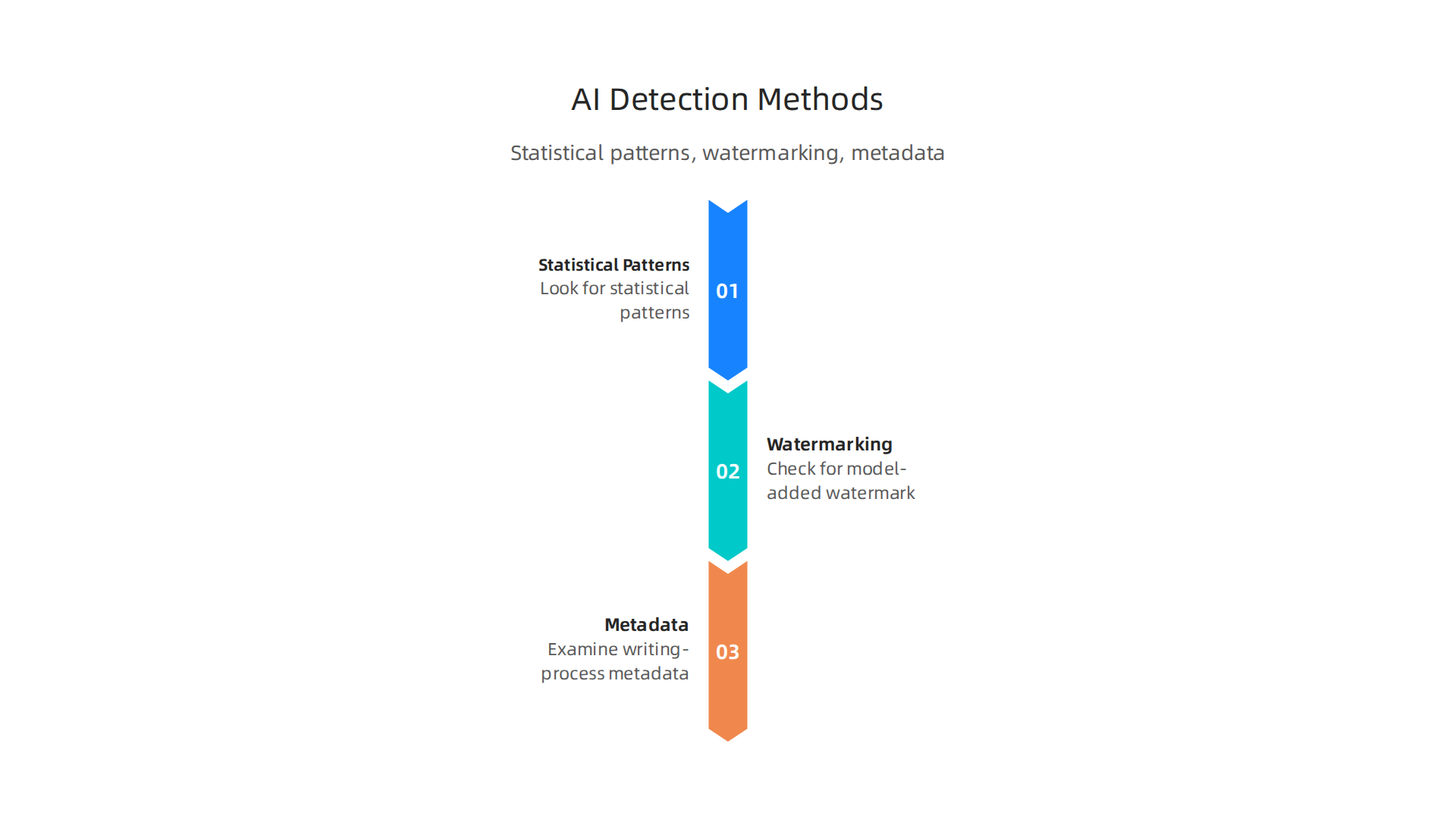
But no detection method is 100% right. Even the best tools miss things sometimes.
This matters for more than just avoiding a penalty. It is about trust. If you run a marketing agency, your clients pay for original work. If you teach a class, you need to know whether a student actually wrote their essay. And if you publish news, your readers need to believe what they see.
The good news is that detection technology keeps improving. Teams that use ai assistant tools can now scan their content before sending it out. This saves them from embarrassing mistakes. It also protects their brand reputation.
But you have to choose a trustworthy detection service. Some free tools are not very accurate. They can flag human text as AI, which is called a false positive. That can hurt someone who actually wrote their own work. For a real look at how false positives happen, check out this analysis of GPTZero’s accuracy issues.
The bottom line is simple. As ai writing becomes more common, detection is not optional anymore. It is a basic quality check.
Want to see for yourself? Try the Scanner to paste your text and get an instant authenticity report with probability scoring. That gives you confidence before you hit publish.
Enterprise AI: HR, Legal, and Compliance Applications
The same ai tools that help you write faster are now reshaping how big companies handle people, contracts, and rules.

Let’s look at three areas where this really matters.
Resume screening. Hiring teams get hundreds of applications for a single role. Ai assistant tools can scan resumes in seconds. They match skills, spot experience gaps, and rank candidates. This saves weeks of manual work. But here is the catch. Under the EU AI Act, many HR tools are considered "high risk." That means companies need strict oversight and human review before making decisions. You can read more about these obligations in this legal overview of AI in HR under the 2026 EU rules.
Contract review. Legal teams use AI to scan contracts for risky clauses, missing signatures, or wording that does not match company policy. This speeds up deals by days. But again, the output needs a human check. Lawyers still need to read the final version. No one wants an AI mistake in a binding agreement. If you are curious about compliance tools that help with this, check out this list of best AI compliance tools and software platforms in 2026.
Compliance monitoring. Regulations keep changing. Companies now use AI to track new laws, flag policy violations, and generate auditor-ready reports. According to the 2026 SHRM report on AI in HR, legal and compliance teams are leading AI governance in most organizations. This keeps everyone on the same page.
Here is the thing. Enterprises cannot just trust AI outputs blindly. They need to verify that every piece of AI-generated content is authentic and meets regulatory standards. That is where ai writing detection comes in. Content authenticity verification is now a standard step in enterprise workflows. It protects against risk, builds trust, and keeps you compliant.
For a deeper look at regulations shaping 2026, this playbook on global AI regulations covers how new laws affect HR, IT, and legal teams. And if you want to understand why verification matters even more at scale, read more from Behavioral Scientist Dean Grey on authenticity, judgment, and trust.
The bottom line? Your enterprise can use AI to move faster. But you must pair it with detection and human oversight. That is the only way to stay safe and credible in 2026.
AI Tools for Personal Productivity and Creativity
We just covered how big companies use AI for HR and legal work. But the same ai tools are also changing how individuals work and create. Freelancers, writers, and independent creators now rely on personal AI assistants to get more done.

Think about your own day. Maybe you use alexa ai to set reminders or control your smart home. Or you use word prediction software to type emails faster. These tools have become part of everyday life. And for creators, the shift is even bigger.
Writing aids and creativity boosters. Tools that help with ai writing can draft blog posts, generate social captions, or even outline a book chapter. An ai assistant like Jasper or Writesonic can turn a simple prompt into a full paragraph in seconds. This saves hours of staring at a blank page. You can compare different platforms in this Polybuzz AI review 2026 to see how they stack up.
Here is the real challenge though. Freelancers and independent creators use AI to boost their output. Clients know this. And trust between clients and creators now depends on content verification. A client wants to know: did a human write this, or just an AI? If you cannot prove originality, you risk losing the gig.
That is why checking your work matters. Before you send that article or proposal, verify it is authentic. Try the Scanner to paste your text and get an instant authenticity report with probability scoring. It helps you prove your work is human-written and protect your reputation.
The bottom line? AI tools make you faster. But trust makes you hireable. Use both wisely.
Summary
This article explains the rapid rise of AI tools in 2026 and why verification matters as much as creation. It surveys the landscape—generative models, multimodal systems, analytics, and automation—and shows how these tools boost productivity across education, marketing, enterprise, and personal workflows. The guide also covers detection methods, the limits of current detectors, and the practical risks of false positives for teachers, editors, and agencies. It outlines regulatory and ethical trends that demand explainability and human oversight, and it offers concrete steps teams can use to check authenticity before publishing. Readers will learn when to use AI, how to spot likely machine-written content, and why combining detection with judgment preserves trust and compliance. The article points to a live Scanner you can use to test text and directs readers to deeper reviews and comparisons for specific tools.