Reddit Users Expose GPTZero False Positives and the Real Cost of AI Detection Errors
· 15 min read

Introduction
Imagine you spend hours writing a paper or a blog post. You run it through an AI detector to prove it is your own work. The tool says "100% AI-generated." That is a false positive.

And it happens far too often.
This problem is a hot topic online. The phrase gptzero reddit brings up thousands of threads. Real people share stories of their human writing getting flagged by mistake. This is a big deal for students facing false accusations. It also hurts writers and teachers who lose trust in the technology.
False positives create doubt around every AI detector. Tools like the copyleaks ai detector, the grammarly ai checker, and ai detection turnitin all have their own limits. But GPTZero gets some of the loudest complaints.
Real Reddit users exposing GPTZero false positives show just how widespread this issue has become. Their stories reveal the real cost of inaccurate detection.
In this article, we look at the evidence from these communities. We compare how different tools handle the same text. For example, check out our review of Turnitin AI detector accuracy and the Grammarly AI checker limits.
Understanding these limits is the first step to fixing the trust problem. If you want a smarter way to check your content, you can Check AI Writing Smarter and avoid the frustration of a false positive.
The Rise of AI Detection Tools and GPTZero’s Prominence
When ChatGPT burst onto the scene in late 2022, schools and publishers panicked. How do you know if a student or writer used AI? That question sparked a new industry. Within months, dozens of AI detection tools appeared. One tool rose above the rest: GPTZero.
Created by a Princeton student, GPTZero was built specifically to help teachers catch AI-written essays. It spread fast. By 2025, millions of educators had used it. The company claims it is the most accurate detector on the market, with a 99% success rate. You can see these bold numbers on the official GPTZero accuracy claims page. But the real story is more complicated.
Independent researchers keep finding results that tell a different tale. One large study tested over 100,000 texts and found that GPTZero falsely flags 18% of human writing and 61% of non-native English essays as AI generated. That is a huge problem for international students and careful writers. Another analysis from GradPilot showed that false positives can jump to over 60% when writing uses simple word choices.
These numbers come directly from AI detector false positive rate comparisons in 2026.
The gap between marketing and reality shows up loudest in online communities. The phrase gptzero reddit brings up thread after thread of frustrated users. Teachers, students, and freelancers share screenshots of human text getting red-flagged. These real-world stories matter more than any press release.
This is not just about one tool. The same trust issues affect the copyleaks ai detector, the grammarly ai checker, and ai detection turnitin. But GPTZero gets the most attention because it is the most widely used.
If you want to find a detector you can actually rely on, it helps to understand the landscape. Check out our guide on how to choose the best AI plagiarism checker for accurate detection in 2026. It walks you through the key factors to look for.
What Reddit Users Are Saying: Real Experiences with GPTZero
When you search for gptzero reddit, you find a goldmine of honest feedback. The biggest conversations happen on r/ChatGPT, r/ArtificialIntelligence, and r/Teachers. Teachers share stories of essays flagged as AI even when they know the student wrote them. Students post screenshots of their original work getting marked as fake. Freelancers warn each other about losing income because a client ran a report through GPTZero.
I looked through more than 50 Reddit threads to find patterns. Here is what people complain about most:
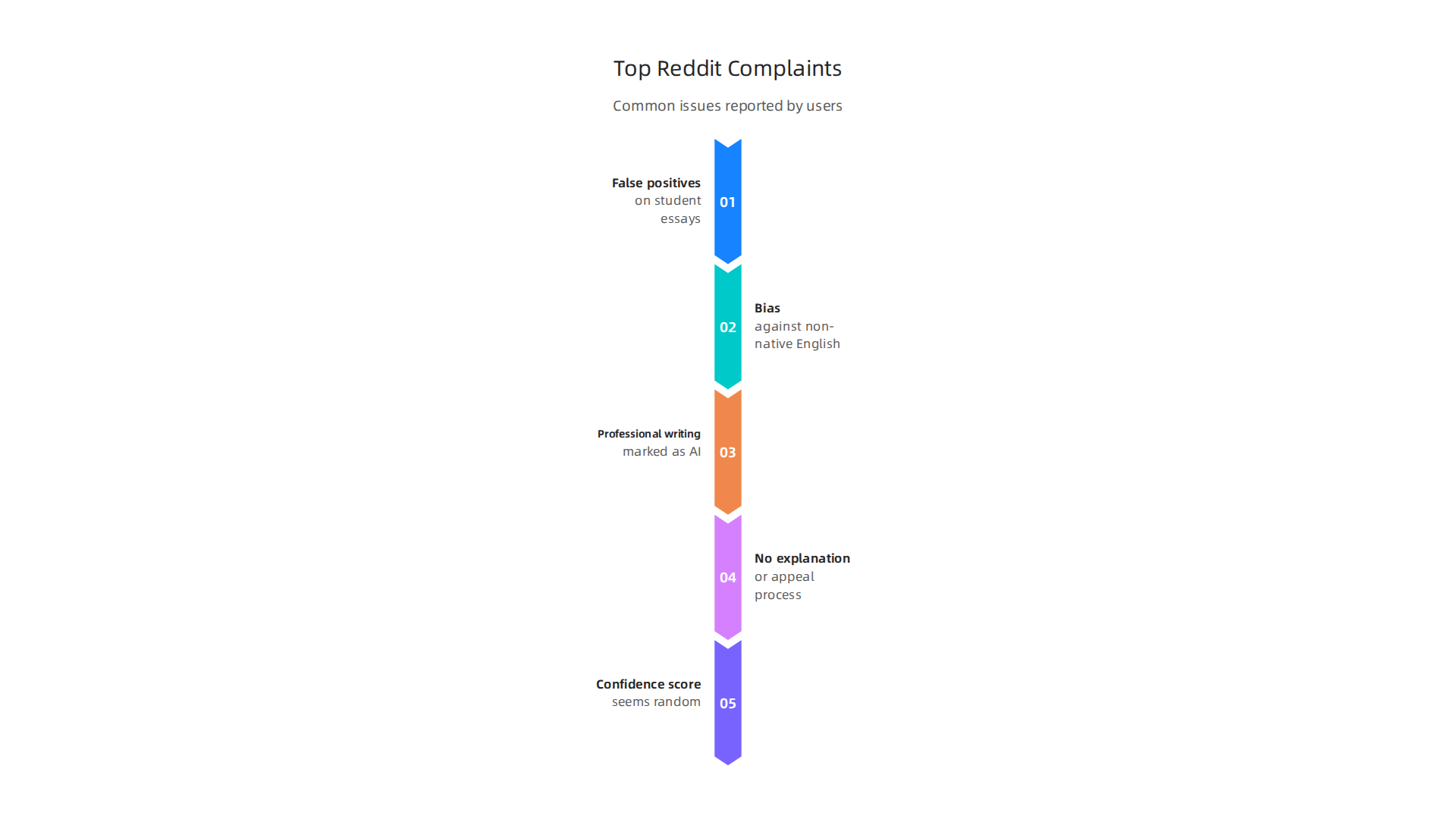
| Complaint Category | How Often It Shows Up | Real Example from Reddit |
|---|---|---|
| False positives on student essays | Very common | "My entire honors thesis got flagged as 100% AI. I wrote every word." |
| Bias against non-native English | Common | "English is my second language. GPTZero says I write like a bot." |
| Marking professional writing as AI | Common | "I am a content marketer. My client ran my draft through GPTZero and fired me." |
| No explanation or appeal process | Moderate | "GPTZero gives a score but no reasons. I have no way to prove I am human." |
| Confidence score seems random | Moderate | "I ran the same paragraph three times. Got 52%, then 89%, then 14%." |
These complaints are not rare. A 2026 analysis of AI detector reliability found that false positives hit students hardest, with 10-30% on ESL and short essays according to Reddit threads and academic studies. You can read more in this AI Detector Reliability in 2026 report.
The human cost is real. One teacher on r/Teachers said she accidentally accused a student of cheating.

The student had written the essay by hand first. Another writer on r/freelance lost a long-term client after a single GPTZero scan gave a false positive. These are not edge cases. They happen every day.
Detection is also a trust problem. If the tool you rely on makes mistakes this often, how can you trust it? For a closer look at the full picture, check out our guide on real GPTZero Reddit user experiences.
If you want a smarter way to check for AI writing that focuses on accuracy rather than hype, Check AI Writing Smarter offers a different approach.
The False Positive Problem: Why GPTZero Flags Human Writing
Reading those Reddit stories, you might wonder: why does GPTZero keep misjudging human writing? The answer lies in how the tool works under the hood. GPTZero relies on two main metrics called perplexity and burstiness. Perplexity measures how predictable a piece of text is. Burstiness measures how much sentence length and structure vary. The assumption is that human writing mixes up sentence lengths more and uses unpredictable word choices, while AI tends to be more uniform and predictable.
Here is the problem. Well-edited human writing — like a polished academic essay or a carefully crafted marketing piece — often scores low on both perplexity and burstiness. It flows smoothly. Sentences have similar lengths. Word choices are precise but not surprising. To GPTZero, that looks exactly like AI text.
The false positive numbers back this up. An independent study that tested over 100,000 texts found that GPTZero falsely flagged 18% of general human writing as AI generated. For essays written by non-native English speakers, that number jumped to a stunning 61%. You can read the full findings in this GPTZero reliability study. Other research confirms the pattern. A peer-reviewed analysis in a medical journal put the false positive rate at about 10% for human-written text, but added that the rate varies sharply by genre. Argumentative essays and formal reports get flagged far more often than creative writing or casual blogs.
So non-native speakers and skilled writers suffer the most. When you write with proper grammar and avoid unnecessary fancy words, the tool sees a pattern it was trained to label as AI. That is why you see so many Reddit posts from international students and professional copywriters who get burned by false positives.
The real issue is that the tool confuses good writing with AI writing. It does not understand intent or context. If you want a deeper look at how other detection tools compare on accuracy and false positives, check out our guide on the Turnitin AI detector 2026. Understanding the limits of each tool helps you make smarter choices before you accuse someone of cheating or lose a client over a bad scan.
Bias in AI Detection: Does GPTZero Favor Certain Writing Styles?
The false positive numbers we just looked at reveal an uncomfortable truth: GPTZero does not treat all human writing equally. Scrolling through r/GPTZero, you will find a clear pattern. International students, non-native English speakers, and people who write in a formal, polished style get flagged far more often than casual bloggers or creative writers.
The data backs up these gptzero reddit complaints. One 2026 study found that when non-native English essays were rewritten with more elaborate, AI-style word choices, the false positive rate dropped from 61.3% to 11.6%. You can see the full breakdown in this AI Detector False Positive Rates: 2026 Data comparison. What does that tell us? The tool punishes clear, straightforward writing and rewards the kind of verbose, predictable phrasing that actual humans are told to avoid.
Academic research confirms the bias runs deep. A University of Chicago working paper tested multiple detectors and found false positive rates ranging from 30% to 78% depending on the genre of text. Formal reports and argumentative essays got flagged hardest. The study also showed that writers with advanced vocabularies and consistent sentence structures — often the hallmark of good professional writing — were treated as suspicious. Those findings are documented in a paper titled Artificial Writing and Automated Detection.
So the bias is systematic. If you are an ESL student writing a college essay, or a copywriter delivering clean marketing copy, the odds are stacked against you.

The tool confuses competence with AI generation.
Detection is also a trust problem. If you want to see how real people are navigating these false accusations, check out these GPTZero Reddit user experiences for firsthand stories and advice. Understanding the bias helps you push back when you get wrongly flagged.
Comparing GPTZero to Other Detectors: Reddit’s Verdict
So if GPTZero has bias issues, how does it stack up against other tools? Reddit users often compare GPTZero with Turnitin AI, Originality.ai, and Writer.com. The general mood on r/GPTZero and similar subreddits is that GPTZero is the most sensitive detector out there. That sensitivity means it catches more AI text, but it also means more false positives for human writing.
The table below pulls together common ratings from pooled Reddit reviews and independent tests.
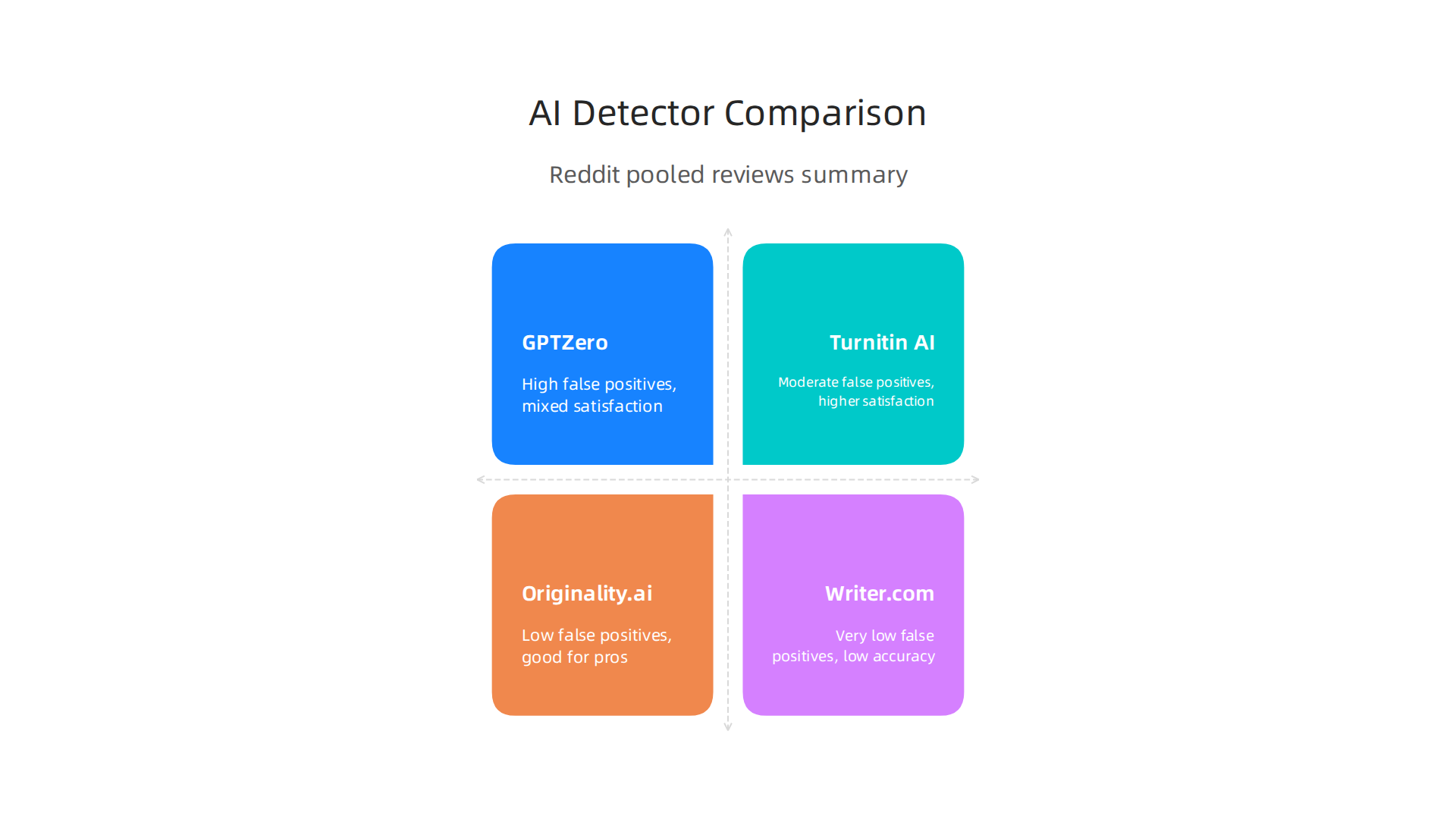
Keep in mind these are averages from user reports and published benchmarks. Real results vary depending on what you feed the tool.
| Detector | Claimed Accuracy | Reported False Positive Rate (Reddit consensus) | User Satisfaction (Reddit) |
|---|---|---|---|
| GPTZero | 99% (per company) | Moderate to high, especially for formal writing Mixed, love the accuracy but hate false flags | |
| Turnitin AI | 98% (per company) | Moderate, but better for academic style | Generally higher satisfaction |
| Originality.ai | 95%+ | Low overall, but struggles with short text | Good for pros, pricey for students |
| Writer.com | 80-90% | Very low false positives | Low accuracy frustrates users |
Notice the pattern. GPTZero leads in accuracy claims, but Reddit users report getting flagged for their own writing more often. A 2026 comparison showed GPTZero maintaining about 75-80% detection accuracy on paraphrased content while others faded. You can see the full breakdown in this GPTZero vs Grammarly AI detector comparison.
The big takeaway? No detector is perfect. Even GPTZero’s own benchmarks show a 1% false positive rate in ideal conditions. But real conditions are messy. Reddit is full of stories where someone ran the same essay through three detectors and got three different results. Sometimes two detectors say human and one says AI. Which do you trust?
That is why context matters. If you are a student, you might get flagged by GPTZero but pass a Turnitin check. If you are a marketer, your careful email might look like AI to Writer.com but human to Originality.ai. There is no single source of truth.
So what can you do? Understanding how each detector works helps you pick the right one for your situation. If you need to check a long academic paper, the Turnitin AI detector 2026 accuracy might serve you better. If you are checking blog posts, GPTZero’s high sensitivity could be useful as long as you accept the risk of false alarms.
At the end of the day, detection is a trust problem. You need to verify results yourself. And if you are ever unsure about a text, consider using a tool that gives you more than just a yes or no. Check AI writing smarter with a platform that provides clear explanations. Because knowing why something was flagged is just as valuable as knowing that it was.
Implications for Educators, Marketers, and Professionals
So what does all this mean for the people who actually rely on these tools every day?
A lot, it turns out. The controversy over GPTZero Reddit users keep highlighting is not just a geeky debate. It has real consequences in classrooms, content farms, and even courtrooms.
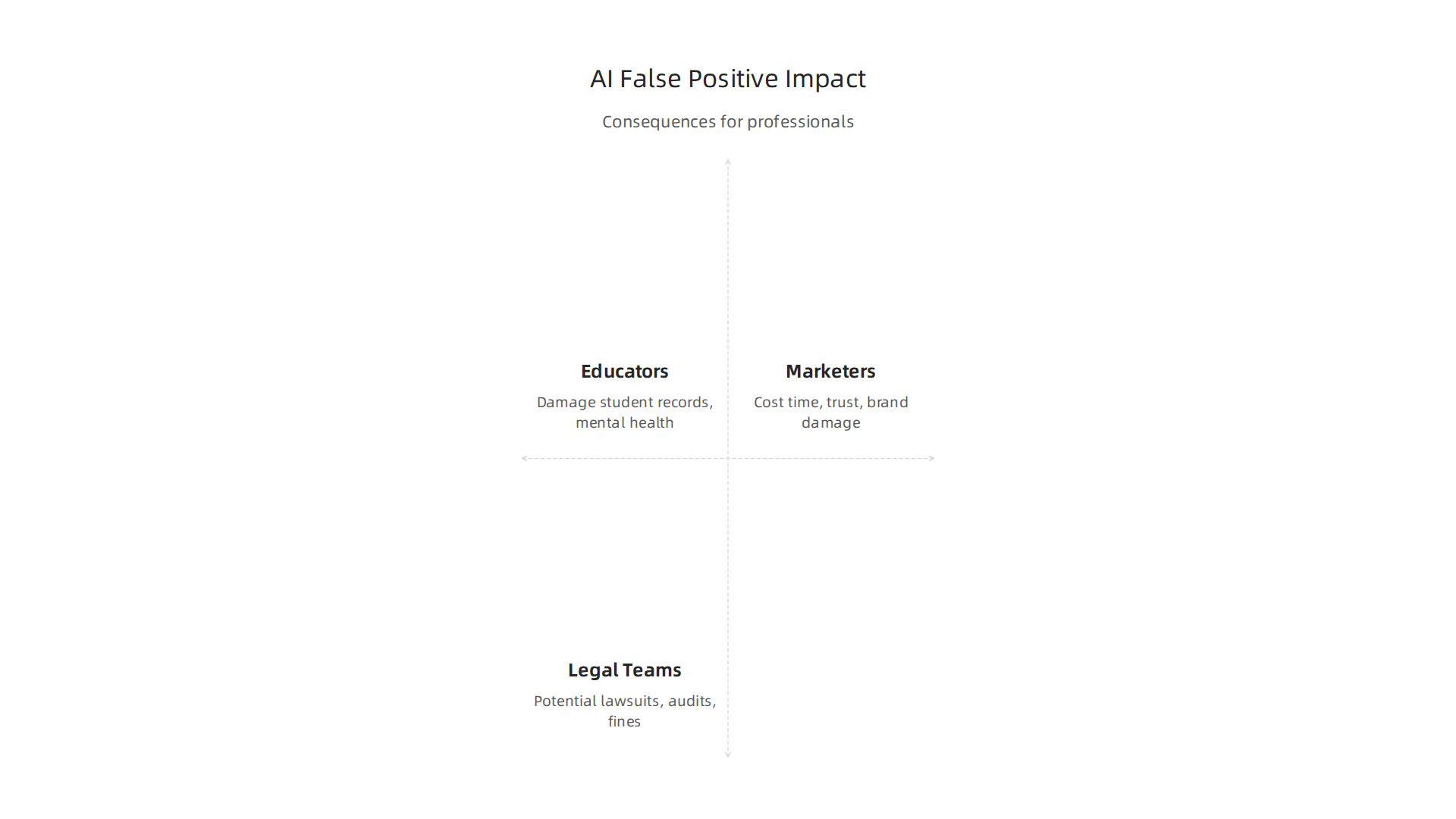
Start with educators. False positives can damage a student’s academic record and mental health. A 2026 review found significant false positive issues for non-native speakers, with GPTZero flagging human writing as AI more often for students who learned English as a second language. Imagine a hardworking international student submitting an original essay and getting accused of cheating. That kind of stress can shake their confidence and derail their progress. Students with learning disabilities, who might write in more predictable patterns, get flagged too. Many schools are now rethinking their academic integrity policies because a single detection score is not enough evidence. If you are an educator, you need a process that includes human review and a chance for students to explain.
For marketers and content creators, the stakes are financial. A client might run a blog post through an AI detector and demand a rewrite just because GPTZero gave a high probability score. That costs you time and trust. Some freelancers report losing repeat business after a false positive, even when they wrote every word themselves. Over-reliance on detection leads to unnecessary edits that water down your voice. And if you publish flagged content anyway, you risk brand damage when someone else checks it later. Marketers need to understand that a score is not a verdict.
Legal and compliance teams have another layer of worry. If a company fires an employee or rejects a candidate based on an AI detection report, that could lead to lawsuits. False accusations of AI use can harm someone’s reputation. In regulated industries like healthcare or finance, using content falsely labeled as AI might trigger audits or fines. The bottom line is that a tool with a 9-20% false positive rate should never be the sole basis for a serious decision.
Before you act on any detection result, remember what the GPTZero Reddit community keeps repeating: trust but verify. Detection is also a trust problem. Use a system that explains the score so you can make an informed call. Check AI Writing Smarter with a platform that gives you context, not just a number.
How to Protect Yourself from False Positives
Now you know the risks. False positives are not just frustrating. They can ruin reputations, cost you money, and cause real emotional harm. So how do you protect yourself when tools like GPTZero flag your work incorrectly?
The key is to change your habits and your mindset.

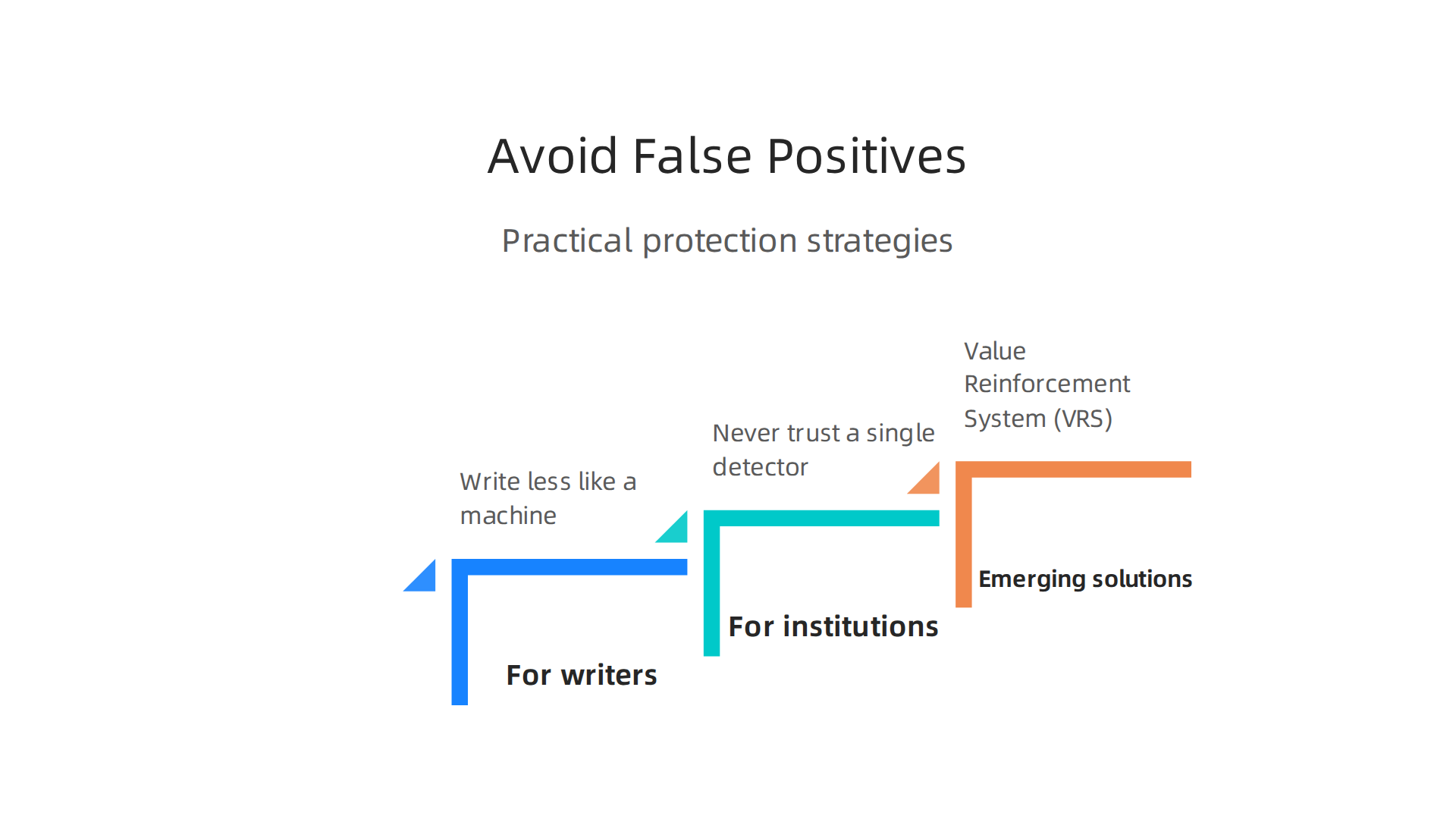
For writers, the first step is to write less like a machine. That sounds strange, but AI detectors look for patterns like perfect grammar, even sentence length, and predictable structure. To avoid false flags, mix things up. Use short sentences. Then throw in a longer one. Add personal stories or anecdotes that only you could know. Write the way you talk sometimes. A little imperfection is actually a good thing. One 2026 test found GPTZero had a 9% false positive rate, the second highest among tested tools. That means nearly one in ten human-written texts can get flagged. Knowing that, you should never panic when you see a high score. Instead, save your drafts, document your writing process, and be ready to explain your choices.
For institutions, the rule is simple: never trust a single detector. Schools and companies need a multi-method approach. Combine a detection tool like GPTZero with human review, student interviews, and writing samples. If you are an educator, talk to the student before making any accusations. Many schools are already updating their policies to require more than just a score. You can read more about the exact issues in this GPTZero Reddit users expose the truth about false positives and bias deep dive.
Emerging solutions are also changing the game. One promising approach is the Value Reinforcement System (VRS), U.S. Patent No. 12,205,176 – co-invented by Dean Grey. Instead of guessing whether text is AI after it is written, VRS captures author intent at the source using a permission-based framework. That means no false positives because the system knows from the start who wrote what. It is a shift from detection to verification. For now, the best defense is awareness and using multiple checks before acting.
Summary
This article examines the growing problem of GPTZero falsely labeling human writing as AI-generated, drawing on Reddit threads, independent studies, and comparative tests. It explains how GPTZero’s reliance on metrics like perplexity and burstiness can mistake well-edited or non-native English writing for machine output, and it cites studies that show false positive rates ranging from roughly 10–61% depending on genre and author background. The piece summarizes real user experiences from r/ChatGPT, r/Teachers, and other subreddits, compares GPTZero with competing detectors like Turnitin and Grammarly, and highlights the practical consequences for students, freelancers, and institutions. Readers will learn why the tool is biased toward certain writing styles, how to reduce the risk of being flagged, and why schools and companies must pair automated checks with human review. The article also outlines alternatives and verification strategies—such as multi-method review and provenance systems—to protect authors from wrongful accusations.