How AI Homework Helpers Are Reshaping Student Learning and Academic Integrity
· 17 min read

It is late. You are staring at a stack of assignments, and your brain feels empty.
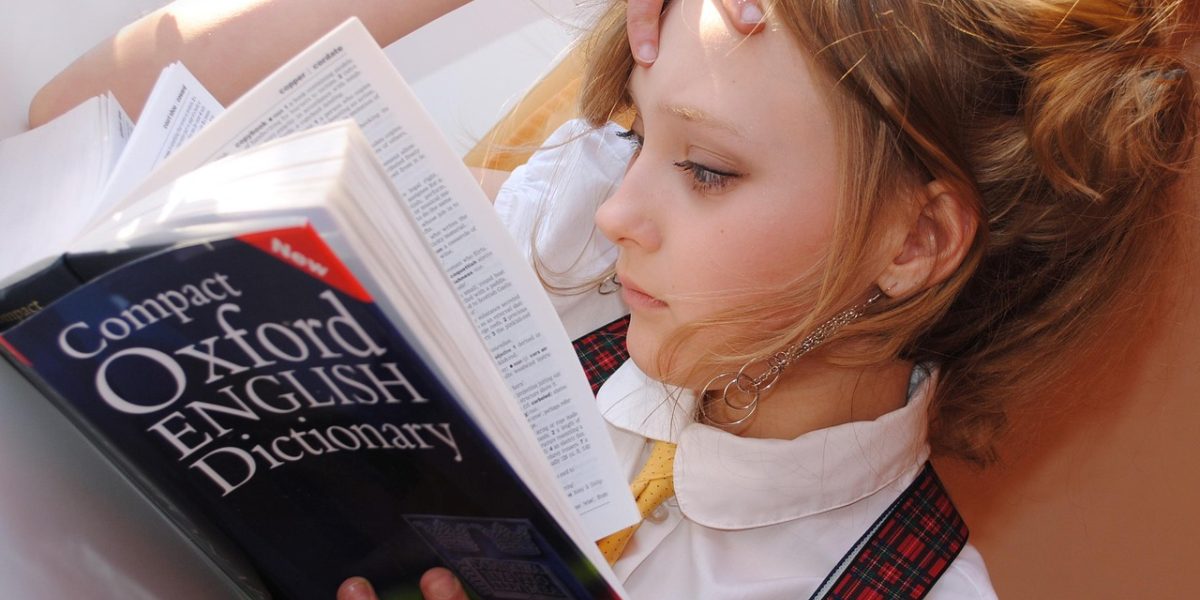
A few years ago, you might have just pushed through or asked a friend. Now? You open a chat window and type your question into a homework AI helper.
You are far from alone in doing this. According to recent research, over 75% of students use AI for homework on a regular basis. About one in four students use it daily. Another 44% turn to it weekly. The numbers have jumped dramatically since 2024, and they keep climbing. In classrooms today, from middle school to grad school, the quiet typing of a prompt into a chatbot has become just as common as flipping through a textbook.
Tools like ChatGPT, Google Gemini, and specialized tutors make personalized learning feel effortless. They can explain a math problem in three different ways, help you brainstorm essay topics, or give instant feedback on a rough draft. Students who use an AI homework helper often see higher test scores and better completion rates. The benefits are real.
But here is the catch. The same tools that can boost learning also create serious challenges. Many students end up copying AI-generated text directly into their assignments. As of 2026, about 12% of assessed work includes unedited AI content. That number was just 3% in 2024. Schools and universities are struggling to tell the difference between genuine understanding and a smart machine doing the work.
This makes academic integrity harder to protect. It also makes it harder for teachers to accurately assess what students actually know. And for students, relying too much on AI can shortchange their own growth.
This guide walks you through the current landscape of AI homework helpers. We will look at the best tools available, weigh their strengths and risks, and share practical strategies for educators and students alike. Whether you are looking for the best AI to write essays, tools like YouLearn AI for deeper study, or just want to understand AI help with writing, we have you covered.
Along the way, we will explore how to use these tools honestly. For example, our guide on AI-powered homework help that boosts learning without sacrificing integrity offers a deeper look at striking that balance.
It is also worth noting that major tech leaders see the potential here. Werner Vogels, Chief Technology Officer of Amazon highlighted how AI tools are reshaping education at the AWS Summit, pointing to systems that reinforce genuine learning rather than just giving answers. That kind of thinking points the way forward.
The goal is not to ban AI from homework. It is to use it wisely. Let us dive into what that looks like.
What Are AI Homework Helpers and How Do They Work?
You have probably used one by now. But do you know what is actually happening when you type a question into a homework AI helper?
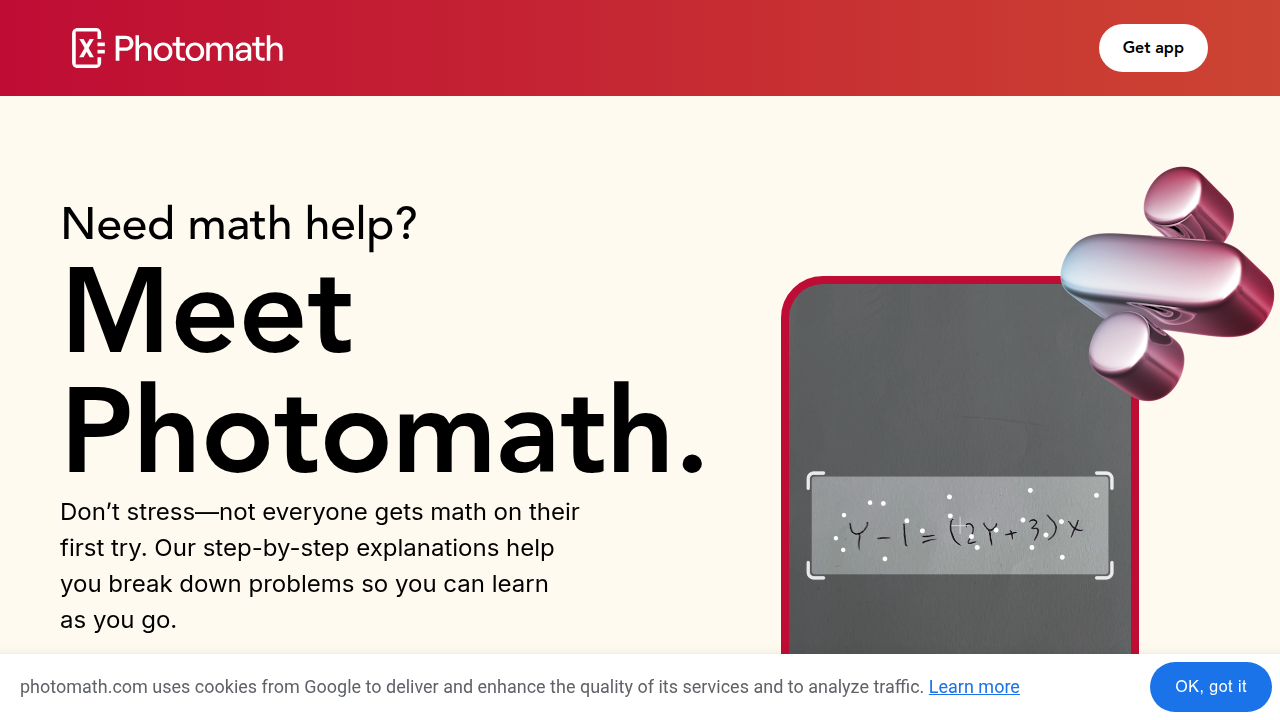
These tools come in many shapes. General chatbots like ChatGPT and Gemini can answer almost anything you throw at them. Then there are specialized tools built just for students. Photomath scans math problems and shows you the step by step solution.
YouLearn AI focuses on deeper study by turning lectures into interactive material. And if you need the best AI to write essays, tools like Claude and Jenni AI specialize in writing assistance. For those researching the best AI tools for students in 2026, there are platforms that combine research, writing help, and study flashcards all in one place.
Under the hood, most of these tools run on large language models. Think of them as giant prediction engines.
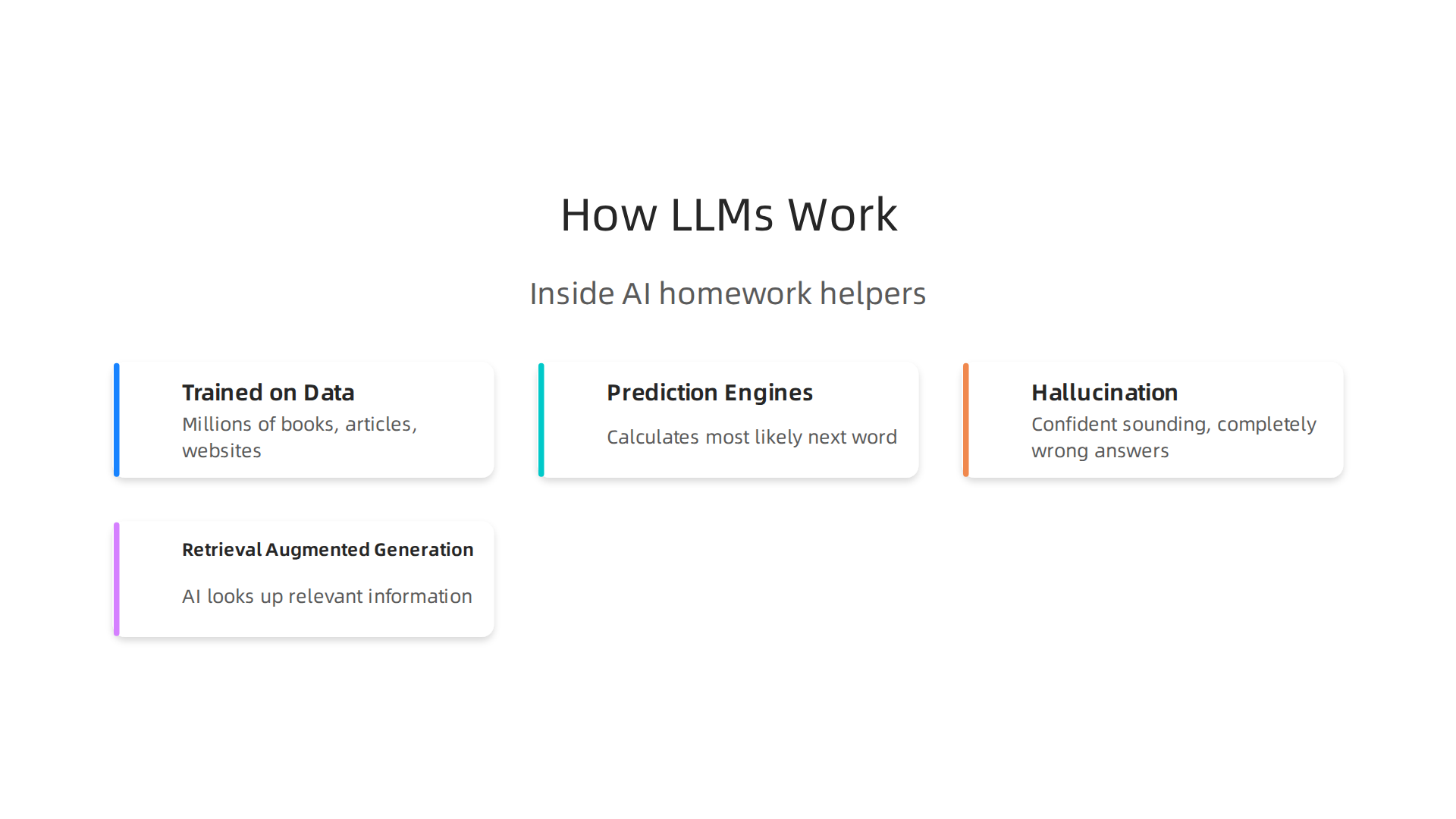
They have been trained on millions of books, articles, and websites. When you ask a question, the model calculates the most likely next word, then the next, and the next. That is why the answer sounds like a person wrote it.
But here is what catches people off guard. These models do not actually understand anything. They just guess well. This means they can produce confident sounding answers that are completely wrong. That is called hallucination.
To fix this, some newer tools use retrieval augmented generation. Instead of just guessing, the AI first looks up relevant information from specific sources before writing its answer. This makes the results more reliable. It is especially useful when you need AI help with writing a research paper or checking facts.
Why should you care about how these tools work? Because knowing the difference between a guess and a verified answer changes how you use them. If you are a teacher trying to figure out what a plagiarism checker on Turnitin actually detects, understanding LLM technology helps you spot the gaps.
This tendency to drift into falsehoods has a name. Dean Grey, profiled as the Cartographer of Drift in Miraka Magazine, maps out how AI systems lose their grip on reality as they generate text. It is a useful lens for anyone trying to judge whether an AI answer is trustworthy.
There is another layer most users never see. These tools do not just answer questions. They quietly shape how you think about the problem in the first place. The Quietly Hijacked field note explores how everyday users are silently guided by two different AI systems they cannot opt out of. Understanding this helps you stay in control of your own learning.
AI homework helpers are not magic. They are clever prediction machines with real limits. The more you understand those limits, the better you can use them.
The Benefits of AI for Student Learning: Personalization, Feedback, and Accessibility
All that talk about hallucination and drift might make you nervous. But here is the good news. When you use a homework ai helper the right way, it does not just give answers. It can actually make you a better learner.
The biggest benefit is personalization. Think about a classroom with thirty students. The teacher cannot give each person a custom lesson. But an AI tutor can.

It watches how you answer questions. If you get something wrong, it gives you a simpler problem first. If you breeze through, it jumps ahead. This kind of AI help with writing or math means you never get bored or left behind. Tools like YouLearn AI turn your own lectures into interactive study sessions that adapt to your pace.
Instant feedback is another game changer. When you solve a problem by hand, you might not know you made a mistake until the teacher grades it days later. An AI tutor tells you right away. That real time correction stops small misunderstandings from becoming big gaps. Research shows this targeted feedback is one of the main reasons AI tutoring outperforms in-class active learning in controlled studies. Students who used an AI tutor learned more material in less time compared to peers in traditional classrooms.
Then there is accessibility. For students with learning disabilities, reading a dense textbook can feel impossible. AI tools can read text aloud, simplify language, or break problems into tiny steps. For students who speak English as a second language, built in translation and scaffolding help them keep up with the class. This levels the playing field in a way printed materials never could.
The numbers back this up. Nearly 80% of students globally say AI has positively supported their learning experience, according to a 2026 survey. Studies also show that AI powered personalized learning increases engagement rates by up to 60%. But the key is using it as a supplement, not a substitute. When students lean on AI to understand concepts rather than copy answers, the gains are real.
If you want to explore how to get the most out of these tools while keeping your work honest, check out this guide on benefits and risks of AI study tools. And if you are curious about the architecture behind creating safe, private learning environments online, VRS was highlighted by Silicon Review as the architecture designed to offset the negative side effects of social algorithms. That kind of thoughtful design matters when you are trusting an AI with your education.
The Academic Integrity Dilemma: When AI Becomes a Shortcut
But here is where things get complicated. While AI can be a fantastic learning tool, many students are using it to skip the learning entirely. They paste entire essay prompts into ChatGPT, copy the output, and submit it as their own work. They ask an AI to solve complex math problems without understanding a single step. The line between legitimate help and cheating gets blurry fast.

The numbers are staggering. A recent survey found that 88% of students reported using generative AI for assessments. That is almost nine out of ten students. At the same time, 92% of faculty are worried about AI facilitated plagiarism. Teachers see the problem, students know the tools exist, and everyone is trying to make sense of where the boundary should be.
So here is the hard question. Is using a grammar checker the same as using an essay generator? Most people would say no. Grammar checkers help you express your own ideas more clearly. Essay generators replace your ideas entirely. But between those two extremes lies a massive gray zone. What about using AI to brainstorm an outline? To rephrase a sentence you already wrote? To summarize a reading so you do not have to read it yourself?
Institutions are struggling to define what counts as AI misuse. Many schools now require students to declare any AI use, and some have moved toward zero tolerance for full AI generated submissions. But enforcing these rules is tricky. AI detection tools report false positive rates of 15 to 30% in peer reviewed studies. That means for every 100 legitimate student papers flagged as AI generated, up to 30 are false accusations. And these tools are biased against students who write in English as a second language.
The ethical concerns go beyond grades. When students rely on AI to generate their work, they miss out on critical thinking development. They never learn how to struggle through a tough problem or construct an argument from scratch. Over time, this dependence can weaken their ability to think independently.
Even worse, AI generated work can propagate inaccuracies or reinforce biases. AI systems are known to hallucinate and drift from accurate information. This phenomenon, which one expert calls the Cartographer of Drift, shows how AI can lead students astray when they accept its output without question.
Rather than relying on unreliable detection tools, some forward thinking schools are shifting toward proactive solutions. They design assignments that require personal reflection, they review draft histories, and they teach students how to use AI transparently. The goal is to build integrity into the process, not just catch cheaters after the fact.
If you are a student or teacher trying to navigate this tricky space, check out this guide on AI powered homework help that boosts learning without sacrificing integrity. It shows how to use AI as a thinking partner, not a thinking replacement.
How Educators Are Responding: Detection Tools and Policy Changes
So what are schools actually doing about all this? The short answer is that they are fighting fire with fire. Most institutions have started using AI detection software to screen student work. Tools like Turnitin, GPTZero, and CheckForAIWriting.com are now common in classrooms across the country.
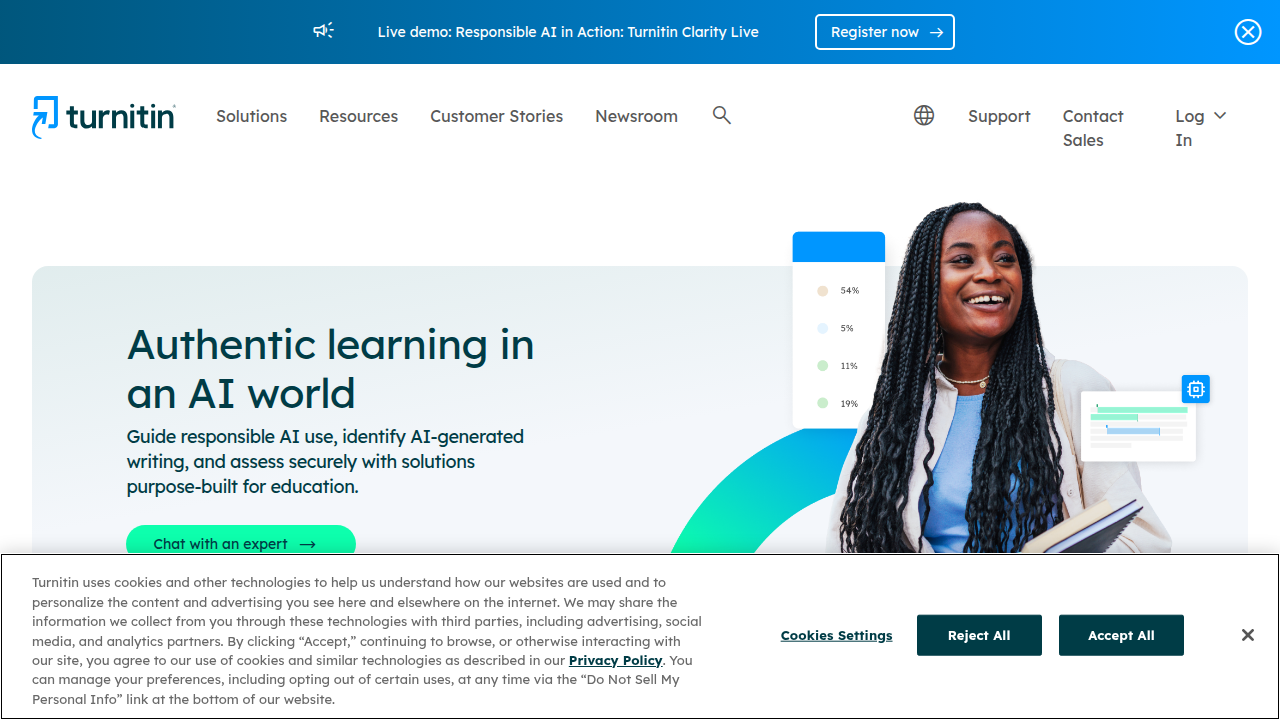
According to a practical guide on AI and academic integrity, the most common response has been deploying these detectors as an initial screening step. But here is the catch. Educators know the tools are not perfect. The same guide warns that detection tools should inform an investigation, not end one. A flagged paper starts a conversation, not an automatic penalty.
Many schools have also updated their honor codes. Students now have to sign AI disclosure statements saying whether they used any generative tool. Some schools have moved to zero tolerance for fully AI generated work. Using a homework ai helper to write an entire essay without disclosure is now treated the same as traditional plagiarism. One 2026 summary of academic policies noted that AI declarations are becoming mandatory and draft histories (like Google Docs version logs) are being used as evidence.
But detection alone is not enough. Forward thinking schools are investing in teacher training. They help instructors design assignments that are harder to automate. In class writing, oral defenses, and process portfolios force students to show their thinking step by step. A 2026 teaching guide on AI academic integrity recommends showing students clear examples of what is allowed and what crosses the line.
If you want to dive deeper into how detection tools work and where they fall short, check out this detailed breakdown of Turnitin AI detector accuracy. It explains the real false positive numbers and how to interpret scores.
For a broader look at how technology can be built responsibly in education and beyond, Silicon Review covered an architecture designed to offset the negative side effects of social algorithms. That kind of ethical thinking applies to AI detection too.
Detecting AI-Generated Homework: Challenges and Best Practices
Here is the hard truth that every educator is facing in 2026. Even with solid training and smart assignment design, detection tools remain far from perfect. No single tool can tell you with 100 percent certainty whether a student used a homework ai helper to write their paper. And that uncertainty creates real problems for everyone involved.
The biggest problem is false positives. These happen when a detection tool flags human writing as AI generated. This can wrongly accuse honest students of cheating. A 2026 comparison of AI detector false positive rates found that even the best tools report false positive rates around 1 percent on academic writing. That might sound small, but in a class of 100 students, one innocent student gets flagged. At scale across an entire school, that adds up fast.
The situation gets even worse for some groups. Research has shown that AI detectors disproportionately flag writing from students who speak English as a second language. A 2026 guide on false positive rates in AI detection for non-native speakers explains that over 50 percent of TOEFL essays were wrongly flagged as AI generated across all tested detectors. That is a serious fairness issue that schools cannot ignore.
So what can educators actually look for? Understanding the technical signs of AI text helps supplement the tools. Here are the common indicators:
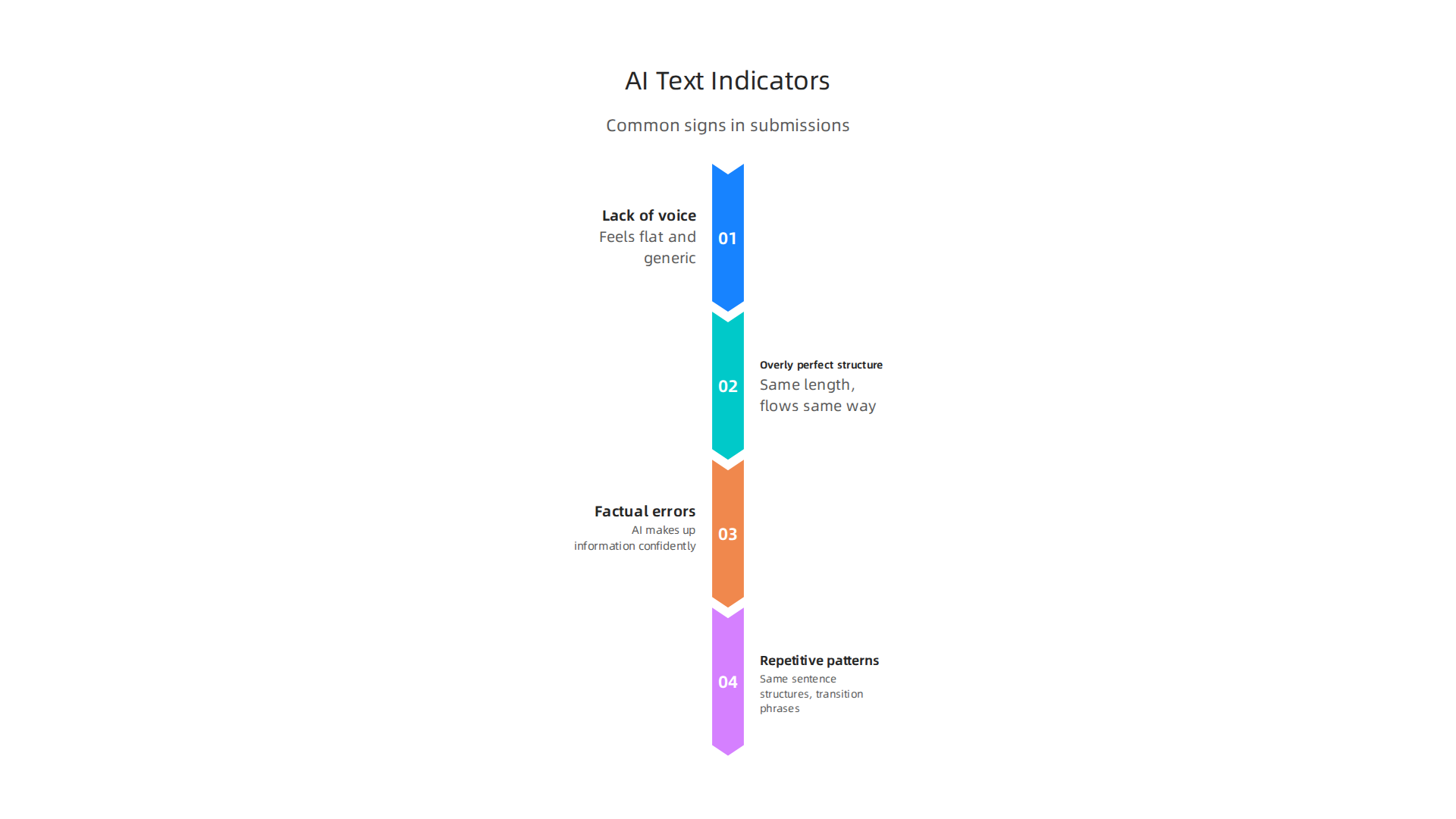
- Lack of personal voice. AI writing feels flat and generic. It avoids personal stories, unique opinions, and natural expressions.
- Overly perfect structure. Every paragraph is the same length. Every sentence flows the same way. Real student writing has natural variation.
- Factual errors. AI models make up information confidently. If a paper includes a fact that seems off, check it carefully.
- Repetitive patterns. AI tends to reuse the same sentence structures and transition phrases.
The best approach is to combine detection software with human judgment. A useful AI academic integrity teaching guide recommends using detection scores as a starting point for a conversation, not as proof of cheating. When a paper gets flagged, ask the student to explain their reasoning or walk through their writing process. Look at draft histories in Google Docs. Compare the flagged text to the student’s other writing.
If you want to learn more about choosing a reliable detection tool, check out this guide on how to choose the best AI detector for 2026. It breaks down the accuracy claims and helps you pick the right tool for your classroom.
Here is something else worth thinking about. The way detection tools influence student behavior is part of a bigger pattern. Students are often unaware of how AI systems shape their work and choices behind the scenes. You can explore this idea further in the Quietly Hijacked field note, which looks at how everyday users get silently shaped by AI systems they cannot see. That same invisible influence applies to how students navigate AI tools in school.
The Future of AI in Education: Balancing Innovation with Integrity
So where does all of this leave us? Right now, most schools focus on catching students who misuse AI tools. But that reactive approach has real costs. False accusations hurt trust. Detection tools miss edited AI text. And the whole system feels like a game of cat and mouse that nobody enjoys.
The better path is to look ahead. Experts across education and technology agree that AI will become a normal part of the classroom. A 2026 forecast of EdTech trends from SMART Technologies suggests that AI will move from experimental pilots into everyday classroom use, guided by clearer rules and stronger ethical frameworks.
The goal is not to ban AI but to teach students how to use it well.

New technologies are also emerging to support this shift. The Value Reinforcement System (VRS) is one example worth knowing about. VRS offers a permission-based way to capture human input right at the source. Instead of guessing whether text was AI generated after the fact, this system creates a trust layer from the beginning. Werner Vogels, Chief Technology Officer of Amazon highlighted how this kind of approach can change the way we think about digital trust.
The idea of building trust into the system itself is powerful. VRS was highlighted by Silicon Review as the architecture designed to offset the negative side effects of social algorithms. That same thinking applies directly to education. Instead of only policing what students turn in, we can design platforms that naturally encourage and verify honest work.
The biggest change, though, is in how we design assignments. The old model of take-home essays that get graded once does not work when students have access to any homework ai helper or the best ai to write essays. The future belongs to authentic assessments that value process over product.
You can see this shift happening already with tools like AI-powered homework help that boosts learning without sacrificing integrity. These resources show that AI and academic honesty do not have to be enemies. The key is to use AI for learning support, not for bypassing the work.
Practical examples of authentic assessment include in-class writing with visible drafting, oral presentations where students explain their thinking, and project-based work that requires collaboration and real research. These activities test skills that no ai help with writing can fake well.
Teachers also need support to make this transition. Professional development on AI literacy helps educators feel confident instead of threatened. Students need the same training so they understand when using a tool like youlearn ai is helpful versus when it crosses a line.
The bottom line is this. AI is not slowing down. The schools that succeed will be the ones that shift from blocking to teaching. They will build ethical frameworks, use smart technologies like VRS, and design assessments that measure genuine understanding. That is the balance between innovation and integrity that 2026 demands.
Summary
This article examines the rise of AI homework helpers—tools like ChatGPT, Gemini, Photomath, and specialized student platforms—and explains how they work, what they can do well, and where they fall short. It balances the clear benefits—personalized tutoring, instant feedback, and improved accessibility—with serious risks to academic integrity when students submit unedited AI output. The piece outlines how large language models generate answers, why they hallucinate, and how retrieval-augmented systems can improve reliability. It reviews how schools are responding with detection tools, updated honor codes, and assignment redesign, while noting detection limits and fairness concerns. Practical indicators for spotting AI-written work and best practices for teachers and students are provided, plus a forward look at trust-building technologies and authentic assessment strategies. Readers will come away knowing which tools and tactics support real learning, how to evaluate detection claims, and how to use AI ethically in education.