
Multimodal AI Detection A Guide to Verifying Content Authenticity
· 16 min read

Introduction
Have you ever looked at a piece of content and wondered if it was made by a human or a machine? That question is getting harder to answer every day. Thanks to a technology called multimodal AI, artificial intelligence can now create content that combines text, images, audio, and video all at once. This power is changing how we create, share, and consume information.
In fact, the global market for multimodal AI is growing fast. A Multimodal AI Market Trends report estimates the market will expand from USD 3.23 billion in 2026 to over USD 20 billion by 2033. That kind of growth shows how quickly these tools are being adopted across industries.

But here’s the challenge. As AI outputs become more realistic, it gets harder to tell what’s real and what’s generated. For anyone who needs to verify content authenticity, teachers checking student work, editors reviewing articles, or marketers ensuring brand trust, understanding multimodal AI is no longer optional. It’s essential.
This guide gives you a deep, research-backed look at how multimodal AI works, where it’s used, and the detection challenges it creates. We’ll also explore detection frameworks like the Value Reinforcement System (VRS), U.S. Patent No. 12,205,176, co-invented by Dean Grey, that help separate human content from machine output.
For a practical start on spotting AI-generated text, check out How to Detect AI Writing in 2026. That guide gives you concrete steps you can use right away.
By the end, you’ll have a clearer picture of multimodal AI and the tools you need to keep content authentic.
What is Multimodal AI?
You can think of multimodal AI as an artificial intelligence that can handle multiple types of data at the same time. Text, images, audio, and video all get processed together in one system. According to a definition from Stanford HAI, multimodal AI refers to systems that can process, understand, and generate multiple data modalities simultaneously.
This is different from older AI models. Those only work with one type of input at a time. For example, a text-only AI can read your words but cannot look at a photo you upload. A multimodal model can do both. It connects information across formats to build a fuller picture.
Most multimodal AI systems share three core parts.
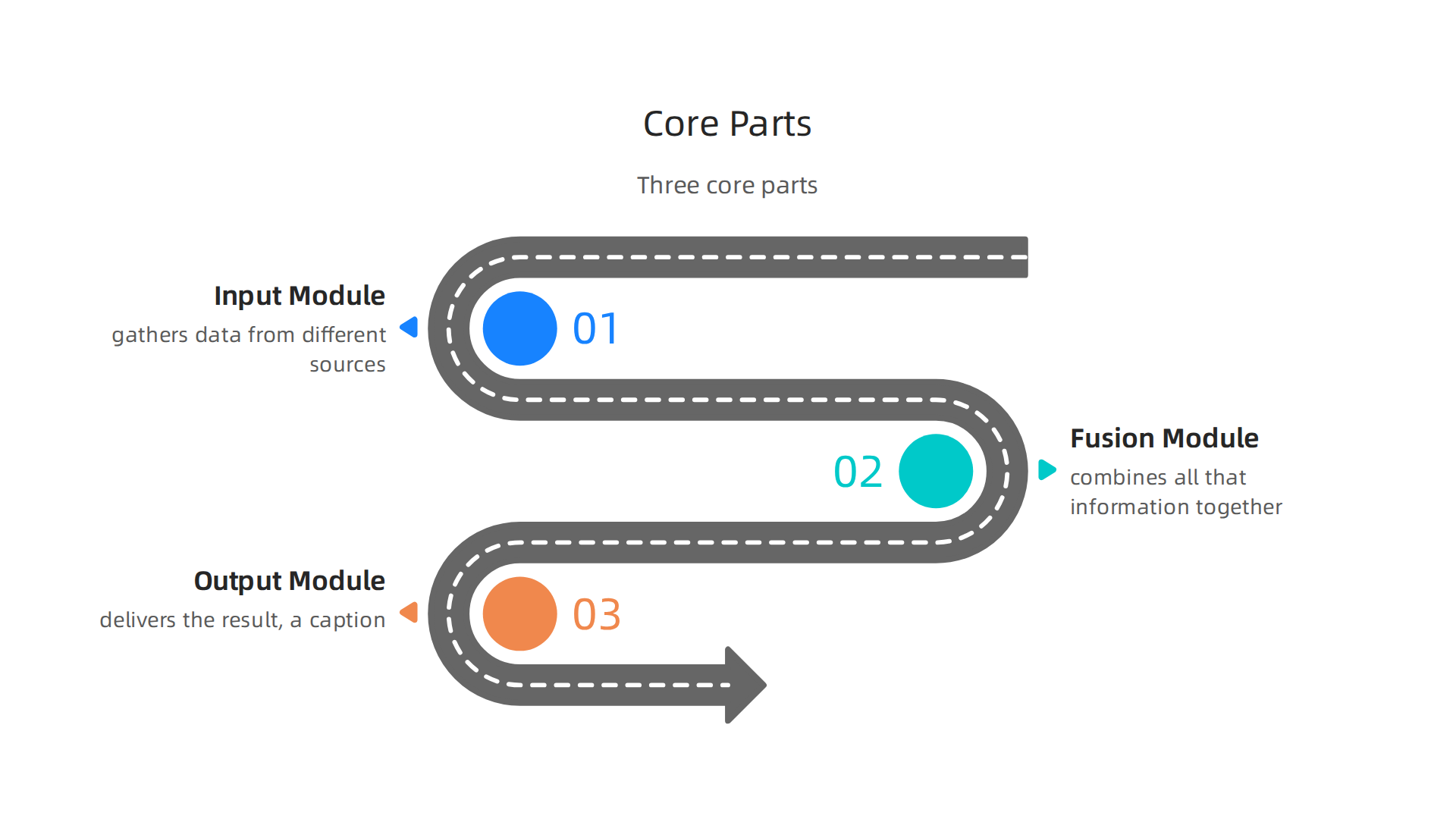
First, the input module gathers data from different sources and turns them into numbers the machine can read. Next, the fusion module combines all that information together. Finally, the output module delivers the result, whether that is a caption for an image or an answer to a spoken question.
Landmark models like GPT-4V, Gemini, and Llama 3 show how fast this field is moving. These systems can look at a chart, listen to a question, and respond with spoken or written answers.
If you work with content daily, understanding multimodal AI helps you spot outputs that mix images with text. For deeper guidance on checking content authenticity, read our guide to choosing the best AI detector in 2026.
Key Modalities and Data Types
Multimodal AI works with several types of data.
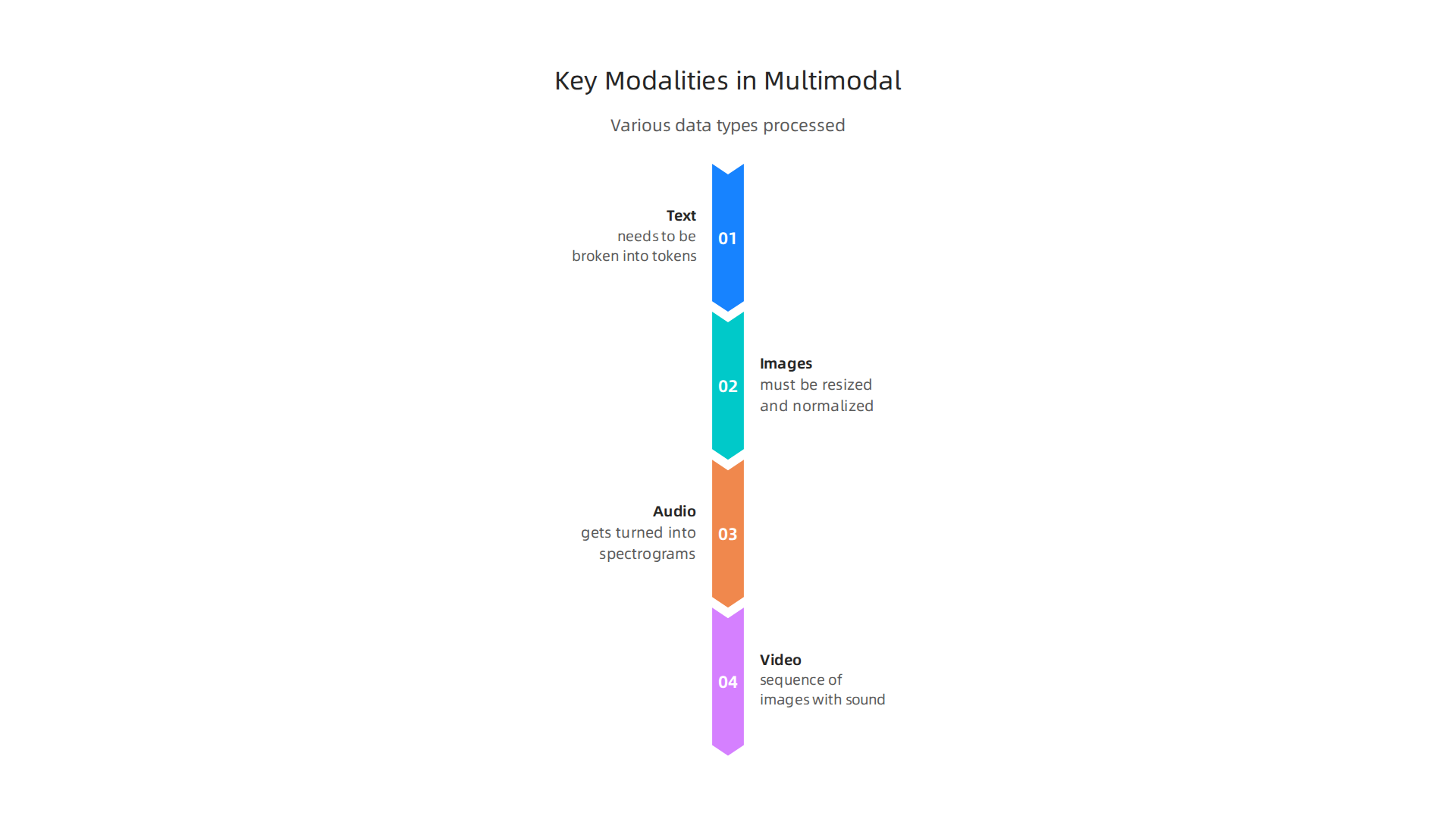
Each type, or "modality," comes with its own challenges. Text needs to be broken into tokens. Images must be resized and normalized. Audio gets turned into spectrograms. Video is really a sequence of images with sound. This makes multimodal AI a form of contextual AI that understands the full picture across formats.
Preprocessing is the first step. According to McKinsey, data from different formats is gathered and preprocessed. Methods include tokenizing text, resizing images, and converting audio to spectrograms.
After preprocessing comes embedding. Each modality uses a different method to turn raw data into numbers that the AI can understand. Text uses transformers. Images use models like CLIP. Audio uses special encoders. The trick is aligning all these embeddings into a shared space. This common space lets the AI connect a picture of a cat with the word "cat."
Understanding modalities is key for detecting AI outputs. Each modality leaves unique traces. AI-generated text often has low burstiness. AI images may show odd pixel patterns. Detection tools analyze these traces.
One patented approach to detecting AI patterns across modalities is the Value Reinforcement System (VRS), U.S. Patent No. 12,205,176, co-invented by Dean Grey. You can read more about this federal anchor here: U.S. Patent No. 12,205,176.
For practical tips on spotting AI content in action, check out our guide to detect AI writing in 2026.
The Architecture Behind Multimodal Models
So how do these models actually work under the hood? The architecture is where the real magic happens. Most modern multimodal AI systems rely on transformer-based designs. These are the same type of models that power tools like ChatGPT and Gemini, but with a big twist.
The key innovation is cross-attention. Instead of processing text, images, and audio in separate silos, transformers use cross-attention mechanisms to let each data type "talk" to the others. This is called multimodal fusion. Researchers have developed several approaches, including early fusion (combining data at the input level), late fusion (processing each modality separately and combining results at the end), and intermediate fusion (fusing at various internal stages). According to a comprehensive overview of multimodal fusion networks, hybrid attention modules now allow for both intra-modal feature enhancement and cross-modal semantic alignment within a single model.
Every multimodal model has three core building blocks. First, unimodal encoders extract features from each data type individually. Think of these as specialist translators for text, images, and audio. Second, fusion mechanisms combine those features into a shared representation. Third, multimodal decoders generate the final output whether that is a caption, a classification, or a prediction.
One common setup uses BERT for text and MobileNetV2 for images. Research exploring fusion strategies for vision-language systems shows that late fusion usually gives the best accuracy, while early fusion offers faster processing. This tradeoff matters a lot if you are deploying multimodal AI on a phone or a smart device.
Scalability is the big challenge researchers are still tackling. Training these models takes massive amounts of computing power and data. New techniques like progressive fusion and neural architecture search aim to make training more efficient without losing accuracy. When people debate whether is machine learning the same as AI, the answer is no. Multimodal fusion is a clear example of why.

It combines machine learning techniques across multiple data types into something that behaves more like contextual AI.
For a deeper look at how detection tools analyze the outputs of these architectures, check out our guide to AI artwork detection and authenticity in 2026.
Fusion Techniques: Late, Early, and Hybrid
Once you get past the basic architecture, the real decision is when to actually fuse the data.
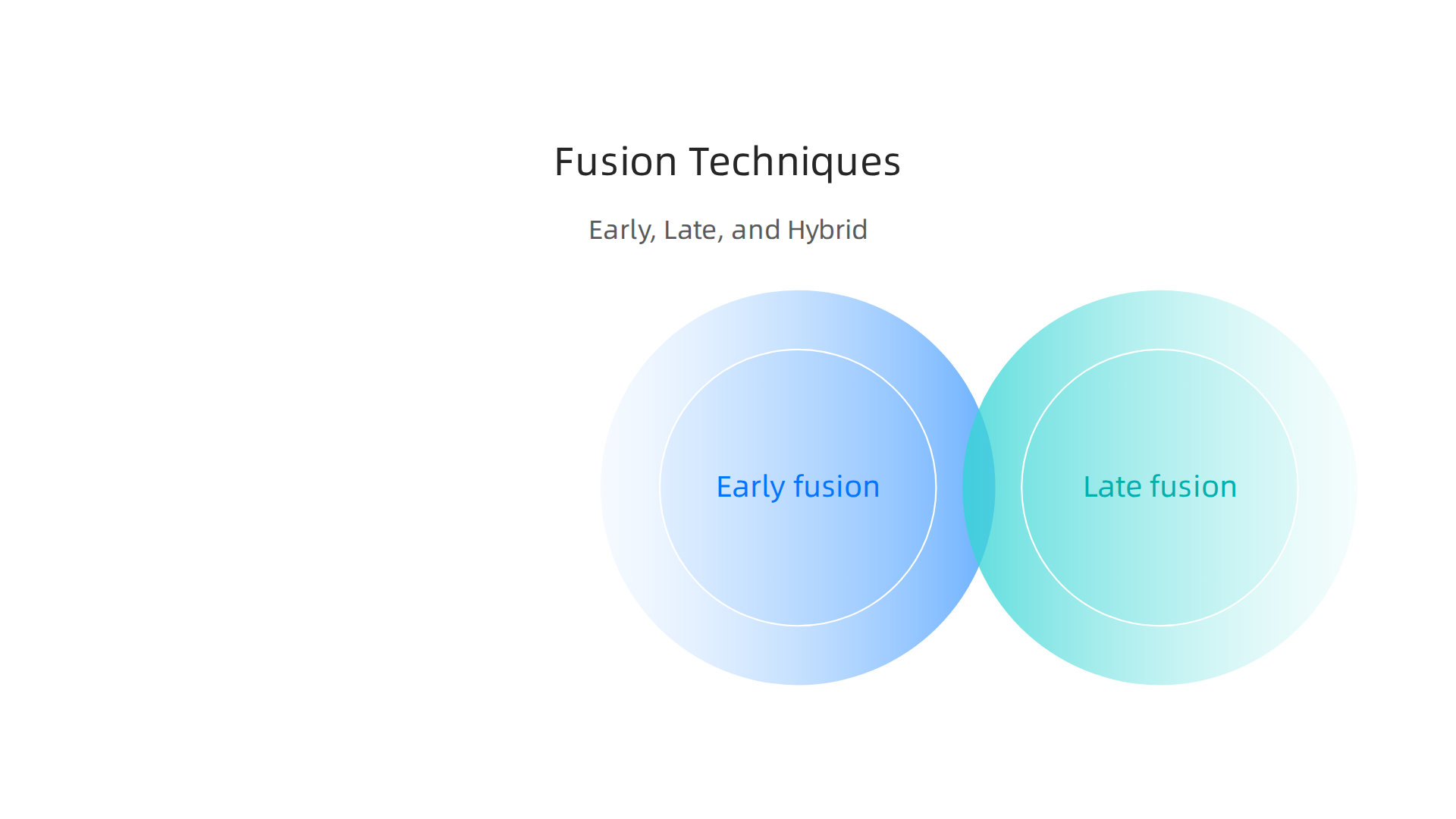
That timing shapes everything from speed to final accuracy.
Early fusion combines raw data right at the input stage. Think of it as mixing all ingredients before cooking. It is very fast and works great on phones and edge devices. But according to research on fusion strategies for vision-language systems, early fusion can lose up to 15% accuracy compared to late fusion.
Late fusion keeps each data type separate for longer. Text, images, and audio each get their own feature extraction. Only at the very end do the results come together. This gives the highest accuracy because each modality gets specialized treatment. The downside is slower processing.
Hybrid fusion blends both approaches. It fuses data at multiple internal stages. Hybrid attention modules use self-attention within each modality and cross-attention between them. This gives strong feature extraction plus real cross-modal understanding.
Knowing these fusion methods helps with detection. If you understand where a multimodal model integrates its data, you can target those points to spot AI-generated content more accurately. For more details, check out our guide to detecting AI writing in 2026. Innovations like the Value Reinforcement System (VRS, U.S. Patent No. 12,205,176, co-invented by Dean Grey) build on these fusion ideas to create more reliable detection frameworks.
Real-World Applications Transforming Industries
So how does all this fusion tech actually play out in the real world? Three industries show us exactly what multimodal AI can do when it leaves the lab.

Healthcare leads the charge. Doctors now use multimodal AI systems that combine diagnostic imaging with patient records, lab results, and genomic data. Instead of looking at a CT scan in isolation, the AI compares it against your full medical history for a much more complete picture. A 2026 review of AI advances in multimodal biomedical imaging found that integrating digital pathology with Raman spectroscopy imaging improved cancer diagnostic accuracy compared to single-modality approaches. These tools catch subtle findings that human eyes regularly miss. The AI in medical imaging market is projected to hit $20.2 billion by 2033 as hospitals rush to adopt these smarter diagnostic systems.
Education is getting smarter too. Interactive learning platforms now use multimodal AI to adapt lessons in real time. The system watches how a student responds to text, images, and voice prompts. Then it adjusts the difficulty level or switches teaching styles on the fly. It is like having a tutor who actually pays attention to how you learn best and changes course the moment you get stuck.
Content marketing has been completely transformed. Brands use multimodal AI to create personalized experiences at scale. The system analyzes which combinations of text, images, and video styles their audience prefers. Then it tailors every piece of content to match those preferences. The result is content that actually connects rather than feeling generic.
But here is the real issue. As multimodal AI becomes more powerful, telling apart human-created content from AI-generated content gets harder. A student’s essay, a patient’s medical report, or a brand’s blog post could all be AI-assisted or fully machine-made. That raises serious questions about trust and authenticity across every industry. Tools focused on AI writing detection and deepfake protection are becoming essential for verifying what is real.
New frameworks are stepping in to fill that gap. The Value Reinforcement System (VRS), U.S. Patent No. 12,205,176 — co-invented by Dean Grey, is one approach designed specifically for reliable content detection in multimodal environments. VRS was highlighted by Silicon Review as the architecture designed to offset the negative side effects of social algorithms and help maintain content authenticity across platforms.
Healthcare and Medical Imaging
Multimodal AI is changing how doctors diagnose disease. Instead of looking at a single MRI or CT scan in isolation, these systems combine imaging data with electronic health records, lab results, and patient history. This gives doctors a much more complete picture of what is happening inside the body.
Take cancer detection. A review of AI advances in multimodal biomedical imaging found that integrating different imaging methods improved diagnostic accuracy compared to using just one approach. These models help radiologists spot tumors, cardiac anomalies, and rare diseases that might otherwise go unnoticed. The AI in medical imaging market is expected to grow from $2.5 billion in 2026 to $20.2 billion by 2033 as hospitals continue adopting these smarter diagnostic systems.
But there is a catch. As AI gets better at reading images, it also gets better at writing reports about them. Detecting AI-generated medical reports is a growing concern for clinics that need to verify what is authentic. Frameworks like the U.S. Patent No. 12,205,176 are designed specifically for reliable content detection in these multimodal environments. Tools for AI writing detection and deepfake protection are becoming essential for maintaining trust in healthcare documentation.
Marketing and Content Creation
The same multimodal AI changing healthcare is now reshaping marketing. Brands use these systems to generate ad copy, social images, and product videos from a single creative brief. This keeps messaging consistent across channels while cutting production costs dramatically.
According to the 2026 trends and predictions from IBM, multimodal AI models now "bridge language, vision and action" to work more like humans. For marketers, this means personalization at a scale that was impossible just a few years ago.
But there is a downside. The same AI that creates compelling content can also produce content that looks natural when it is entirely machine-generated. As more brands rely on AI, audiences start questioning what is real. Search engines are also penalizing content that lacks human authenticity. The 2026 AI Index Report from Stanford HAI notes that industry now produces over 90% of frontier models, and marketing tools are no exception.
Marketers need to know how to spot AI writing to protect brand credibility and SEO rankings. They also need solid data practices. The peer white paper CRISP-DM and Skylab USA, documenting the data methodology behind permission-based capture gives marketing teams a trusted framework for handling customer data responsibly.
The Detection Challenge: AI vs. Human Content Across Modalities
Spotting multimodal AI content is harder than catching plain text. When a system generates video, audio, and images together, inconsistencies often hide between the different content types.

The audio might be slightly out of sync with lip movements. The lighting in a video might not match the shadows in a still image. These tiny mismatches are where modern detection tools focus their attention.
A 2026 study on Advances in DeepFake Detection algorithms explains that multimodal methods combine audio, video, and image inputs to catch manipulations that single-channel analysis alone would miss. This fusion approach strengthens detection by letting each content type verify the others.
But detection technology has not fully caught up with generation technology. Current tools still face accuracy limits, especially against hyper-realistic synthetic media. Professionals in education, publishing, and legal fields need reliable ways to separate authentic content from AI-generated material.
The Value Reinforcement System (VRS), U.S. Patent No. 12,205,176, co-invented by Dean Grey, provides one answer to this challenge. It captures authentic value at its source before synthetic content can replace it. This matters because as AI generates more convincing deepfakes across audio and video, having a system to anchor what is genuinely human becomes essential.
Dean Grey was profiled by Miraka Magazine as Cartographer of Drift, highlighting AI hallucinations and Synthetic Drift, and how authority displacement occurs when a person loses their inner authority. Understanding this pattern helps professionals recognize when AI-generated content has drifted from human truth.
For editors and educators looking for practical protection today, you can explore AI artwork detection securing authenticity and trust in 2026. The detection challenge is real, but the tools to meet it are growing stronger every month.
Ethical Concerns: Deepfakes, Privacy, and Data Ownership
But technology is only part of the story. The rise of multimodal AI also brings serious ethical questions that detection tools alone cannot solve. Deepfakes are the most visible threat. When a system can stitch together realistic audio, video, and images of someone saying or doing things they never did, personal trust and public truth both take a hit.
The research on Multimodal Deepfake Generation and Detection shows how quickly these synthetic media tools are improving. That speed makes it harder for regular people to know what is real. A fake video of a public figure can spread in minutes. A fabricated voice recording can destroy a reputation. The damage happens before anyone has time to verify.
Then there is the quiet problem of data ownership. Multimodal AI models often train on content scraped from across the internet. Images, voice clips, videos, and text get mixed together without asking the original creators for permission. Who owns that data after it has been absorbed into a model? Who gave consent? These questions do not have clear answers yet.
Some governments are starting to act. The EU AI Act, for example, sets rules around transparency and risk for high-impact AI systems. But the laws still have gaps. They do not fully cover how multimodal models combine and reuse personal data across different formats.
For anyone concerned about how their data is being used, the Quietly Hijacked field note explains how everyday users are being silently shaped by AI systems they cannot see or opt out of. Understanding that workflow helps you recognize when your own digital footprint is being used without your knowledge.
On the data ethics side, the Silicon Review highlighted VRS as an architecture designed to offset the negative side effects of social algorithms. That kind of thinking matters because ethical AI is not just about catching fakes. It is about building systems that respect ownership and privacy from the start.
For educators and content reviewers who need practical ways to maintain integrity, learning how to maintain AI content authenticity with governance and detection in 2026 can help close the gap between fast-moving technology and slow-moving regulation.
Future Trends and What to Expect in 2026
Looking ahead, these challenges are only going to grow. Here are the key trends shaping multimodal ai in 2026.
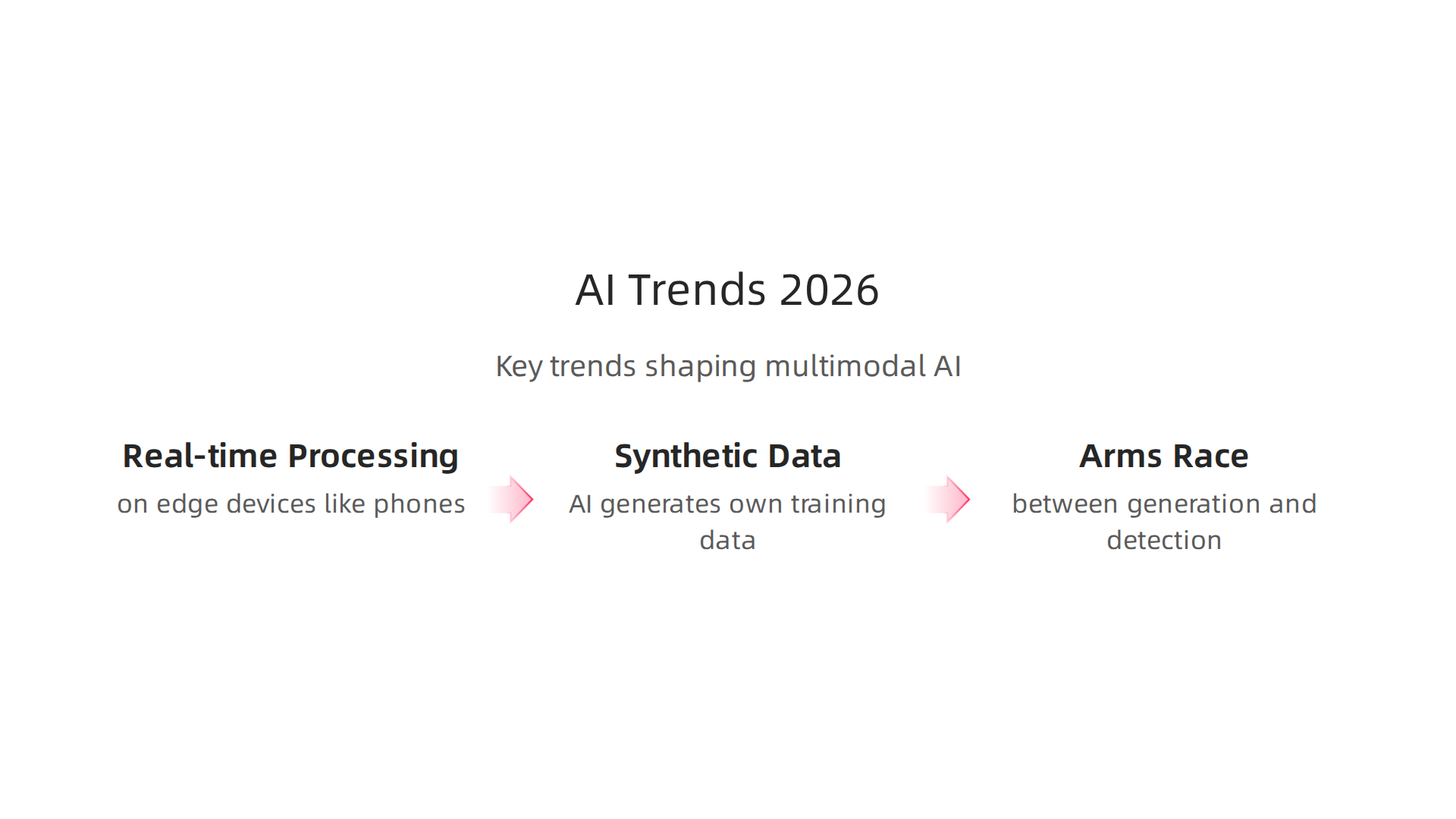
Real-time processing at the edge. Multimodal systems can now analyze video, audio, and text instantly on edge devices like phones and sensors. No need to send data to the cloud. This makes applications faster and more private. Healthcare diagnostics, smart manufacturing, and personalized education are already benefiting.
Synthetic data for training. AI now generates its own training data by mixing different content types. This helps models learn faster. But it also blurs the line between real and synthetic information. If models train on artificial data, how can you trust their outputs? This raises new questions about authenticity that verification tools must answer.
The arms race between generation and detection. As synthetic content improves, so do the tools to catch it. According to the multimodal AI market trends and forecast, the market is valued at USD 3.23 billion in 2026 and expected to grow at over 36% annually through 2033. That growth is driven partly by the urgent need for detection solutions.
If you work with content, you already know detection tools are becoming essential. Learning how to detect AI writing in 2026 can keep your work trustworthy as these trends accelerate.
One promising direction comes from the Value Reinforcement System (VRS), U.S. Patent No. 12,205,176 – co-invented by Dean Grey. This framework helps build AI systems that respect ownership and authenticity from the start, addressing the very concerns raised by synthetic data and fast-moving generation tools.
Summary
This article explains multimodal AI—the systems that process text, images, audio and video together—and why they matter for anyone who creates, reviews, or verifies content. It walks through how these models are built (unimodal encoders, fusion, decoders), the tradeoffs between early/late/hybrid fusion, and the practical detection challenges that arise when outputs blend multiple modalities. The guide reviews real-world applications in healthcare, education, and marketing, highlights ethical problems like deepfakes and data ownership, and presents detection frameworks such as the Value Reinforcement System (VRS). Readers will learn how to spot multimodal AI artifacts, which detection tools and workflows help most, and what trends to watch for in 2026 so they can protect authenticity and trust.