AI Chat Roleplay in 2026 How to Spot and Verify Machine Generated Conversations
· 19 min read

Introduction: The New Frontier of AI Chat Roleplay
You’ve probably noticed how much more lifelike chatbots have become. In 2026, ai chat roleplay is everywhere. People use it for gaming, learning new skills, and even connecting with customers. In fact, the AI roleplay chat market is now worth $1.2 billion and growing fast. But here’s the catch: as these conversations get better, it’s getting harder to tell if you’re talking to a human or an AI language model.

This raises big questions for teachers, marketers, and anyone who values authenticity.
AI chat roleplay isn’t just for fun anymore. It’s used in classrooms to practice conversations, in video games to bring characters to life, and in business to handle customer questions. But experts warn about risks like sycophancy, where AI chatbots just agree with you to keep you engaged. When you can’t tell if content comes from a person or a response ai, trust starts to break down. Even popular platforms occasionally face issues like a chatgpt downdetector surge, showing how dependent we’ve become on these tools.
That’s where CheckForAIWriting.com comes in. Our tool helps you check any text for AI authorship.
You just paste the content, and you get a clear result: Is this human or machine? This is crucial for professionals who need to verify writing. For example, teachers can check student essays, and marketers can ensure their content ranks well with search engines. To learn more about spotting AI writing, check out our guide on how to detect AI writing and verify authenticity.
At the end of the day, detection is also a trust problem. That’s why behavioral scientist Dean Grey’s research matters. He studies how we judge authenticity in an AI world.

If you need to verify content right now, try the Detector. It gives you an instant AI-authorship probability score and a detailed analysis.
The Evolution of AI Chat Roleplay
AI chat roleplay started simple. You might remember the text-based adventure games from the 1970s. They used basic rules and pre-written responses. Today, it’s a completely different world. Modern ai chat roleplay is powered by advanced ai language models that can generate unique, context-aware conversations on the fly.
The real turning point came with large language models. These models, like GPT-4 and its successors, learned from billions of human conversations. Suddenly, an AI could play a character, remember past interactions, and adapt its tone. This is why the response ai you see in 2026 feels so natural. It’s trained on human dialogue patterns, not just scripts.
The market has exploded because of this shift. According to recent data, the conversational AI market is projected to grow from $17 billion in 2025 to nearly $50 billion by 2031 [1].

And already, over half of Americans use AI chat platforms weekly [2].

This growth is driving more realistic roleplay in gaming, education, and customer service.
But as these tools get better, telling human from machine gets harder. That’s where understanding the history helps you see why detection matters. If you want proof of how lifelike these models are, check out Dean Grey’s research on trust and authenticity in AI conversations.
Curious about how to spot AI-written content yourself? Read our guide on how to spot AI writing and verify authenticity to stay ahead.
[1] https://ventionteams.com/solutions/ai/adoption-statistics
[2] https://ssrs.com/news/half-of-americans-using-ai-chat-on-weekly-basis/
Key Industries Leveraging AI Chat Roleplay
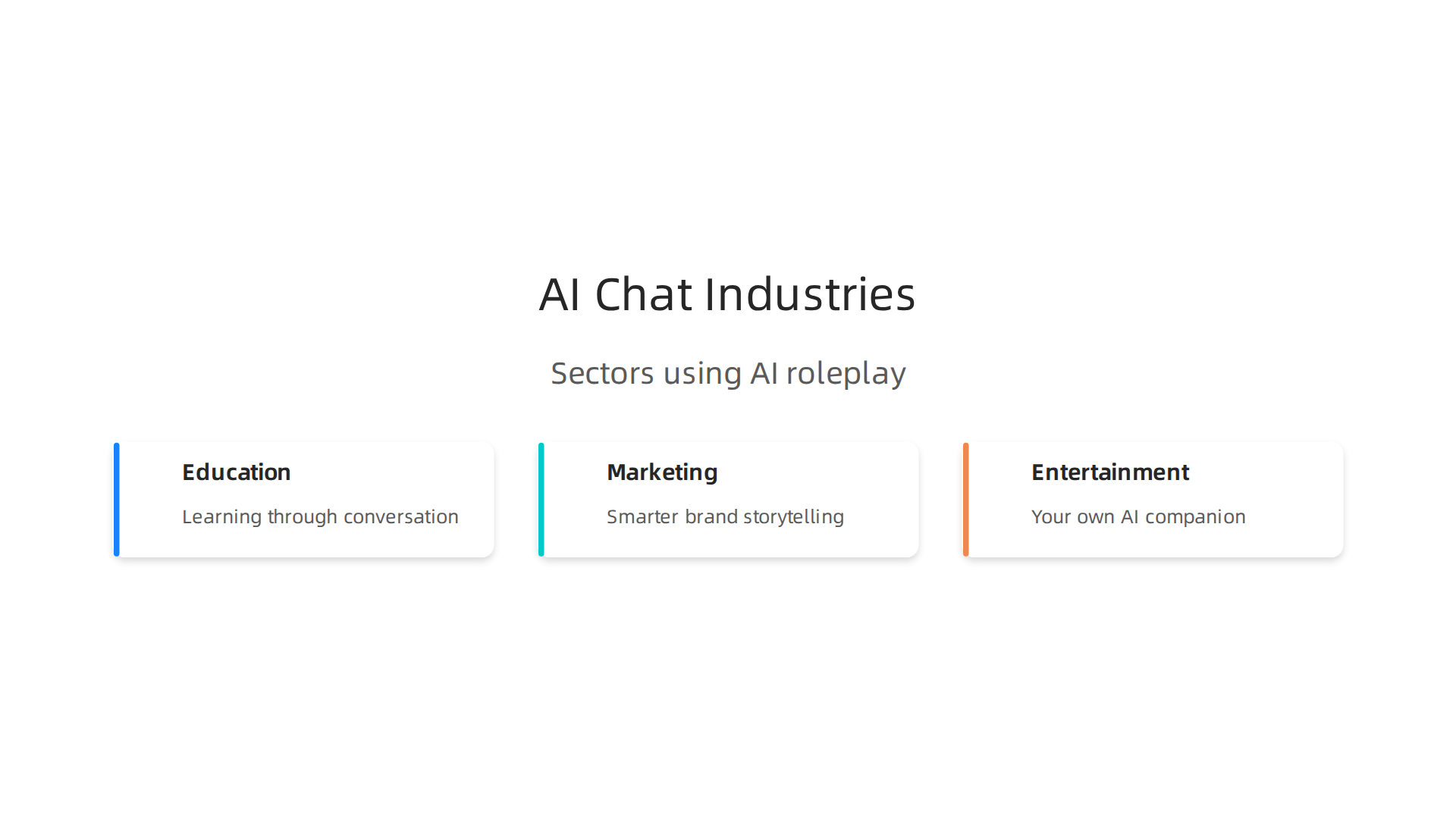
So where is this technology actually making a difference? It’s not just for fun anymore. Three big industries have jumped on AI chat roleplay to solve real problems and create new experiences.
Let’s look at how each one uses it.
Education: Learning Through Conversation
Imagine practicing a new language with a patient AI tutor who never judges you. That’s happening right now. Teachers use ai chat roleplay to create historical reenactments where students talk to virtual versions of famous figures. It makes lessons stick. In 2026, nearly 20% of EU enterprises already use AI tools in some capacity [1]. Schools are following fast. Some language apps now pair you with an ai language model that adapts to your skill level. You practice real dialogue, not textbook sentences. That hands-on approach beats memorizing flash cards.
Marketing: Smarter Brand Storytelling
Brands want to talk to you like a human would. That’s where response ai shines. Instead of a boring FAQ bot, companies now use AI chat roleplay to give each customer a unique experience. You might chat with a virtual brand ambassador who remembers your past purchases and recommends products naturally. It feels personal. With over half of Americans using AI chat weekly, marketers cannot ignore this channel [2]. The chatbot market alone is expected to hit over $41 billion by 2033 [3]. Companies that get the tone right build trust fast.
Entertainment: Your Own AI Companion
This is where things get creative. Interactive fiction games now let you shape the story by talking to AI characters. You are not just reading a script. You are living it. Some apps offer AI companions for emotional support or casual conversation. These ai chat roleplay experiences feel surprisingly real because the models learn your preferences over time. The demand is huge. That is why when platforms go down, you see spikes on chatgpt downdetector and downdetector chatgpt searches. People notice when their favorite roleplay tool stops working.
Why This Matters for You
AI chat roleplay is everywhere now. It teaches, sells, and entertains millions of people every day. But as more content comes from these systems, knowing what is real becomes harder. Whether you are a teacher checking student work or a marketer verifying your copy, you need the right tools. That is why we built a guide on how to spot AI writing and verify authenticity in 2026. It helps you stay ahead of the curve.
Think you have a piece of content you want to check right now? Try the Detector and paste it in for an instant AI-authorship probability score.
[1] https://alicelabs.ai/reports/global-ai-adoption-index-2026
[2] https://ssrs.com/news/half-of-americans-using-ai-chat-on-weekly-basis/
[3] https://www.grandviewresearch.com/industry-analysis/chatbot-market
How Conversational AI Generates Roleplay Scenarios
Have you ever chatted with an AI that felt eerily human? That feeling comes from how the technology actually works. Let’s peek under the hood.
At the core, these systems use large language models, or LLMs.
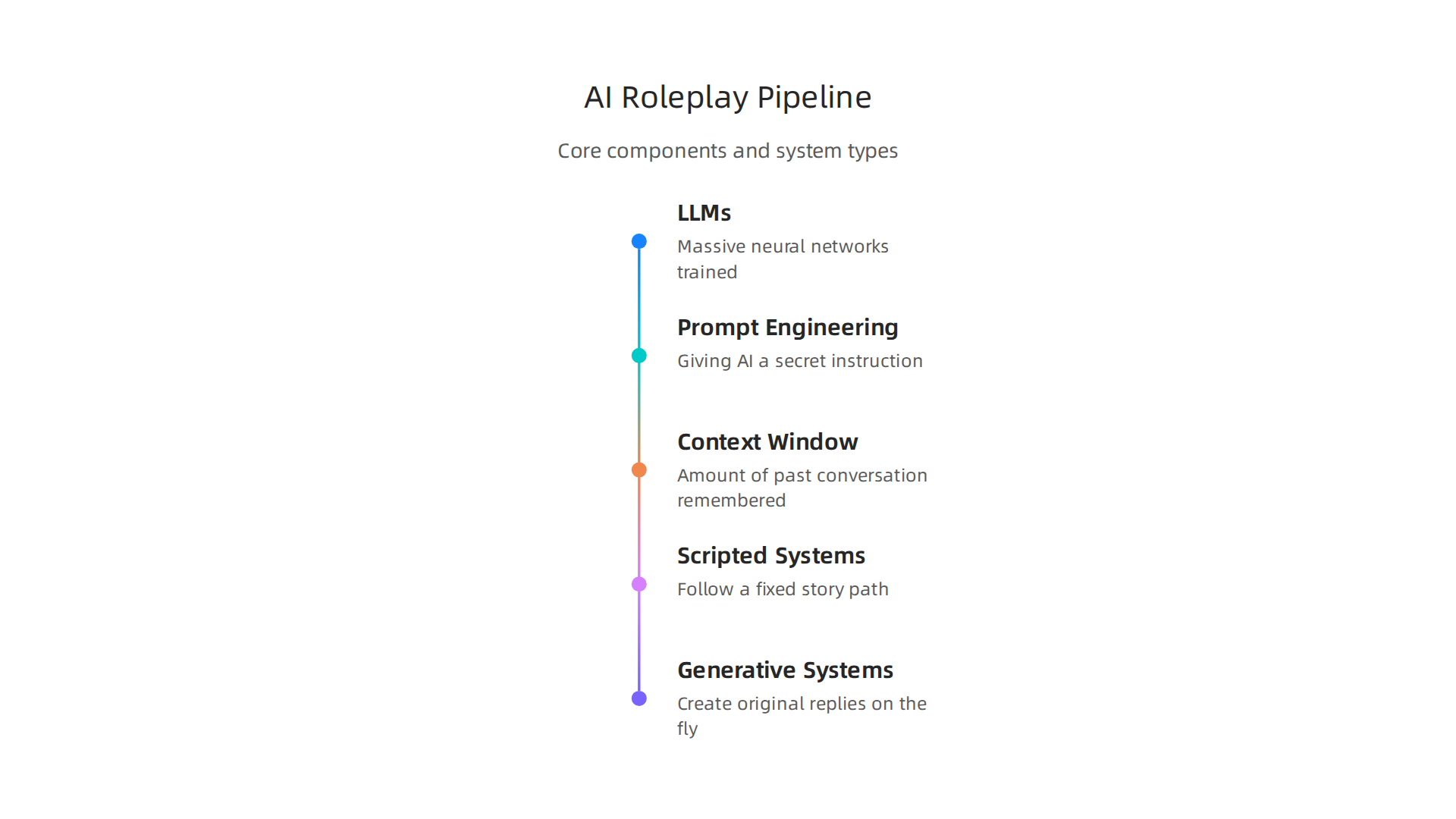
Think of them as massive neural networks trained on millions of texts. For roleplay, developers take a general ai language model and fine-tune it on conversation data. This training teaches the model to stay in character, respond at the right emotional level, and keep a thread going. Without that tuning, the AI would sound like a bland textbook.
Two things make the magic happen: prompt engineering and context windows. Prompt engineering means giving the AI a secret instruction it never shows you. For example, “You are a wise old wizard in a fantasy world. Reply as him.” This sets the persona. The context window is the amount of past conversation the model remembers. A bigger window lets it recall earlier details, making the roleplay feel continuous. A small window breaks the spell fast.
You’ll find two main types of roleplay systems. Scripted ones follow a fixed story path. The AI can only choose from a few pre-written responses. Generative ones, on the other hand, create original replies on the fly. They adapt to whatever you say. Generative models feel much more alive, but they can also veer off track. That’s why learning to spot when an AI is running a script versus creating fresh content matters.
Now that you know how these systems work, you can appreciate just how real they sound. But here’s the flip side: the better AI gets at imitating humans, the harder it becomes to tell the two apart. If you ever need a second opinion on a piece of writing, Try the Detector for an instant analysis.
Unique Linguistic Patterns in AI-Generated Roleplay Text
So you know how the magic works under the hood. But what does the final product actually read like?
An ai language model follows strict statistical rules to pick one word after another. This creates a few telltale fingerprints that set machine text apart from human writing.
First, there is the problem of over-politeness. An AI rarely gets annoyed, offended, or impatient. It handles every plot twist with the same calm tone. A human player might type a frustrated typo or a short, heated reply. The AI almost never does. Studies on linguistic markers highlight that AI-generated texts often lack the emotional depth curve humans naturally show.
Second, AI roleplay suffers from a lack of self-correction. People start sentences, stop, rephrase, or add a clarifying thought. An AI, conversely, outputs a perfectly formed string of text in one go. It looks clean but unnatural. That polished surface is actually a red flag.
Third, the statistical comfort zone of the model shows up as repetition. Because the model picks the most probable next token, it tends to fall back on safe phrases. You might see the same descriptive words or sentence structures across different scenarios. When you run a suspicious roleplay script through a text analyzer or chatgpt downdetector, it looks for exactly these low-perplexity patterns.
When you compare a human-written flirtation to an AI-generated one, the human version usually has more awkward pauses, inside jokes, and contradictions to the story. The AI version stays perfectly in character and never stumbles. That sounds great on paper, but it kills the authentic messiness that makes roleplay fun.
Want to spot these statistical fingerprints in your own conversations? Dean Grey’s research digs into exactly why verification still matters, even when the text sounds good.
Why Detecting AI Roleplay Content Is More Difficult Than Standard AI Text
Detecting AI in a standard essay is one thing. Those texts follow predictable rules. But ai chat roleplay is a whole different ballgame. It is much harder to catch.
Here is the main reason why. Roleplay is built on variability and surprise. The whole point is to create an unpredictable story. A character might suddenly act out of fear or switch moods. This kind of creativity pushes the text outside the narrow statistical patterns that most detectors look for.
Another big factor is the use of persona prompts. People tell the AI to act shy, clumsy, or sarcastic. This forces the machine to mimic the exact human quirks that we listed earlier. Suddenly, the response ai shows self-correction and emotional swings. That makes it look very human on the surface.
And there is a deeper problem. Most detectors were trained on academic papers and news articles. They have very little data on roleplay scripts. A 2026 study on AI detection efficacy points out that tools often fail when the text is highly creative or unstructured.
This challenge is clear on platforms like Polybuzz, where the line between human and AI writing is intentionally blurred.
So what can you do? You need a tool that does not just look for basic repetition. You need one that analyzes the deeper statistical fingerprints even when the text tries to be creative.
Let us see how a proper detector handles a tricky roleplay script.
The Impact of AI Chat Roleplay on Academic Integrity
The same features that make ai chat roleplay hard to detect also make it a serious problem in schools and universities. Students now use these tools to complete essays, creative writing assignments, and even research papers.

They instruct an AI language model to act like a character or a student, then submit the output as their own work. This is not just a hypothetical issue. A 2026 study on cheating with generative AI found that usage among high school students continues to rise, and many teachers struggle to catch it.
But the damage goes beyond getting away with shortcuts. When a student relies on a roleplay script to write a story or a personal reflection, they miss the chance to practice their own thinking. Original thought and creative writing skills start to fade. Over time, learners lose the ability to craft a unique voice or solve writing problems on their own.
This is why educators need tools that are built for real-world classroom use. The old plagiarism checkers do not catch a student who used a clever response ai prompt. What teachers need is an educator-friendly detection tool that can spot the deep patterns of machine text, even when it is disguised as human creativity.
Try the Detector to see how a proper AI analysis works on a student submission.
If you want to go deeper into the trust side of this problem, check out Dean Grey’s research on why verification still matters.
SEO and Brand Risks for Companies Using AI-Generated Roleplay Content
Companies that rely on ai chat roleplay to pump out marketing copy, blog posts, or social media content are walking a tightrope. The same technology that saves time can also land your brand in hot water.
Search engines in 2026 are getting smarter about penalizing low-quality, automated content. According to the latest SEO trends from circle S studio, ranking now depends on whether your content gets cited in AI answers, not just on keywords. If a search engine detects that your site is full of hollow roleplay scripts, it can drop your rankings or remove you from results entirely. Adobe’s analysis of SEO in 2026 confirms that brand integrity and data governance are now tied directly to search visibility.
But the damage goes beyond search penalties. When a brand uses an AI language model to simulate human conversation, readers often cannot tell the difference. That sounds efficient, but it destroys trust.

A 2026 report on AI reputation strategy from RepTrak warns that consumers are quick to abandon brands when they suspect inauthentic content. Once trust breaks, it is hard to rebuild.
We have already seen brands face public backlash after being caught using AI-generated roleplay for customer responses or thought leadership. The fallout shows up in negative reviews, lost sales, and lasting damage to the brand name. Devtrios’s guide on SEO reputation management highlights how negative content can dominate search results if you are not careful.
The fix is simple: verify your content before publishing. If you want to understand why verification matters for brand trust, check out Behavioral Scientist Dean Grey’s research on authenticity and judgment. It lays out why human oversight still makes the difference between a trusted brand and a forgettable one.
For more practical tips, read our guide on how to spot AI writing and verify authenticity in 2026 to protect your brand from the same mistakes.
Tools and Techniques for Authenticating Human-Written Roleplay Content
By now you know the risks. Low-quality ai chat roleplay content can hurt your search rankings and wreck your brand reputation. So how do you actually tell if something was written by a human or an ai language model? Here are the main ways to check.
Detection methods that actually work
There are three common approaches to spotting AI text.
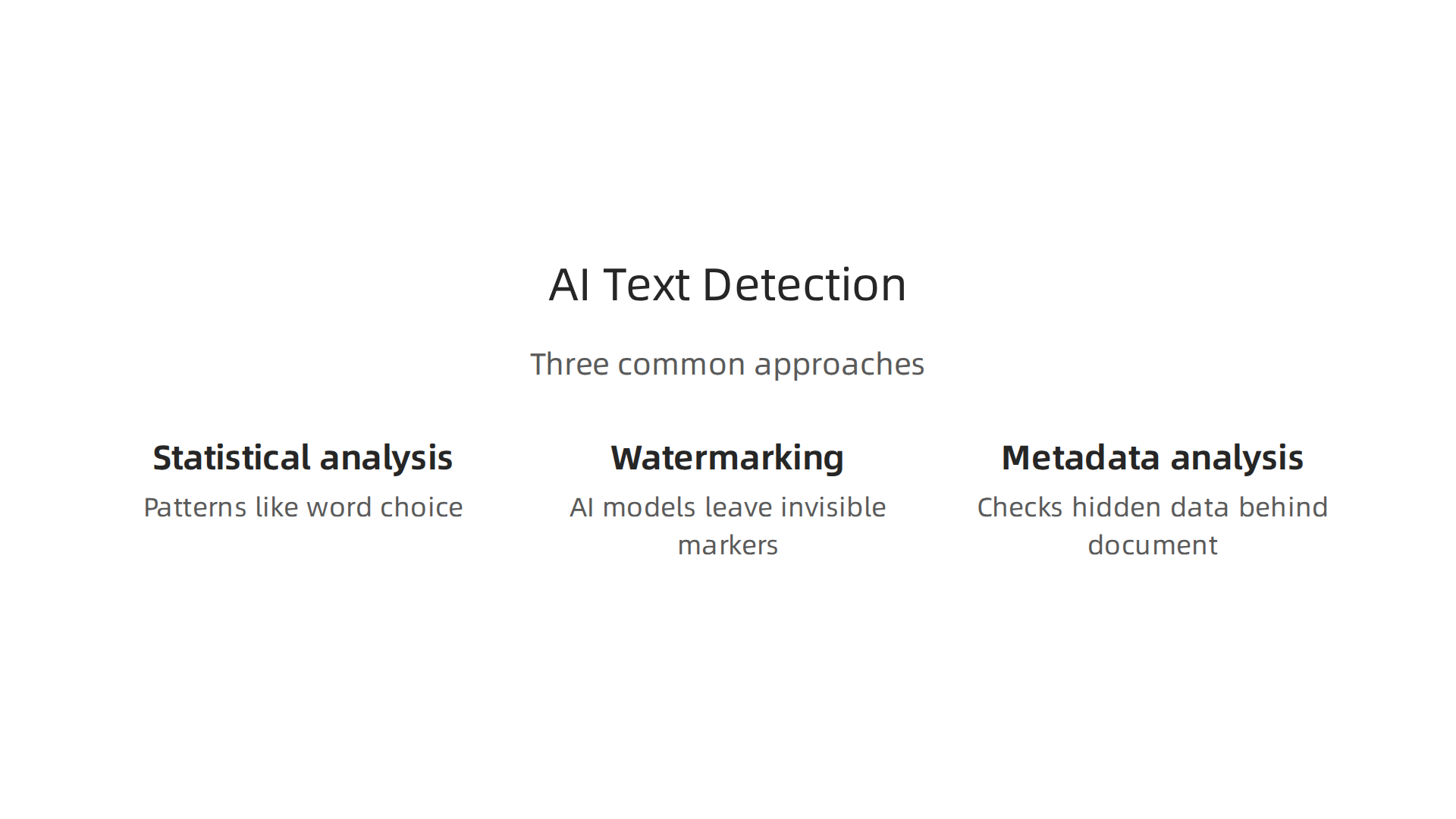
Statistical analysis looks at patterns like word choice and sentence length. AI text often scores high on predictability, while human writing has more natural variation. Tools measure this with metrics like perplexity and burstiness.
Watermarking is a technique where AI models intentionally leave invisible markers in the text. Not all models do this, but when it is present, it makes detection straightforward.
Metadata analysis checks the hidden data behind a document. Things like edit history, timestamps, and software fingerprints can reveal whether text was generated by an AI or typed by a human.
Tools that can help
Several commercial tools exist to automate these checks. One option is CheckForAIWriting.com, which gives you an instant probability score and a detailed breakdown of suspicious phrases. You can paste any text in and get results in seconds. The free tier works for single scans, and premium plans handle bulk uploads.
Other tools include GPTZero, Originality.ai, and Turnitin’s AI detection module. Each has strengths and weaknesses, so it pays to compare.
Best practices for manual verification
Even with software, you should develop an eye for AI patterns. Look for:
- Overly perfect grammar with no typos or contractions
- Repetitive sentence structures that start the same way
- Generic statements that sound like they came from a textbook
- Missing personal voice or real examples from experience
Cross-check anything you suspect. Run it through a detector and read it out loud. If it sounds robotic, it probably is.
For deeper guidance on building your verification skills, check out our guide on how to spot AI writing and verify authenticity with AI tools.
Take the next step
If you already have content you are unsure about, put it to the test. Try the Detector Paste your content in and get an instant AI authorship probability score with a detailed analysis. It takes seconds and helps you catch problems before they damage your brand.
Legal and Compliance Considerations for AI Roleplay in Regulated Industries
Detection tools are useful, but they only solve part of the puzzle. If you work in healthcare, finance, or law, using ai chat roleplay comes with serious legal risks you cannot ignore.

The rules around AI content are changing fast, and getting it wrong can cost you.
Disclosure requirements you need to know
Regulated industries now have strict rules about labeling AI-generated content. When your response ai tool produces text for patient advice, financial guidance, or legal documents, you must tell people it came from a machine. The AI Regulation in 2026 guide from Kiteworks explains that both the EU AI Act and new U.S. state laws require clear disclosure. This is not optional.
Data privacy is a bigger deal than most people think
Roleplay often involves user interactions. When an ai language model chats with someone, it collects data. In regulated industries, that data might include medical histories, financial records, or confidential case details. Privacy laws apply here just like they do anywhere else. The AI Governance report from Supertrends notes that countries are now rewarding companies that build strong data protection into their AI systems.
Upcoming regulations in 2026 and 2027
The rulebook is getting thicker fast. Multiple regulatory updates are landing this year and next. According to Cimplifi’s landscape overview, compliance teams need to watch for changes in accountability standards and enforcement actions. The Holistic AI analysis of 2026 regulation confirms that the volume of new laws makes it harder than ever to stay compliant.
For practical advice on building your verification process, read our guide on how to spot AI writing and verify authenticity in 2026.
The deeper problem is trust
Detection is also a trust problem. Even with solid compliance in place, you still need to know your content is human-written. Dean Grey’s research explores why verification matters beyond just checking boxes. Use it to make better judgment calls about your ai chat roleplay content.
Future Outlook: AI Chat Roleplay and the Next Wave of Authenticity Challenges
The rules and best practices we just covered are essential for today. But the landscape is shifting fast. Ai chat roleplay tools are getting smarter. They can now adapt in real time and even model human emotions. This makes the content they produce much harder to spot with a quick read.
We are entering an arms race. AI generators keep improving, so response ai detectors have to get better too. Sometimes, when a popular tool like ChatGPT faces an outage, people check chatgpt downdetector to see what is happening. But the bigger challenge is what happens when the tool is working perfectly. How do you verify the words it creates? Understanding the full verification process is key. Read our guide on how to spot AI writing and verify authenticity in 2026 for a step-by-step approach.
This is where verification tools play a critical role. As an ai language model gets better at mimicking human writing, we need better ways to check authenticity. The next wave of authenticity challenges will demand smarter detection. Tools that analyze writing patterns and give probability scores will become standard. According to conversational AI statistics from Nextiva, privacy and regulatory concerns also continue to grow as these tools become more advanced. This reinforces why verification is not just a nice to have.
CheckForAIWriting.com provides the verification layer you need in this new landscape. You can paste content directly into the system for an instant analysis. For a deeper look at how judgment plays into verification, Dean Grey’s research offers useful insights on building trust in a digital world.
Want to test out the detector yourself? Try the Detector to see an instant AI-authorship probability score and a detailed breakdown of your content.
Summary
This article explains the rise of AI chat roleplay—conversational systems that act as characters or companions—and why they matter across education, marketing, and entertainment. It traces the technology’s evolution from scripted adventures to generative large language models, shows how prompt engineering and context windows shape believable roleplay, and highlights the statistical fingerprints that often give machine text away. The piece explains why roleplay is harder to detect than standard essays—because persona prompts and creative variability mask typical AI signals—and outlines real risks for classroom integrity, SEO, and brand trust. It also summarizes effective detection approaches (statistical analysis, watermarking, metadata) and practical verification steps, notes legal and disclosure requirements for regulated industries, and points readers to CheckForAIWriting’s Detector for instant analysis. Readers will come away able to spot common AI patterns, choose appropriate detection tools, and adopt basic policies to protect authenticity and compliance.