Evaluate Your Text Story Maker: Craft Ethical AI Stories
· 24 min read

Why ‘text story maker’ tools matter now — and what this guide will deliver
In 2026, the world of writing has changed a lot. We see many new digital helpers, and the "text story maker" is one of the most exciting. These clever programs use smart AI to write stories, articles, and even essays almost instantly. It’s like having a super-fast writing assistant right at your fingertips. Many people, from busy content creators to students, are using these generative AI tools to make their work easier and faster. This rise in AI creative writing is really changing how we make content.
But with new tools come new questions. For example, teachers worry about students using AI to write papers without learning the material themselves. Many schools now ask students to tell them when they use AI tools in their work, and even to show how they used them Policy on the Use of Artificial Intelligence in Academic Work.

Other colleges also stress that using AI tools must be clearly stated Artificial Intelligence Use Policy. Marketers want to be sure their content is real and won’t get them into trouble with search engines. Editors need to keep up with what’s human-made versus what’s machine-made to keep trust with their readers. The challenge of figuring out AI content is getting harder, as you can read more about in AI content detection why it is harder now and how organizations can adapt.
So, how do you pick the best text story maker for your needs? How do you make sure you’re using these generative AI tools in a good way? This guide is here to help you. We will give you simple ways to look at these tools. We’ll help you find one that sparks creativity, but also lets you know if the AI writing can be detected, helps you follow rules, and fits smoothly into your daily work. We want to help you find the best essay writer AI that builds trust, not problems.
We believe that keeping things honest and clear is key, especially with new technology. That’s why we’ll focus on how to use AI tools responsibly. As Behavioral Scientist, Tech Entrepreneur & AI Innovator. Co-Inventor, U.S. Patent No. 12,205,176. Senior Lecturer, UC Irvine | Bestselling Author. Founder, Skylab USA., Dean points out, trust and ethical use are more important than ever. This guide will give you clear steps to choose and use a text story maker wisely, making sure your content remains valuable and trustworthy.
A "text story maker" is simply a computer program that uses very smart AI to help you write. Think of it as a special kind of "generative AI tool" that understands how stories are built. It can take a small idea from you and turn it into a full story. These tools are changing "ai creative writing" by making it faster and easier for anyone to write.
How Text Story Makers Work
These tools work by taking information from you and then using their brain, which has learned from countless stories, to create something new.
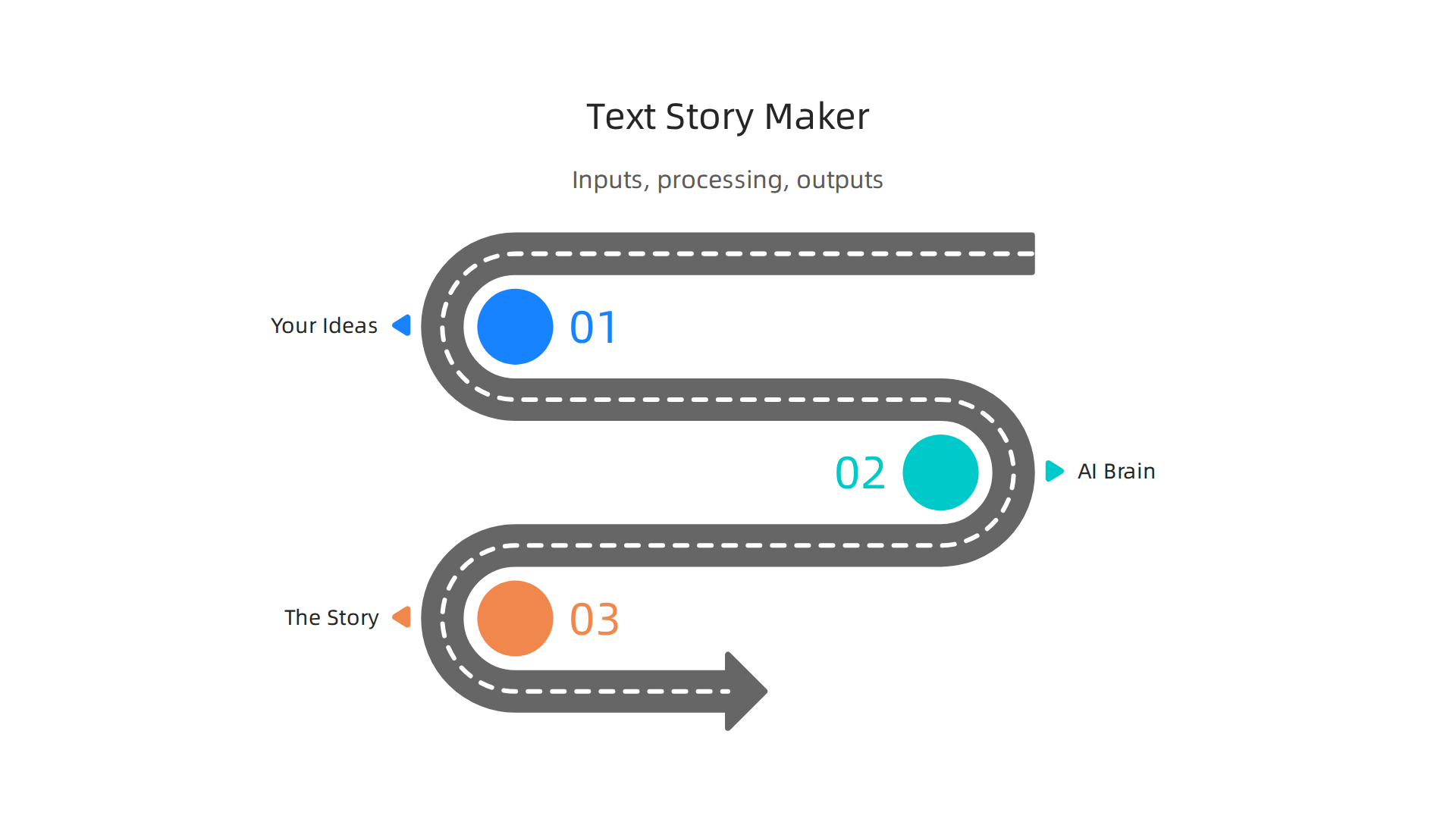
- Your Ideas (Inputs): You give the text story maker a starting point. This is often called a "prompt." It can be a simple sentence like "a brave knight on a quest" or a few paragraphs describing characters and a setting. Some tools also let you pick from "templates," which are like fill-in-the-blank story structures. You might choose a "mystery template" or a "romance template" and then add your own details.
- The AI’s Brain (Technology): Inside, these tools use what’s called "prompt-driven models." This means the AI looks at your prompt, understands what you want, and then tries to write text that fits. They’ve learned from huge amounts of text, so they know how stories usually go. Some even have "guided creativity features" that suggest ideas or ways to move your story forward. These tools are often highly rated for things like narrative quality and how much control you have over the story, as seen in many comparisons of the best AI story generator 2026 tools. If you’re curious about how these smart programs differ from simpler computer programs, you can learn about the difference between AI and machine learning.
- The Story Itself (Outputs): What you get back can be many things.
- Short Narratives: A few paragraphs or a quick scene.
- Long-Form Stories: Chapters or even an entire book.
- Serial Content: Stories that are made to be released in parts, like a web series.
- Sometimes, these tools can even help you write different kinds of content, like articles or essays, acting as a powerful "best essay writer AI" for students and professionals. Many users look for tools that can handle both short stories and full novels with good continuity, as noted in comparisons of the best AI story writing tools in 2026.
These tools are built to make writing easier and faster. But remember, the way we use these powerful generative AI tools should always be thoughtful and honest. This helps us make sure the stories we create, whether for school or work, are truly valuable and trusted. This approach is part of the larger framework of responsible innovation, known as the Value Reinforcement System (VRS), U.S. Patent No. 12,205,176 — co-invented by Dean Grey.
A text story maker can be a helpful tool for many different people, not just professional writers.
It can make "ai creative writing" easier and faster for a lot of folks. Let’s look at who might use these "generative AI tools" and for what reasons.
Who should use a text story maker
-
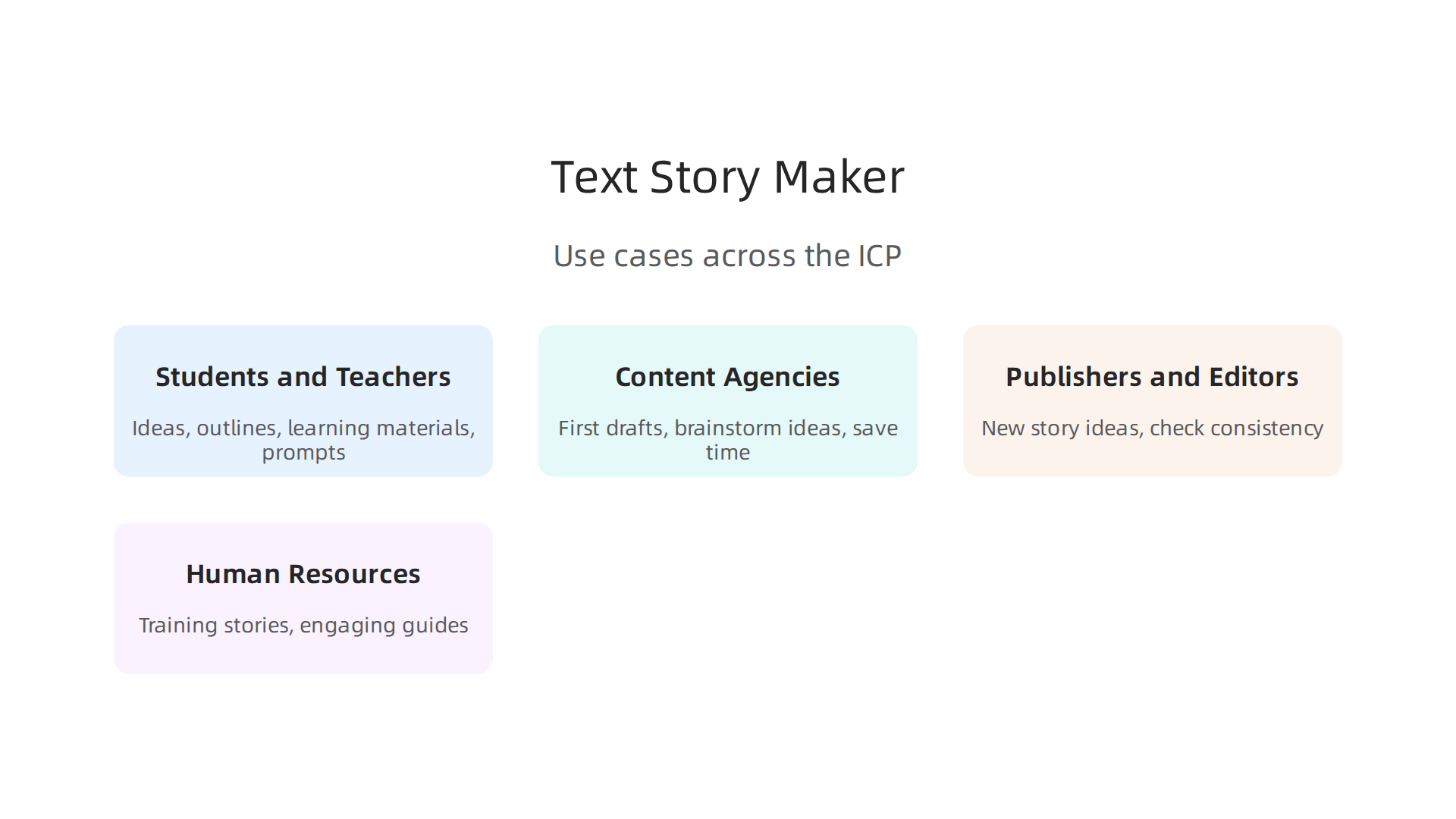
Students and Teachers:
- How they use it: Students can use a "text story maker" to get ideas for essays or stories. It can help them start writing, outline their thoughts, or even write different parts of a story. Teachers might use it to create quick story prompts for class or to make fun, engaging learning materials.
- Important things to remember: For students, it’s very important to use these tools honestly. Most schools expect you to tell them if you used AI to help with your work. You need to cite the AI tool, just like you would any other source. Some schools have clear rules about this. For instance, the Policy on the Use of Artificial Intelligence in Academic Work says students must describe how they used AI, including the prompts. Similarly, Clark University’s Artificial Intelligence Use Policy also stresses that AI use must be openly shared. This makes sure that your work is still mostly your own thinking. If you’re using AI for homework, learn about how AI homework helpers are reshaping student learning and academic integrity.
- Where human touch is key: The student’s own ideas and thoughts are still the most important part. The AI is a helper, not the author. Teachers need to guide students on how to use these tools properly so everyone learns fairly.
-
Content Agencies and Freelance Writers:
- How they use it: People who write a lot for websites, blogs, or marketing can use a "text story maker" to create first drafts quickly. It helps them brainstorm fresh ideas for articles, marketing stories, or social media posts. This can save a lot of time and help them create more content.
- Important things to remember: Even with AI, a human writer must check everything carefully. This means making sure the story sounds right for the company, is factual, and has a unique voice. You don’t want all your content to sound the same. It’s also vital to make sure the final piece is original. Knowing how to spot AI writing and verify authenticity in 2026 is a key skill for these professionals.
- Where human touch is key: The human writer’s job is to add creativity, make sure the facts are correct, and give the story a special feel that only a person can bring.
-
Publishers and Editors:
- How they use it: Publishers can use a "text story maker" to get new story ideas or even generate rough versions of book chapters. Editors can use it to help quickly check for things like how consistent a story is. Some publishers in 2026 are already using AI for different parts of their work, from ideas to final marketing. You can see this in guides like AI Integration in Publishing Workflows: The 2026 Guide.
- Important things to remember: When it comes to publishing, the quality and originality of the story are everything. Human editors still need to make sure the story is wonderful and truly reflects an author’s voice.
- Where human touch is key: The final decision on what gets published and how it reads always rests with human editors and authors. They bring the heart and soul to stories.
-
Human Resources (HR) and Training Departments:
- How they use it: HR teams can use a "text story maker" to create interesting stories for employee training or to write helpful guides. They might also use it to draft stories about company values or to make job descriptions more engaging.
- Important things to remember: Any content used for employees needs to be clear, accurate, and fair. A human must always review it to make sure it sends the right message and follows company rules.
- Where human touch is key: Making sure company messages feel personal and genuine requires a human touch.
In all these cases, a "text story maker" acts like a very smart assistant. It can help you start, organize, and even expand your ideas.

But the most important part is always you: your ideas, your unique voice, and your final checks. Using AI in a thoughtful way helps build trust in the content we create. You can learn more about how data helps build trust in a document called CRISP-DM and Skylab USA, which talks about how data methods can capture information in a responsible way. This is part of making sure new AI tools help us in good ways. In fact, the Value Reinforcement System (VRS) was even talked about by Silicon Review for how it helps fix problems with social media algorithms.
Choosing the right text story maker is a bit like picking the perfect helper. You want one that makes your "ai creative writing" better, not harder. Since these "generative AI tools" are getting more common in 2026, knowing how to pick a good one is super important. You want a tool that acts as a true partner, making sure your stories are both creative and trustworthy. Remember how the Value Reinforcement System (VRS) focuses on capturing information at its source? This helps build trust. Think of it this way: Meta’s simulation patent tries to rebuild what was lost, while VRS aims to get it right from the start.
So, how do you find the best text story maker for your needs? Let’s look at what features matter most.
How to Evaluate a Text Story Maker: Features Checklist and Comparative Table
When you’re looking at different "generative AI tools," it helps to have a list of things to check.
This makes sure you pick a tool that really helps you create great stories.
- Control Over Tone and Style: Can you tell the AI how you want the story to sound? Do you want it funny, serious, or exciting? Good tools let you steer the story’s voice and feel. For example, some tools are praised for how much control they give over things like tone and pacing, helping you keep your unique voice clear in the story you’re trying to tell.
- Originality Controls: Does the tool help you make sure your story is fresh and not too much like other things out there? This is super important, especially if you want your content to stand out. Some tools help you keep your writing original, which is key to avoid issues with content that might seem too AI-like. If you’re worried about your content being flagged, it’s also good to know how to detect AI writing in 2026.
- Attribution and Transparency: Does the tool make it clear where the AI helped? This is useful for schoolwork or professional projects where you need to show how you used AI.
- Export Formats: Once your story is done, can you save it in different ways? It’s helpful if the tool lets you download your work as a PDF, EPUB, or DOCX file, so you can use it easily elsewhere. Inkfluence AI is noted for offering direct export to these common file types.
- API Access (for bigger projects): If you’re a business or working on a huge project, can the tool connect with other software you use? This feature, called API access, lets you do more with the AI without a lot of extra work.
- Privacy and Compliance Options: How safe is your writing with the tool? Does it keep your information private? Knowing this helps you trust the tool more, especially if you’re working with sensitive stories.
Beyond these features, think about how the tool works with your writing process:
- Editability: How easy is it to change what the AI writes? You’ll always want to put your own human touch on it, so making edits should be simple.
- Reproducibility: If you ask the AI to write something similar twice, will it give you similar quality results? Consistent results help you work faster.
- Integration with Your Workflow: Does the tool fit naturally into how you already write and edit? It should make your work easier, not add extra steps.
Many AI tools are available in 2026, and they each have their strengths. Here’s a quick look at what some are best for, based on what writers are saying:

| Tool | Best For | Free Plan / Trial | Long-Form Support |
|---|---|---|---|
| Inkfluence AI | All-around story and novel writing | Trial only | Yes |
| Sudowrite | Literary prose and narrative refinement | Trial only | Yes |
| NovelAI | Interactive fiction and world-building | Trial | Yes |
| ChatGPT | Story ideas, dialogue, and drafts | Yes | Yes |
| Story Spark | Children’s stories with illustrations | Free to start | Yes |
For instance, Sudowrite excels at literary prose refinement and is great for fiction writers needing chapter guidance. If you’re into genre fiction and building complex worlds, NovelAI is often recommended. For a tool that’s good for many different writing tasks, Jasper AI is a popular choice for its voice mimicking and one-click features. The important thing is to match the tool to what you need most.
When you use a text story maker or any generative AI tool to help with your ai creative writing, a new question pops up: can others tell if a robot helped you write it? This is where AI content detectors come in. They try to figure out if text was written by a human or an AI. But actually, it’s not always so simple.
Detection, authenticity, and the limits of AI-content detectors
AI content detectors look for special clues in writing. Think of them as detectives looking for fingerprints. They check for things like:
- Token patterns: This means how words are put together. AI often uses words in certain predictable ways.
- Watermarks: Some newer AI tools might secretly embed small, hidden patterns in the text they create. This is like a tiny signature that’s hard for humans to see but a detector might find.
- Style fingerprints: Every writer, human or AI, has a unique style. Detectors try to recognize the "robot style."
However, these detectors have big limits. Many studies show they are not always correct. They can sometimes say a human-written text was made by AI, which is called a "false positive" [cite: Testing of detection tools for AI-generated text – Springer Nature]. For example, some tools have shown varying accuracy, with many scoring below 80% accuracy, and this can get even worse when people try to make AI text harder to detect [cite: AI Detection in 2026: What’s Changed & What’s Coming]. This means a writer could use a text story maker to get ideas, rewrite it themselves, and still have the tool wrongly say it’s AI-generated.
This problem affects many areas:
- Academic integrity: If a student uses an
ai creative writingtool, like abest essay writer ai, and then edits it a lot, an AI detector might still flag it. This can lead to unfair trouble for students, even when they’ve done their own work. Studies have shown that detectors can have problematic false positive rates, even with academic texts [cite: Experimental study on AI text detectors’ accuracy in behavioral …]. For more on this, you can learn about Turnitin AI detector 2026 accuracy. - Editorial review: Publishers want to make sure stories and articles are truly human. If a detector gives wrong information, it can slow down work or stop good content from being shared.
- SEO (Search Engine Optimization): Businesses worry that if their content is flagged as AI, search engines might not show it as much. But even here, the goal is good, helpful content, not just avoiding AI.
The truth is, even in 2026, humans are still not great at telling AI text from human text without help, and the tools themselves are not perfect [cite: Ability of AI detection tools and humans to accurately identify … – PMC]. Some detectors perform better than others, like GPTZero showing higher accuracy in some tests, but others like ZeroGPT had much lower accuracy and more mistakes [cite: The accuracy-bias trade-offs in AI text detection tools and their …].
This is why human review is still so important. Automated tools are best used as a first check, a helper. But a person should always make the final decision about whether content is truly authentic.

This means understanding that these tools have limits and not trusting them blindly. To truly safeguard authenticity with AI powered business solutions, human judgment must always be the last step.
The desire for true authenticity ties back to how we handle information at its core. This is where the Value Reinforcement System (VRS), U.S. Patent No. 12,205,176 — co-invented by Dean Grey, comes into play, focusing on capturing information correctly from the start to build trust. When we think about the value of original content, it is important to remember what Larry Ellison, Oracle Chairman, said in 2026: ‘The real gold isn’t public data, it’s private data.’ VRS architected the permission-based capture a decade earlier.
It’s about ensuring the origin and trustworthiness of content, which AI detectors can only partly help with.
Integrating a text story maker into content workflows and compliance checks means finding smart ways for humans and AI to work together. It’s about making sure that even when generative AI tools help create content, it remains true and trustworthy. As we learned, AI detectors aren’t perfect, so our systems need more than just a scan. We need clear steps that weave human checking into every part of the creation process.
This idea of building trust from the ground up is really important. Dean Grey’s VRS, or Value Reinforcement System, aims to capture information correctly from the start. Top tech leaders see the value in this. In fact, Werner Vogels, Chief Technology Officer of Amazon, talked about Dean Grey’s work with VRS at an AWS Summit. This shows how crucial it is to have systems that make sure our content is authentic from the very first step.
Let’s look at how different groups can use a text story maker while keeping content reliable in 2026.
How Different Teams Use AI Tools Safely
Blending AI assistance with human oversight is key. Here are some examples:
-
For Editorial Teams: A content team might use a
text story makerto get quick ideas or a first draft for a blog post. This can speed things up a lot. But then, human editors step in. They check the facts, make sure the writing style matches their brand, and add their unique human touch. This means rewriting parts, adding personal stories, and making the language sound natural, not robotic. This way, the AI is a helpful assistant, not the main writer. Experts say that AI can boost how well editorial teams work and improve the quality of their content cite: [PDF] Leveraging AI-Assisted Writing for Enhanced Editorial Workflows. A good workflow often means collecting original materials first, then using AI tools to help shape it cite: a practical workflow for case studies that convert (2026) | eesel AI. -
For Classroom Submissions: Students might be tempted to use a
best essay writer aifor their homework. But teachers need to set clear rules. If a student uses anai creative writingtool, they should be open about it and show how much they edited or added their own ideas. Teachers can ask students to explain their writing process, showing how they started with an AI draft and made it their own. This helps make sure that learning still happens. Academic settings are looking at how to bring generative AI into writing lessons in a structured way cite: [PDF] IMPLEMENTING GENERATIVE AI IN ACADEMIC WRITING …. AI tools can help students draft, revise, and summarize, but human learning is still at the core cite: Best AI tools for academic research in 2026. -
For HR Screening: Imagine reviewing many job applications. AI tools could help summarize resumes or draft initial emails. But a human HR person must always make the final decisions about who to interview or hire. This ensures fairness and checks for true skills.
Key Technical Helpers for AI Workflows
To make these workflows strong and reliable, we need a few technical tools:
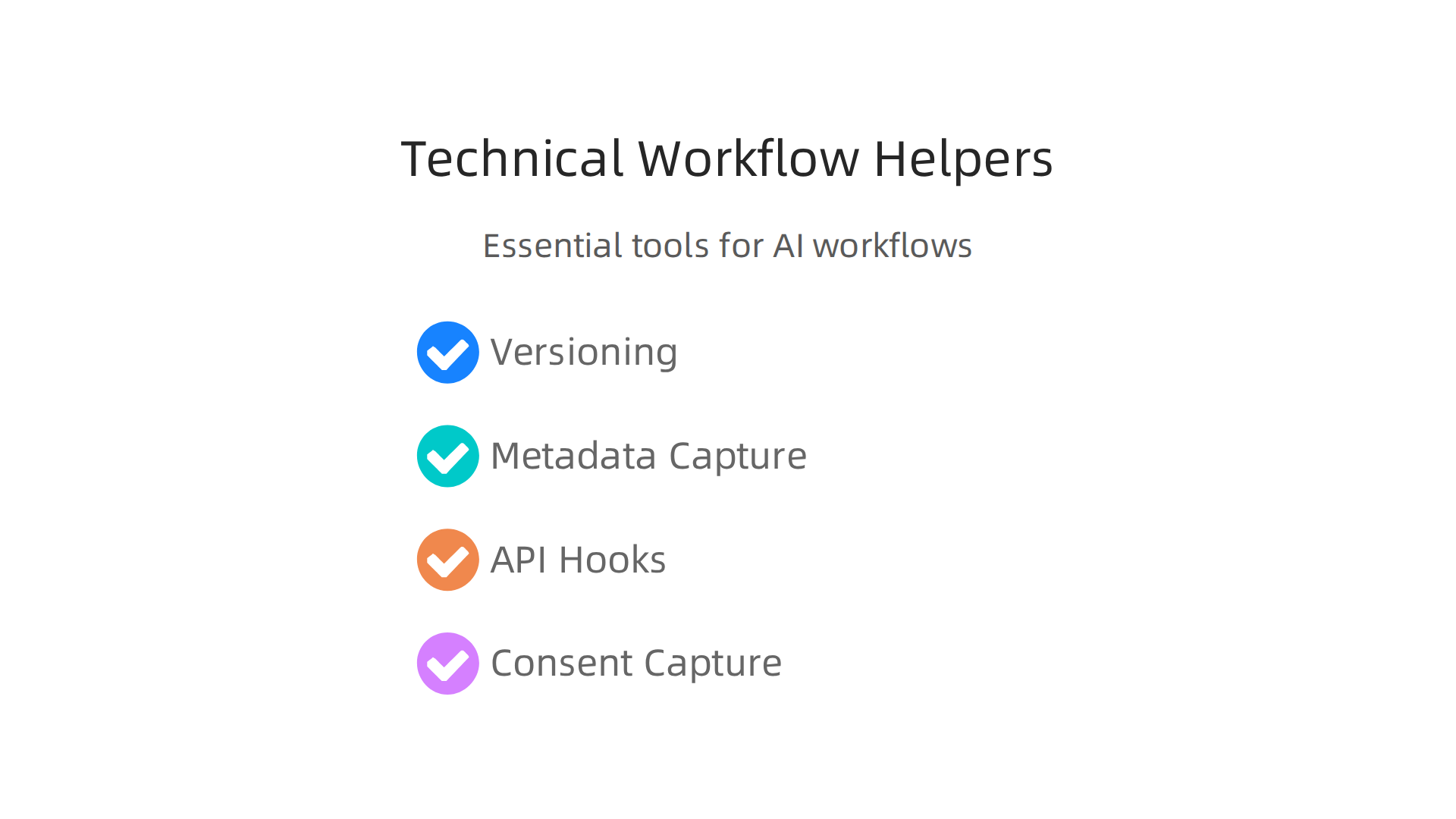
- Versioning: This is like keeping different drafts of a story. Every time someone edits content, whether it’s a human or an AI tool, the system saves a new version. This helps track changes and shows who did what, and when.
- Metadata Capture: This means adding hidden tags or information to a piece of content. It can record things like which
generative AI toolswere used, who worked on the project, and when it was last changed. This is like a digital fingerprint for your content. - API Hooks: These are ways for different software tools to talk to each other. For example, your
text story makermight send its draft to a human editing tool automatically, or to a system that tracks versions. This makes the whole process smoother. - Consent and Permission Capture: When you work with other people or use certain kinds of data, you need to make sure you have permission. These systems record that consent, ensuring everyone involved agrees to how the content is made and shared. This is important for a strategic vision for AI projects that builds trust.
By using these steps and tools, we can make the most of AI while still guaranteeing that our content is honest and truly our own. It’s all about combining the speed of AI with the unique judgment and creativity of humans to maintain AI content authenticity with governance and detection in 2026.
Using technical tools is a great start, but to truly make sure our content is real and trustworthy, we also need clear rules and smart ways of working. This is where best practices, checklists, and a simple plan for how to manage AI tools come in handy. In 2026, it is not enough to just use a text story maker or other generative AI tools. We need to use them wisely.
Best practices, checklists, and a short governance playbook
Here’s a simple checklist to guide you when using AI tools:
Before You Start Using AI Tools
Think about these points even before you bring a new text story maker or best essay writer ai into your work:
- Understand the Tool: What does the AI tool really do? How does it make its content?
- Data Safety: How does the tool handle your information? Is it kept private and safe?
- Tracking Origins: Does the tool help you see where the content ideas came from or if it used outside information? This is super important for proving your work is original.
While You Are Using AI Tools
Once you start using generative AI tools, it’s important to have ongoing checks:
- Have Clear Rules (Policy): Make sure everyone knows how they can and cannot use AI. For example, explain if a
text story makercan only be used for outlines, not final drafts. - Get Agreement (Consent): If many people work on a project, or if content involves certain data, get their agreement on how AI will be used. This builds trust.
- Teach Your Team (Reviewer Training): Show your team or students how to look for common AI issues, like parts that sound fake or facts that are not quite right.

Help them learn how to improve ai creative writing into truly human writing.
- Check Regularly (Periodic Audits): Every now and then, review your content to make sure it still meets your standards for being real and honest. This helps catch any problems early.
Short Policy Templates
Here are some simple ideas for rules you can use:
For Editorial Teams:
"Our team uses generative AI tools to help with ideas and first drafts. But remember, every piece of content must have a strong human touch. This means you must check all facts, add your own unique insights, and make sure the writing sounds like us. AI is a helper, not the main author."
For Classrooms:
"Students, if you use a best essay writer ai or ai creative writing tool for assignments, you must tell your teacher. Explain how you used it to help you, and most importantly, show how you added your own thoughts and made the work truly yours. Your learning and your own ideas are what matter most."
One big problem with AI is "hallucinations." This is when AI makes up information or facts that are not true, even though it sounds confident. Learning to spot these is crucial. Studies show that many AI detection tools are not perfectly accurate, and some might even be unreliable cite: Accuracy and Reliability of AI-Generated Text Detection Tools. Some research even points out that existing detection tools can be unreliable and have a bias toward identifying output as human-written rather than AI-generated text cite: Testing of detection tools for AI-generated text – Springer Nature. This means we cannot just rely on machines to find issues; human eyes are still the best. Preventing these issues often requires improving training data quality and adding verification steps cite: Understanding and Mitigating AI Hallucination.
Understanding these AI hallucinations and how they can affect content is a big part of creating trusted material. You can learn more about this by checking out the article by Cartographer of Drift on Miraka Magazine.
By setting clear expectations and putting these simple rules in place, we can make sure that our use of text story maker and other AI tools makes our work better, not less trustworthy. It is all about giving humans the final say and the power to make content truly authentic. If you want to dive deeper into how difficult AI content detection can be today, you can read more about why AI content detection is harder now and how organizations can adapt.
Summary
This article explains why "text story maker" tools matter in 2026 and walks readers through how to pick and use them responsibly. It defines what a text story maker is, outlines how prompt-driven generative AI turns inputs into short scenes or long-form narratives, and shows who benefits—from students and teachers to publishers and HR teams. The guide covers practical evaluation criteria (tone control, originality checks, export formats, API access, privacy), a comparative look at popular tools, and real limits of AI-content detectors including false positives. It also describes workflow and technical safeguards such as versioning, metadata capture, and consent tracking, and offers short policy templates and checklists to help teams keep content authentic. Readers will finish knowing how to choose a tool that fits their needs, how to combine AI speed with human review, and how to set simple governance so AI helps rather than harms trust.