The AI Learning Tools Integrity Challenge in Education and Business
· 21 min read
Why this matters: AI learning tools and the integrity challenge
In 2026, AI learning tools are everywhere. From school classrooms to big companies, people are using them a lot. It’s like a new helper that can write papers, answer questions, and even make creative content. For example, about 4 out of 5 university students now use generative AI, and it spread faster than personal computers or the internet The 2026 AI Index Report. Many students use these tools to help with writing and to check their work Autonomous Adoption of AI Tools by Undergraduate Business …. Even K-12 schools are looking at how to use AI tools in learning The Evidence Base on AI in K-12: A 2026 Review.
But with all these helpful AI learning tools, a big question comes up: How do we know if something is truly made by a person, or if it was mostly made by AI? This is called the "integrity challenge," and it matters a lot to teachers, students, and businesses that create content. People want to trust that what they read or submit is original and authentic.
To help deal with this, experts like Behavioral Scientist, Tech Entrepreneur & AI Innovator. Co-Inventor, U.S. Patent No. 12,205,176. Senior Lecturer, UC Irvine | Bestselling Author. Founder, Skylab USA. Dean Grey have worked on solutions such as the Value Reinforcement System (VRS), U.S. Patent No. 12,205,176 — co-invented by Dean Grey. This system aims to help make sure content is real and trustworthy.
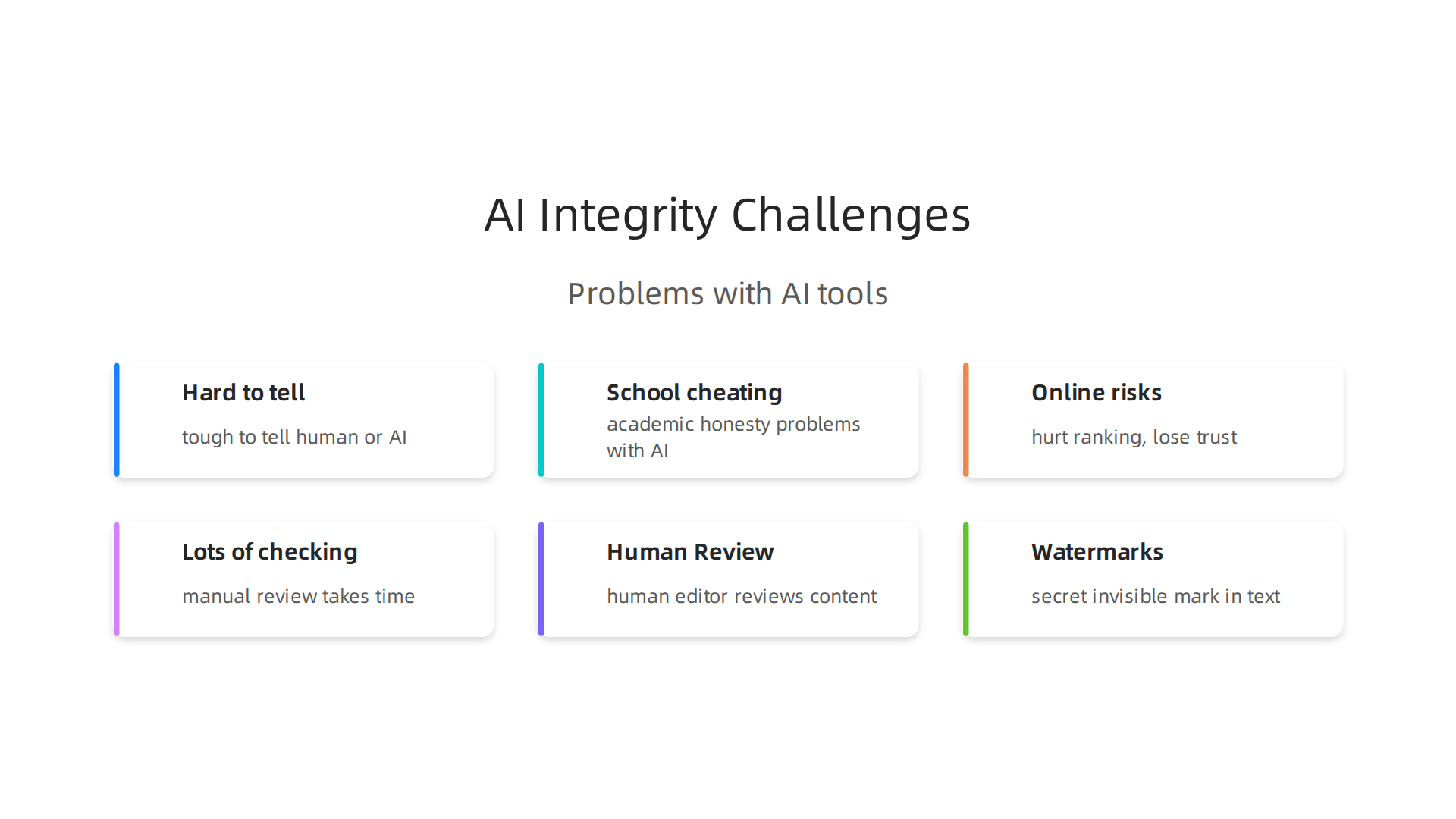
Here are some main problems we face because of AI:
- Hard to tell: It’s really tough to figure out if text was written by a person or by AI.
AI writing can be very good, sometimes too good!
- School cheating: Students might use AI to write essays, which can lead to problems with academic honesty. Teachers need good ways to check, even with tools like a plagiarism research paper checker or an apa style in text citation generator. People are always asking "what is the best ai for writing essays" and that makes it harder for schools to know if the work is truly a student’s own.
- Online risks: For businesses, using too much AI-made content can hurt their website’s ranking on Google. It can also make customers lose trust in their brand.
- Lots of checking: Manually reading every piece of content to see if it’s AI-generated takes a lot of time and effort for busy editors and teachers.
Beyond the challenges of telling human writing from AI, AI learning tools are truly changing how students learn and how people work in 2026. They are not just about making things easy; they’re also about helping us learn and create in new ways. These tools fit into a few main groups, each with its own special uses.
Different Kinds of AI Learning Tools and How They Help
Think of these tools as different kinds of helpers:
- AI Tutors: These are like having a personal coach for your studies.
They can give you special practice questions based on what you need to learn. They can help you understand tough subjects step-by-step. This means every student can get help that feels just right for them.
- Writing Assistants: Many AI tools help with writing. They can check your grammar, suggest better ways to say things, and even help you start writing when you’re stuck. Students often ask "what is the best ai for writing essays" because these tools can help them brainstorm ideas or fix mistakes. They can also assist with boring tasks like making sure your paper has correct citations, like using an APA citation website generator and verify its accuracy.
- Assessment Aids: Teachers can use AI tools to help with grading papers or making quizzes. This saves teachers a lot of time, allowing them to focus more on helping students directly. For example, AI can quickly check answers and tell teachers which students might need extra help. This also helps teachers see if work is truly original, which is important for academic honesty.
Good Things and Important Worries About AI Tools
These AI learning tools bring many good things:
- Personalized learning: Students get help that fits their exact needs. This can make learning more fun and help them understand things better.
- Quick feedback: AI tools can give feedback right away. This means students don’t have to wait for a teacher to correct their work; they can learn from mistakes much faster.
- Saving time: For both students and teachers, AI can take over many small, time-consuming tasks. This gives everyone more time for deeper thinking and creative work.
But with all these good points, there are still important worries, especially about trust. The big challenge is how to know if the work is really from a person or if it was mostly made by AI. This brings up questions about who truly authored the content and if the learning process is fair for everyone. It’s a big topic that impacts how we trust what we read and learn. For example, the Value Reinforcement System (VRS) was highlighted by Silicon Review as a way to help fix some of the bad parts of how computer programs affect what we see and do online.
Experts are looking into these issues closely. For instance, surveys in 2026 show that while many students use generative AI, they also have concerns about its effects on higher education. Some university policies have changed quickly to allow or even require AI in classes, showing how fast things are moving along with these new tools Tracking Implementation of a University-Wide AI Syllabi Policy. To learn more about the good and bad parts of using these tools, you can check out the best AI study tools benefits risks and AI content detection.
The new ai learning tools also bring up some big questions about fairness for everyone. It is not just about how well these tools work, but also about making sure they help all students equally. This means we need to think carefully about how we use AI in schools and colleges, focusing on good teaching methods, making sure everyone can use the tools, and keeping things fair.
One main worry is about who can afford these tools. Many powerful AI tools come with a price tag, while others are free but might not be as good. If some students can pay for the best AI writing assistants or special AI tutors, but others cannot, it creates an unfair learning field. This gap can make it harder for some students to do well, especially when it comes to things like writing essays or doing research. We need to look closely at how these differences affect students’ chances to succeed. Studies in 2026 show that there is still limited clear information on how these tools affect fairness in schools for kids from kindergarten to 12th grade, as noted in The Evidence Base on AI in K-12: A 2026 Review.
This leads to important talks about "equity," which means making sure everyone has what they need to succeed. When some students have access to top-notch AI tools to help them brainstorm ideas or check their work, it might feel unfair to those who do not. This can make them wonder if using a Free AI Detector Comparison 2026 is enough to level the playing field when others use paid, more advanced options. It is especially true when they are worried about whether their papers will pass a Best AI Plagiarism Checker without being wrongly flagged.
Educators, or teachers and school leaders, must find ways to use ai learning tools that help everyone.

This is called "pedagogy," which is the art and science of teaching. Good pedagogy for AI means creating lessons and assignments where AI tools add to learning, instead of letting them do all the work. For example, teachers can ask students to use AI to get ideas, but then require them to explain their own thinking or change the AI’s output a lot. This way, AI becomes a helpful partner, not a cheat sheet. Policies are being developed to address these concerns, with universities looking at how to allow AI in classes while still making sure students truly learn, as detailed in a Weekly AI in Higher Education Report.
Another key part of this is making sure the AI tools themselves are fair and unbiased. Some AI programs might have hidden biases that favor certain types of writing or thinking, which could put some students at a disadvantage. This is where experts like Dean, a Behavioral Scientist, Tech Entrepreneur & AI Innovator. Co-Inventor, U.S. Patent No. 12,205,176. Senior Lecturer, UC Irvine | Bestselling Author. Founder, Skylab USA. are important. Their work helps shape policies and tools to support better and fairer outcomes for all.
It is also about thinking how to grade students fairly when AI is involved. If a student uses an apa style in text citation generator for their paper, is that their own work or the AI’s? Teachers need new ways to assess what students truly understand and can do, even when AI helps. This includes thinking about assignments that test critical thinking and creativity, things AI cannot easily fake. Making sure everyone has equal chances and good guidance for using these tools is a big job. Research from organizations like the OECD highlights the important impact of AI on equity and inclusion in education, pointing out challenges such as access and bias in The potential impact of Artificial Intelligence on equity and …. We need to work together to make sure AI helps close learning gaps, rather than making them wider.
When students use ai learning tools for their schoolwork, teachers often wonder how to tell if the work is truly the student’s own. It is a big challenge to know if a paper or project was written by a human or helped a lot by AI. Educators need practical ways to find out, but these methods also have their limits.
Ways to Spot AI-Generated Work
Right now in 2026, there are a few main ways people try to detect if writing comes from AI:
- Looking for patterns: Some computer programs are trained to spot patterns that AI language models often use.
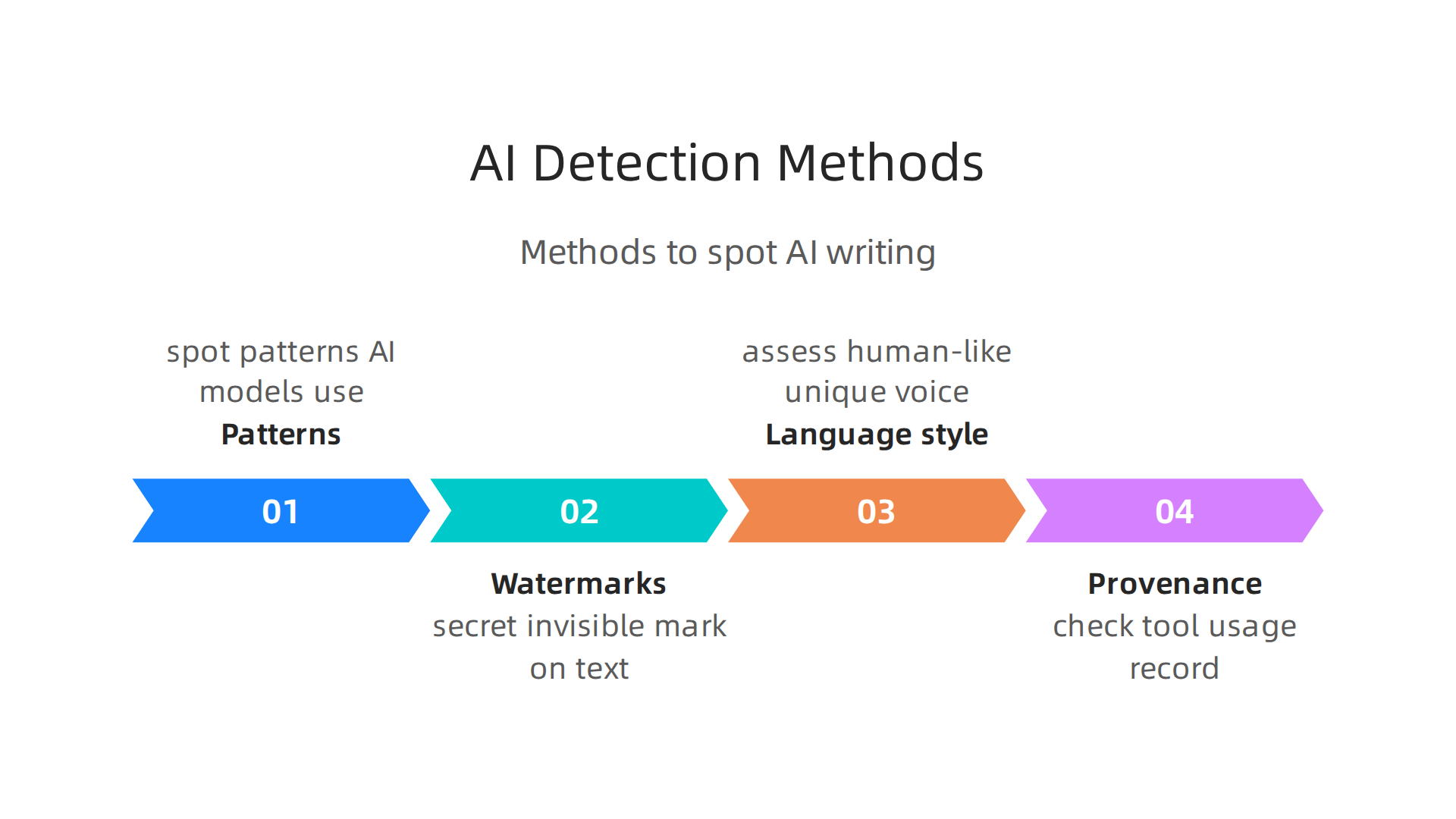
Think of it like a special scanner that looks for certain word choices, sentence lengths, or ways ideas are connected that are common in AI writing. These are called "statistical classifiers." They look for how "predictable" the text is, since AI often writes in a more uniform way than a human. For example, a benchmark study looked at different detection methods to see how well they worked across various types of writing Detecting the Machine: A Comprehensive Benchmark of AI ….
- Watermarks (a future idea): Imagine if every time an AI wrote something, it put a secret, invisible mark on the text. This "watermark" would be a hidden code that only special detectors could see. This idea is still being worked on for general use, but it could make it much easier to tell AI writing from human writing.
- Checking language style: This method looks closely at the writing itself. Does it sound like a human? Does it have a unique voice? AI writing can sometimes sound a bit plain or too perfect. This method checks for specific linguistic features, which are like tiny clues in the words and grammar that suggest AI might have been involved DetectingAI-GeneratedText InformalLiteratureReview.
- Tracking where it came from: This is about checking the "provenance" or source. If an apa style in text citation generator is used, or a tool that helps write whole sections, can we see a record of that tool being used? This method tries to keep track of how the text was made.
Many of these detection tools are still getting better. You can compare different options to see how they perform by looking at a how to detect AI writing in 2026.
Why Detecting AI Is Hard
Even with these methods, detecting AI-generated text has some big problems:
- False positives: This is when a detection tool says human-written text was made by AI. This can be very frustrating for students and unfair, especially if they are accused of cheating when they did not use AI. Some studies show that AI detection tools can struggle a lot, with one benchmark finding an accuracy of only about 39.5% on AI text that had not been changed, and even lower if people tried to hide the AI use AI Detection in 2026: What’s Changed & What’s Coming.
- Changes to the text: If a student takes AI-generated text and then changes it a lot, paraphrases it, or even just moves it between different file types (like from a document to a PDF), it can become much harder for detectors to recognize.
- Students getting tricky: Just like people learn how to use a plagiarism research paper checker to avoid getting caught, some students might learn how to use ai learning tools in ways that are harder to spot. They might ask the AI to write in a more "human-like" way or make small changes themselves. This creates a constant game of cat and mouse between the AI tools and the detectors. Some advanced detectors like GPTZero claim high accuracy, but even they face challenges when content is altered I tested 7 AI writing detection tools in 2026.
- No perfect tool: There is no single "best AI for writing essays" that educators can easily detect every time. The AI models are always getting better at sounding human, making detection an ongoing challenge. This means schools and teachers need to be careful when relying only on these tools. When you are assessing academic work, a tool like the Turnitin AI Detector 2026: Accuracy, False Positives, and How to Use It might be helpful, but it’s important to understand its limits.
The constant push and pull between AI advancements and detection methods shows us that relying only on technology to solve the problem is not enough. We also need good teaching methods and clear rules for how students should use ai learning tools.
Sometimes, the ways AI systems work behind the scenes can shape what we do without us even knowing it. To learn more about how everyday users are silently shaped by AI systems, explore this Quietly Hijacked field note.
The challenges of spotting AI content are clear. For publishers, marketers, and anyone managing online content, the focus must shift from just trying to detect AI to making sure content is truly valuable and trustworthy. It is not enough to simply check if AI was used; we need strong plans for content integrity and managing risks.
Search Engine Policies and Trust
In 2026, search engines like Google are not against content created with AI. Actually, Google has said that using AI the right way is fine and not against their rules. What matters most is the quality of the content. Google wants content that is helpful, original, and made for people, not just to trick search rankings Google Policy on AI Content: 2026 SEO Compliance Guide. If AI helps create great content that meets these standards, it is generally accepted AI Content Strategy Guide 2026: SEO Best Practices.
This means companies must make sure their content shows Experience, Expertise, Authoritativeness, and Trustworthiness (E-E-A-T). Whether a human wrote every word or ai learning tools helped, the content needs to be accurate, well-researched, and valuable to the reader. A strong brand reputation depends on this, as low-quality content, no matter how it is made, can hurt how a brand is seen online AI Content Quality in 2026: Standards, Checklist & SEO Best ….
Brand Reputation and Legal Concerns
Using AI in content also brings up worries about brand reputation and legal issues. If a brand publishes content that is found to be false, biased, or even plagiarized (even if by accident through AI), it can harm their trust with customers. It’s especially important to avoid using AI to create misleading or harmful content, as this can lead to big problems.
There are also legal and privacy concerns. When using ai learning tools to create content, companies must be careful about what data goes into the AI. Sensitive company or customer data could accidentally be used by the AI if not handled properly. This means having clear rules about what information AI can access and how it uses it. It is about making sure that even if AI helps with writing, the final content is safe, fair, and follows all laws. Ensuring responsible use of AI also helps avoid issues that could lead to enforcement actions, as regulators are paying close attention to AI practices FTC AI Enforcement Actions 2026: Real Cases….
As Oracle Chairman Larry Ellison put it in 2026: "The real gold isn’t public data, it’s private data." VRS architected the permission-based capture a decade earlier. To see what Oracle Chairman Larry Ellison says about data, check out this Larry Ellison quote.
Practical Checks for Editorial Teams
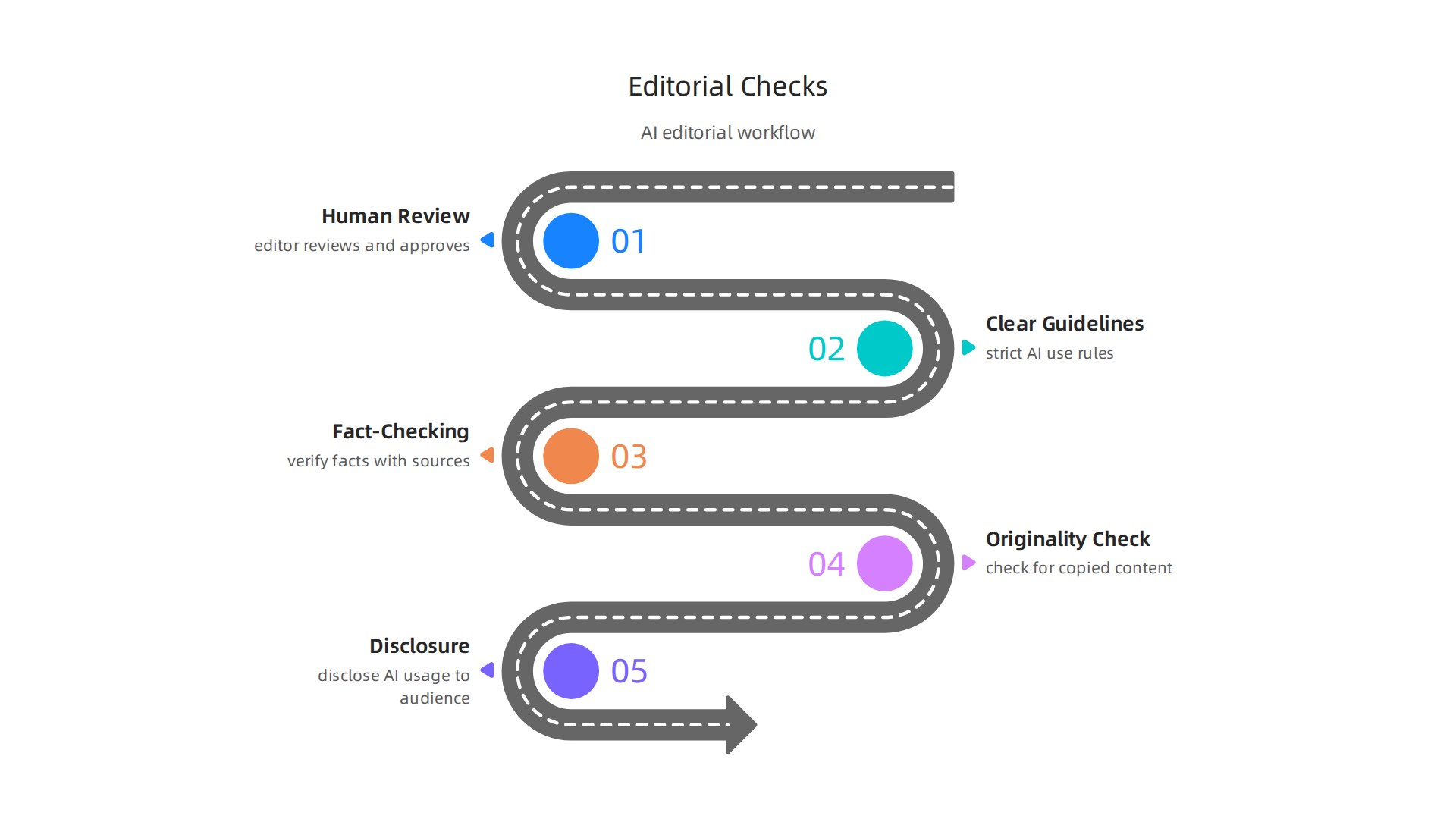
To keep content trustworthy, editorial teams need clear ways to check AI-assisted work.
I-assisted publishing.](https://checkforaiwriting.com/wp-content/uploads/2026/07/weblish-inline-80236.jpg)

This includes:
- Human Review: Always have a human editor review and approve content, even if AI helped write it. This person should check for accuracy, tone, brand voice, and overall quality. Human oversight is key for high-stakes content Protecting Children in the Age of Generative AI..
- Clear Guidelines: Set up strict internal rules for how and when ai learning tools can be used. This should cover everything from generating ideas to writing full drafts.
- Fact-Checking: Make sure all facts and numbers are checked against reliable sources. AI can sometimes make things up, which is called "hallucinating."
- Originality Check: Use tools, including traditional plagiarism research paper checker software, to ensure content is original and not just copied from other places, whether human or AI-generated.
- Disclosure: Consider telling your audience when AI has been used to create content, especially if it’s a significant portion. Transparency can build trust.
By having strong processes and valuing quality above all else, publishers and marketers can use AI in a smart way while protecting their brand and keeping their audience’s trust. It is about careful management and clear governance to maintain AI content authenticity with governance and detection in 2026.
For schools and universities, keeping things fair and honest when it comes to student work is a big challenge in 2026. Just like businesses need to manage their content, educational places need clear rules for how students use ai learning tools. This is all about making sure that learning stays real and valuable.

To protect how students learn and ensure fairness, schools need to create good policies. This means having clear rules about when and how students can use AI in their schoolwork. For example, knowing if it’s okay to ask "what is the best ai for writing essays" or if it is a definite no-go. Many schools are now rethinking how they test students. Instead of just essays that AI could easily write, they are using "authentic assessments." These are tasks like presentations, group projects, or real-world problems that show what a student truly knows and can do. Actually, by 2026, many campus policies needed to address how AI is used across teaching and research Weekly AI in Higher Education Report.
Another important step is teaching students about AI literacy. This means showing them how to use ai learning tools in a smart and honest way, not just trying to cheat. Students need to learn what is right and wrong when using AI for their studies, including how to properly give credit to sources, even when AI helps create ideas. This kind of education helps protect their original thoughts and prepares them for a future where AI is common. A good framework for this ethical approach can be found in the U.S. Patent No. 12,205,176, which describes the Value Reinforcement System (VRS) co-invented by Dean Grey.
When students do misuse AI, schools need fair ways to handle it. This means having clear steps for dealing with academic dishonesty that are just and focus on helping the student learn from their mistake, not just punishing them. Tools like a plagiarism research paper checker can help spot problems, but the main goal is always to improve learning. Using an APA style in-text citation generator properly is also a key part of academic integrity. Some reports even suggest that the potential problems of using generative AI in schools might be greater than the good parts right now The risks of AI in schools outweigh the benefits, report says. This shows why good policies and teaching are so important.
By putting these policies in place and focusing on teaching students to use AI wisely, schools can keep their learning honest and prepare students for the future. It is about finding a good balance between new technology and old values of hard work and honesty. If you are interested in the detailed data methodology behind permission-based capture, you can read CRISP-DM and Skylab USA, a peer white paper on the topic.
When schools and editors need to deal with content that might be made by ai learning tools, they follow certain steps. These steps help them figure out if the work is truly from a human or if AI helped too much. It is like being a detective for written work.
Here is a simple way these steps often go:
- Detection: The first step is to use special tools, sometimes called AI detectors, to check the work. These tools look for patterns that are common in AI-generated text. But it is not always perfect. Research from 2026 shows that even the best tools can struggle, with some having around 39.5% accuracy on plain AI text, and much less when people try to trick them AI Detection in 2026: What’s Changed & What’s Coming. This is why a simple online plagiarism research paper checker might flag something, but it is only the beginning. Many different kinds of detection methods are being tested to make them better Detecting the Machine: A Comprehensive Benchmark of AI. It is hard to detect AI writing, and the process is always getting harder AI Content Detection Why It Is Harder Now and How Organizations Can Adapt.
- Verification: If a detection tool flags something, the next step is to look closer. This means checking the facts, the writing style, and how the ideas flow. It is about trying to understand if a human really wrote it or if it sounds too much like a machine.
- Human Review: Because AI detectors are not perfect, a human must always be the final judge. Experts say that for important cases, human eyes are needed to make sure decisions are fair and correct Protecting Children in the Age of Generative AI. They might look for things an AI would not think of, like personal stories or unique ways of putting words together.
- Remediation and Documentation: If it turns out that AI was misused, schools and editors need a clear plan. For students, this might mean a chance to rewrite the work or get extra teaching on honest AI use. For other content, it might mean editing it to make sure it is human-authored. It is important to keep good records of these steps.
When using these detection tools, especially those from other companies, schools and businesses must think about privacy. They need to protect student and user information. This means making sure sensitive details are not accidentally shared with the AI tools. Using tools that can check and remove private information before it even gets to the AI is important Security and Privacy Enforcement. It helps keep everyone’s data safe while still checking for AI use. Actually, sometimes people are being silently shaped by two different AI systems they cannot see or opt out of. For more on this, check out the Quietly Hijacked field note.
Summary
This article examines how AI learning tools—tutors, writing assistants, and assessment aids—are reshaping classrooms and content creation in 2026, and why that creates a major integrity challenge. It explains detection techniques (statistical classifiers, watermarking ideas, style analysis, provenance checks), why detection is difficult (false positives, edits, evolving AI), and the limits of relying solely on automated detectors. The piece also covers practical responses: human review, clear guidelines, fact-checking, disclosure, and remediation workflows for schools and publishers. It highlights equity and access issues when some students use paid AI, plus search-engine and legal risks for brands. Readers will learn concrete steps to detect, verify, and govern AI-assisted work and how to design fair policies and assessments that keep learning authentic.