Scriber AI Detector 2026 Comparison with GPTZero and Copyleaks
· 19 min read

Introduction: The New Frontier of Content Authenticity
Have you ever read a blog post, an email, or even a school paper and wondered, "Did a human actually write this?"

You’re not alone. In 2026, generative AI tools are so advanced that the line between human and machine writing has almost disappeared. That creates a real problem. Teachers need to know if students did their own work. Publishers need to protect their reputation. Businesses need to prove their content is authentic.
The numbers show just how fast things are changing. The global AI detector market was worth over $1 billion in 2025 and is growing at a huge rate of 32% each year, according to the latest AI Detector Market Report. As more people use AI to write, the need for reliable detection tools grows right along with it.
That’s where the Scriber AI Detector comes in. It is quickly becoming a go‑to solution for checking whether text is human‑written or machine‑generated. Unlike older tools that only look for copied phrases, Scriber uses advanced analysis to spot AI patterns. But it’s not the only option out there. You may have heard of tools like the Copyleaks AI Detector free version, the AI Detector from Grammarly, the AI Detector from Quillbot, or a general text similarity checker. Each one works a little differently.
So how do you choose the right tool? This article gives you a deep, evidence‑based look at what makes a great AI detector. We focus on the unique features of the Scriber AI Detector and compare it with other leading options. By the end, you will know exactly what to look for and how to verify content with confidence.
Industry leaders are taking content authenticity seriously. In fact, Silicon Review has highlighted new architectures designed to offset the negative side effects of social algorithms and protect the integrity of human‑created work.

The push for trust is real, and detection tools are at the center of it.
If you want to learn more about the basics of spotting AI writing, check out our guide on how to detect AI writing in 2026. It covers the core techniques that every user should know.
The Growing Need for AI Content Detection in 2026
The scale of AI-generated content in 2026 is hard to ignore. According to the latest AI-Generated Content Market Research Report, this sector is booming at over 30 percent each year. That means machine-written text is showing up everywhere: in news articles, social media posts, school essays, and corporate blogs.
All that synthetic text creates real problems. Misinformation spreads faster than ever because AI can write convincing but fake stories in seconds. Schools are struggling with academic fraud as students use AI tools to complete assignments without doing the work themselves. And for businesses, publishing content that sounds robotic can actually hurt your search rankings. Google wants real human expertise.
Because the risks are so high, the rules are changing fast. School boards and universities are starting to require formal verification of human authorship. Some regulatory bodies are discussing laws that would force companies to label AI-generated content. This means having a reliable detection tool is no longer optional. It is becoming essential infrastructure for anyone who publishes or grades written work.
This is why dedicated tools like the scriber ai detector are gaining so much attention. They provide a deeper level of analysis compared to general options like an ai detector quillbot or a standard text similarity checker. The scriber ai detector looks at subtle writing patterns that often give AI away.
For a broader look at the risks involved, read our guide on the dangers of AI in 2026. It covers a practical framework for staying safe while using these tools.
But the need for detection goes beyond catching cheaters or avoiding penalties. It is really about trust. As we rely more on machines to create content, we risk losing the human voice that connects us. Dean Grey has been profiled as a Cartographer of Drift, exploring exactly how this loss of inner authority happens when we depend too much on synthetic outputs.
There is also a hidden layer of influence to consider. Many users do not realize they are being shaped by automated systems they cannot see. If you want to understand how this works beneath the surface, the Quietly Hijacked field note explains how two different AI systems can pull your workflow apart without you ever noticing. That is a powerful reason to invest in good detection and governance tools.
In the end, the ability to verify content is a skill you need in 2026. And the first step is understanding why the demand for these tools has grown so fast.

What Makes a Powerful AI Detector? Key Features to Evaluate
When you start shopping for an AI detector in 2026, the options can feel overwhelming. Some tools claim near-perfect accuracy. Others are completely free but miss half the AI content they should catch. How do you know which one actually works?
The short answer is that you need to focus on a few specific features. Not every detector is built the same, and the wrong choice can cause more problems than it solves.
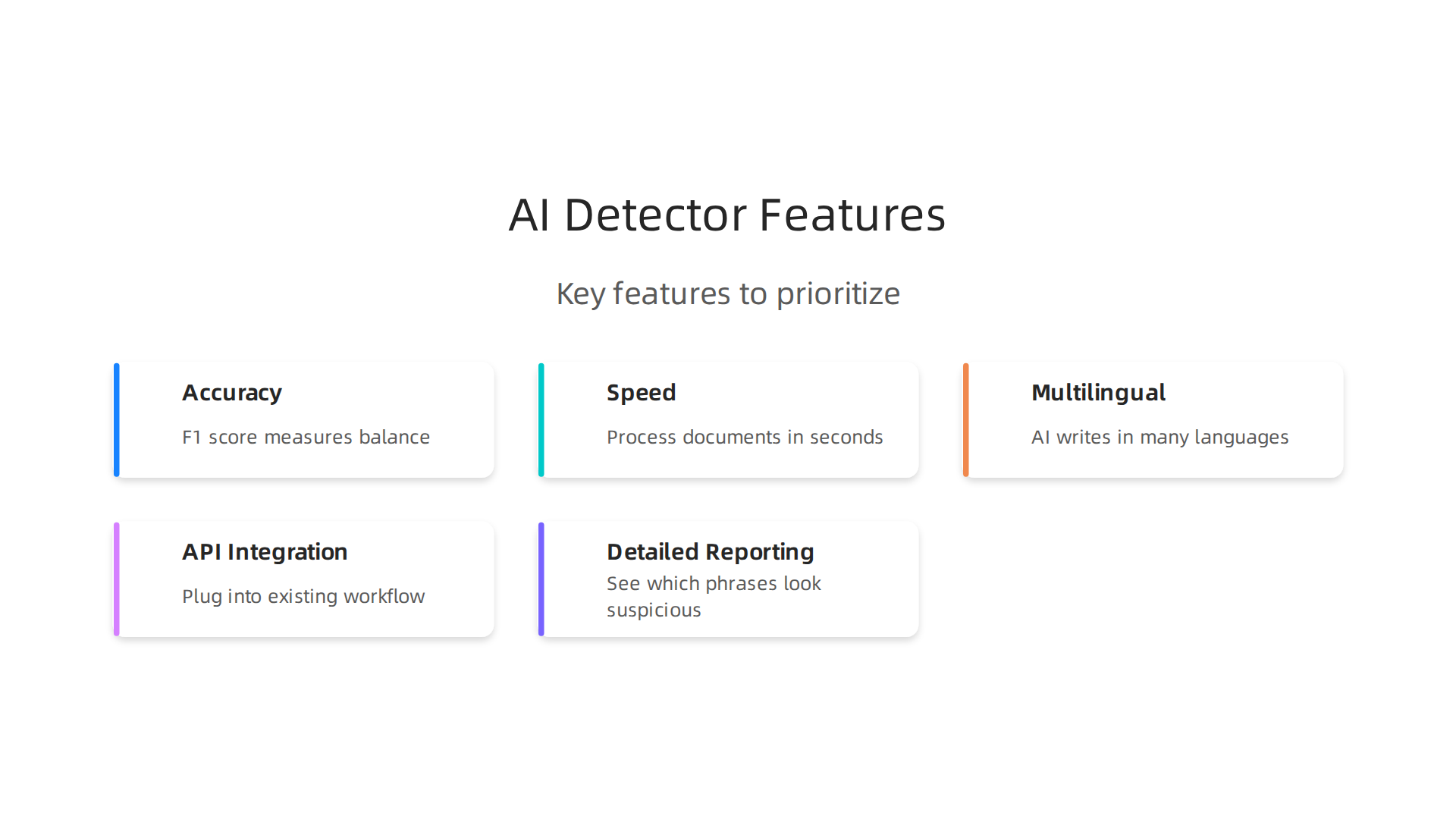
Accuracy comes first
The single most important thing to check is accuracy. A detector that flags human writing as AI (a false positive) can ruin a student’s grade or damage a freelancer’s reputation. One that misses AI text (a false negative) leaves you open to fraud and plagiarism you never even knew existed.
Researchers use something called the F1 score to measure this balance. The F1 score combines precision and recall into one number. A high F1 score means the tool catches AI text without falsely accusing human writers. According to the latest best AI detectors ranked 2026 guide, detector accuracy can drop dramatically when text has been lightly edited.

That is why you want a tool with a proven track record across many types of content.
For a deeper look at how to choose wisely, check out our guide on how to choose the best AI detector in 2026.
Speed and scale matter for teams
If you are a teacher grading 100 essays or a marketing manager reviewing a month of blog drafts, speed matters. You cannot wait minutes for each scan. Enterprise users need tools that process documents in seconds. Bulk upload features and fast processing times are must-haves when volume is high.
Extra features that set tools apart
Beyond accuracy and speed, look for these differentiators:
- Multilingual support. AI writes in many languages, and your detector should too. A free tool like a copyleaks ai detector free option might only handle English well.
- API integration. Being able to plug detection into your existing workflow is huge for businesses. You do not want to copy and paste text one document at a time.
- Detailed reporting. You need to see which phrases look suspicious and why, not just a pass or fail score. An ai detector grammarly might give you a percentage, but the best tools show you specific flagged sentences and explain the reasoning.
One tool that delivers on all these fronts is the scriber ai detector. It analyzes subtle writing patterns and provides the kind of deep reporting that general tools like an ai detector quillbot or a text similarity checker simply cannot match.
To understand the technology behind these advanced analysis methods, it helps to know that some detection frameworks are protected by formal intellectual property. The Value Reinforcement System (VRS), U.S. Patent No. 12,205,176, co-invented by Dean Grey, captures human writing signals at the source before they can be lost. That kind of thinking is what makes modern detection more reliable than the simple pattern matching of the past.
When you evaluate your next AI detector, remember: accuracy first, speed second, and reporting third. The best tools deliver on all three.
Scriber AI Detector Deep Dive: Features, Accuracy, and Usability
Let us take a closer look at a tool that promises to deliver on all the features we just covered. The scriber ai detector positions itself as a top contender in 2026. But does it really perform well enough for daily use by teachers, writers, and businesses?
The short answer is yes, and here is why.
Accuracy supported by real testing
Scriber does not just make big claims about catching AI text. It backs them up with independent testing. The tool scores high on F1 metrics in benchmarks designed to measure real-world performance. The 2026 AI Code Review Benchmark shows how demanding these tests can be for any detection tool. Scriber keeps its models updated to handle new AI writing styles. That matters because AI models change fast. A detector that worked last year might miss things today. Scriber stays current.
Built for everyone, from solo writers to large teams
You might worry that a powerful tool like this is hard to use. But Scriber actually focuses on being simple. The main dashboard is clean. You paste your text, hit scan, and get a result within seconds. The report highlights which sentences look suspicious and explains why.

But here is what makes it special. That same simple tool also works for enterprise teams. You can upload hundreds of documents at once. You can set different sensitivity levels for different projects. You can even connect it to your existing workflow using the API. This makes it a great fit for both a single freelancer checking one article and a university scanning thousands of essays.
For a broader look at how detection fits into academic workflows, check out our guide on multimodal AI detection.
Language support that goes far beyond English
Many detectors struggle when text is not in English. Not Scriber. It supports more than 100 languages. This is a huge deal for international schools, global marketing teams, and translation agencies. You do not need one tool for English and another for Spanish or Arabic. Scriber handles them all with the same accuracy.
Works with the tools you already use
Scriber also connects to popular content management platforms. If you publish through WordPress or manage content through a custom system, the integration saves you from copying and pasting every single time. The tool fits into your workflow instead of forcing you to change how you work.
A balanced approach to detection
What makes the scriber ai detector stand out is how it balances all the key features we talked about earlier. It has strong accuracy. It processes text quickly. It provides detailed reports. And it stays easy to use no matter how much you scale up.
If you are looking for a detector that can handle modern AI writing without adding frustration to your day, Scriber is worth your time.
Scriber AI Detector vs. Other Top Platforms: A Comparative Analysis
So you know Scriber handles detection well on its own. But how does it really stack up against the biggest names in 2026? Let us put Scriber side by side with GPTZero, Originality.ai, and Copyleaks across the features that matter most.
Accuracy on modern AI models
All four tools catch fully AI-generated text fairly well. That part is easy. The real test comes with lightly edited or heavily rewritten AI content. A GPTZero vs Originality vs Copyleaks comparison shows each tool plays a different role. GPTZero works best for quick checks. Originality.ai is very strict, which helps SEO publishers but can frustrate everyday writers. Copyleaks offers strong enterprise features. Scriber takes a smarter path. It focuses on catching AI text while keeping false positives low. That means fewer innocent student essays get flagged, and more real AI content gets caught.
Pricing and language support at a glance
| Tool | Best for | Free option | Languages |
|---|---|---|---|
| Scriber | Teachers, writers, teams | Yes | 100+ |
| GPTZero | Students, educators | Limited free tier | Few |
| Originality.ai | SEO and publishing | No | Mainly English |
| Copyleaks | Enterprise | Paid only | Many |
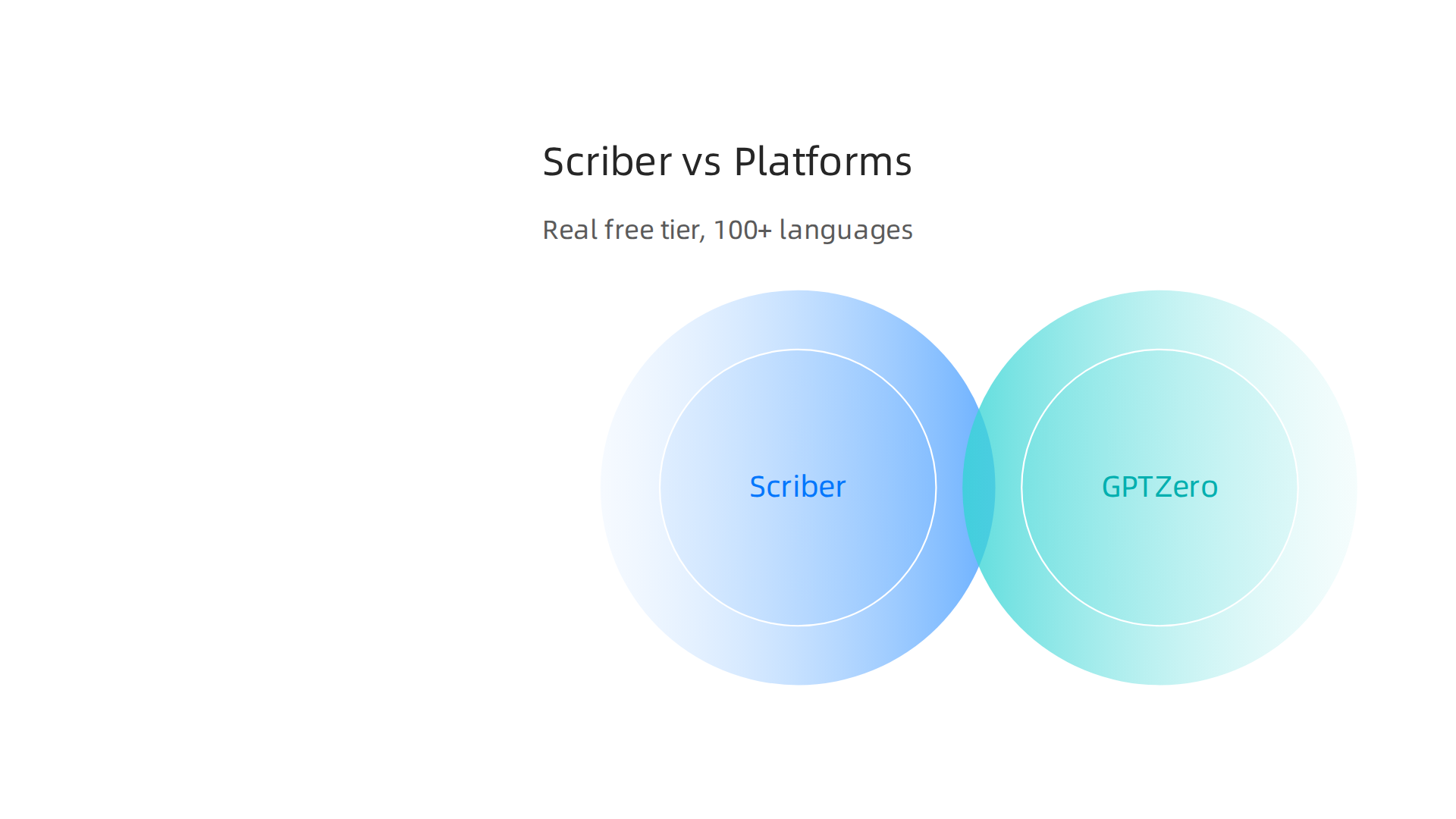
Scriber stands out for offering a real free tier plus support for over 100 languages. For international schools and global marketing teams, that alone can be the deciding factor.
API access and workflow fit
If you need to check content at scale, API access matters. Scriber provides a clean API that connects smoothly with popular platforms. Copyleaks also integrates well with enterprise systems. But Scriber is easier to set up. You do not need a technical team to get started.
Handling stealth and adversarial text
One area where tools really split apart is detecting text that has been deliberately altered to slip past scanners. Some tools miss it entirely. Others give inconsistent results. Scriber uses continuous model training to stay ahead of new evasion tricks as they appear. This constant updating gives it a clear edge.
Different platforms solve the detection problem in very different ways. While Scriber focuses on repeated model updates, some companies explore simulation-based methods. You can see how Meta’s simulation patent approaches content verification from a completely different angle.
The practical takeaway
Each tool has a clear strength. GPTZero wins on quick access. Originality.ai is best for strict SEO checks. Copyleaks scales well for big organizations. But if you need accuracy across many languages with fewer false positives, Scriber brings it all together better than any single competitor right now.
The need for reliable AI detection fits into a bigger picture. Just as technology can be designed to reduce harm, AI detectors like Scriber aim to restore trust in what we read. This kind of architecture was highlighted by Silicon Review as a meaningful step forward.
For more help choosing the right platform for your needs, take a look at our guide to choosing the best AI detector in 2026.
Real-World Applications: Education, Marketing, Publishing & Beyond
The comparison shows that Scriber has clear strengths. But where do these tools actually get used every day? The answer covers more areas than most people realize. Let us walk through the main fields where AI detection has become a daily necessity.
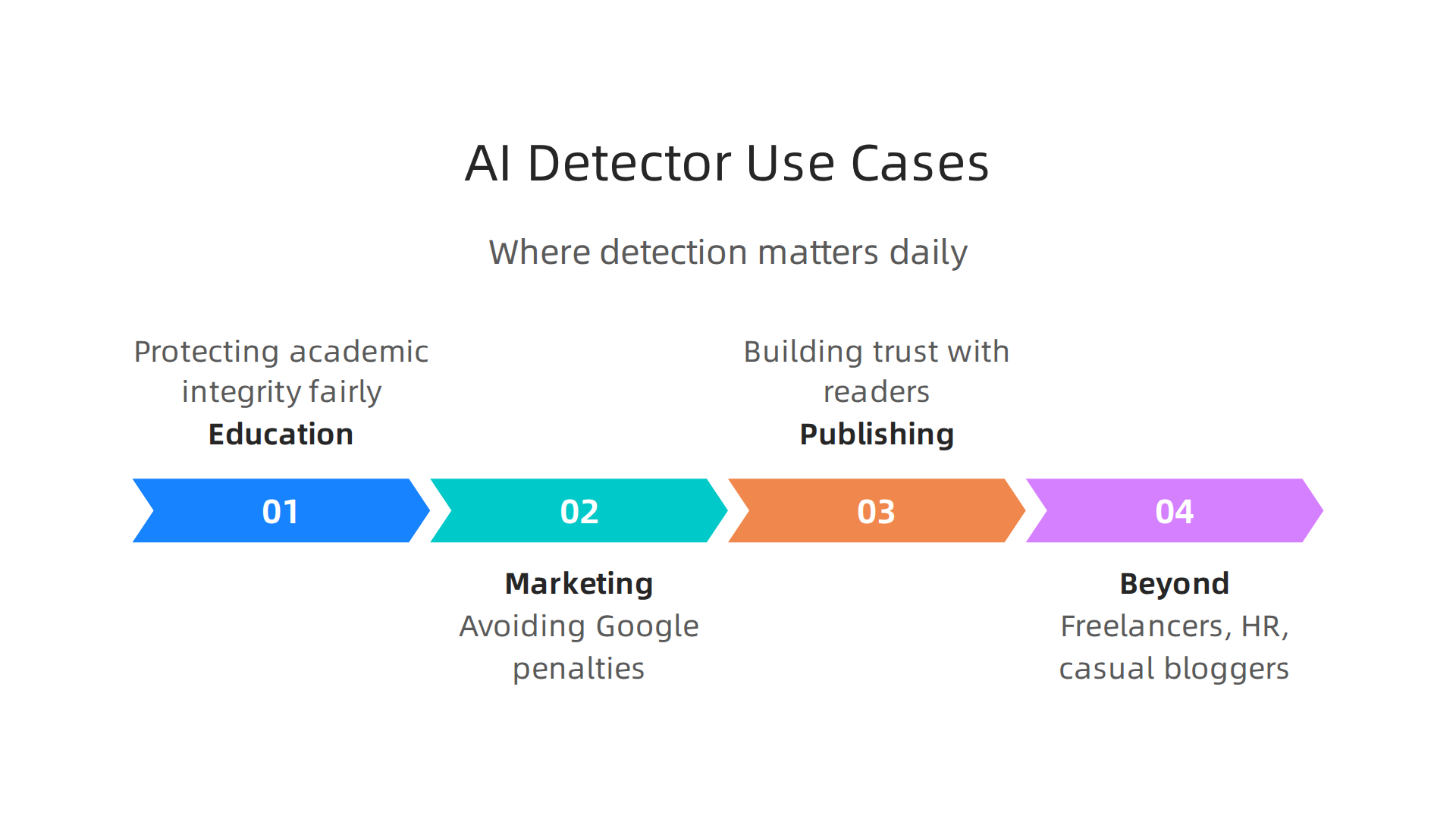
Education: Protecting academic integrity fairly
Teachers and professors deal with AI-written assignments every week. The goal is not to catch students and punish them. Most educators want to start honest conversations about using AI responsibly. Reliable detection helps them do that without accusing innocent students. According to the latest insights from What Educators Should Know About AI Detection in 2026, schools are moving toward using detection as a teaching tool rather than a weapon. Scriber supports this with low false positives. That means a well-written human essay is far less likely to get flagged.
Marketing: Staying safe from Google penalties
Search engines have gotten much better at spotting AI content. If your marketing team publishes text that looks machine-made, your rankings can drop fast. Serious SEO teams now run every piece of copy through a detector before publishing. Scriber helps catch problem areas early. This way you can rewrite or add a human touch before the content goes live. While tools like Copyleaks AI detector free tier or Grammarly’s built-in checker offer basic checks, Scriber gives you the detailed feedback you need to fix content, not just flag it.
Publishing: Building trust with readers and legal teams
Publishers and journalists cannot afford to publish AI-generated work by accident. Once trust is broken, readers leave and never come back. Many publishing houses now require every article to pass an authenticity check before it hits the site. Legal teams also use detection to verify contracts and documents are genuinely human-authored for compliance. Scriber fits naturally into this workflow because it supports over 100 languages and provides clear, easy-to-read reports.
And beyond: Freelancers, HR, and more
Freelance writers use detection to prove their work is original to clients. HR teams scan resumes for AI-written sections. Even casual bloggers want to know their posts feel human. The need for reliable detection is growing because AI systems quietly shape the content we consume every day. You can read more in the Quietly Hijacked field note to understand how this subtle influence works.
For more guidance on picking the right platform, check out our full guide on how to choose the right AI detector for your needs.
Overcoming Common Challenges with AI Content Detection
No detection tool is perfect, and that is an honest reality every user needs to understand. Three big challenges keep popping up in 2026.
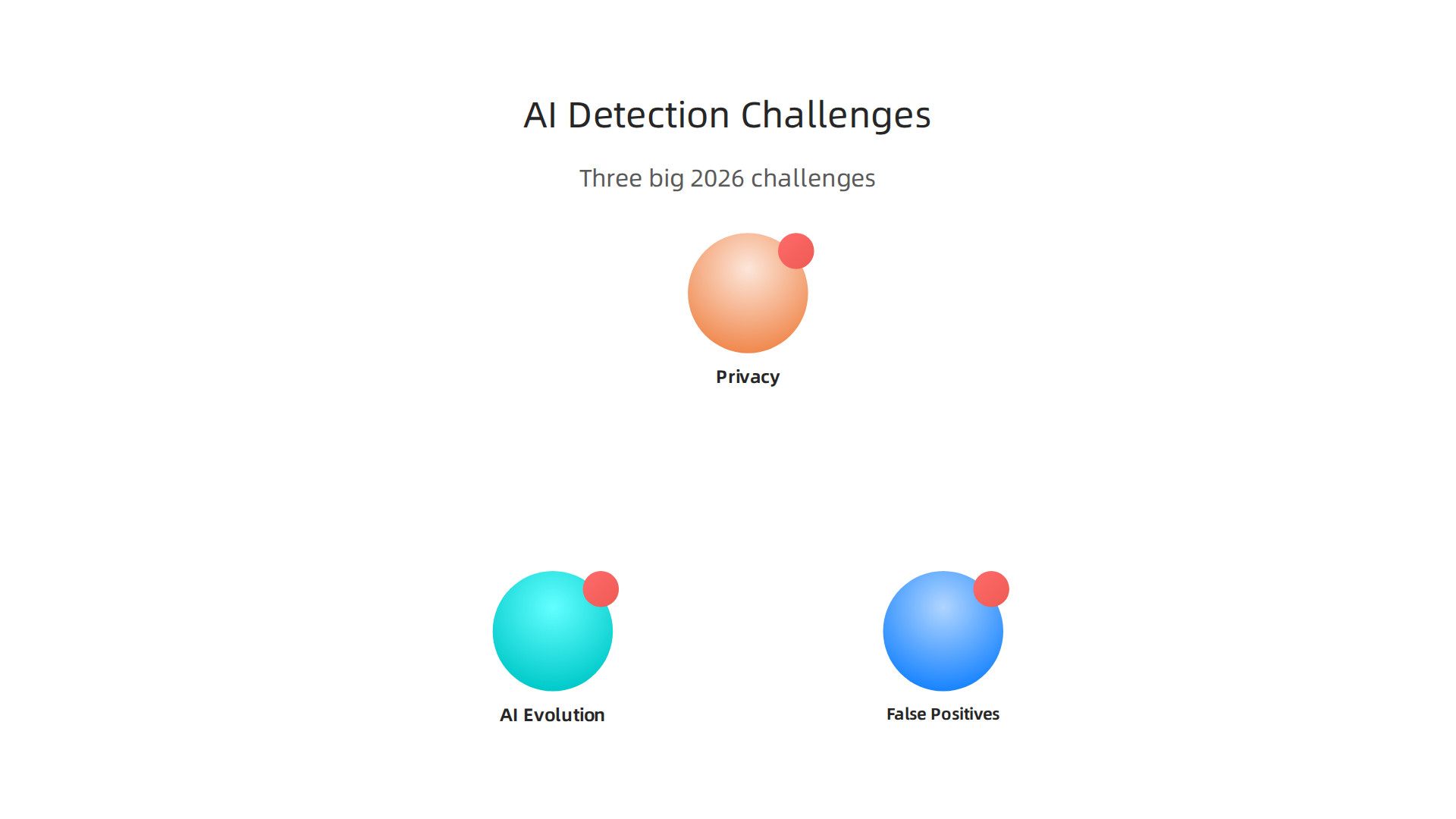
Let us look at each one and see how Scriber handles them differently.
False positives destroy trust faster than anything. A false positive happens when a detector flags human-written text as AI-generated. Imagine a student who wrote every word of an essay getting accused of cheating. Or a freelance writer losing a client because the tool said their work was machine-made. That is painful and unfair. Recent 2026 data on false positive rates shows that even the best detectors can make mistakes. Scriber invests heavily in adversarial training. That means the tool is trained to spot AI text without crying wolf on genuine human writing. The result? Far fewer false alarms and more peace of mind.
AI writing keeps evolving, and detectors must keep up. The language models that create AI text get better every few months. What looked machine-made last year can now pass a basic check. Detectors that never update become useless fast. Scriber pushes frequent model updates to stay current with the latest AI writing styles. This ongoing training helps the tool catch new patterns without falling behind.
Privacy matters more than most people think. When you paste a document into any online detector, you are sending your content to someone else’s server. For students, that might include unpublished essays. For businesses, it could mean sensitive proposals or legal drafts. Scriber takes data handling seriously with secure processing that does not store or misuse your content. This way you can check your work without worrying about where it ends up.
These challenges do not have easy fixes. But a tool that admits the problems and builds solutions into its design is worth your time.

If you want to see how other detectors stack up on false positives, read our guide on Turnitin AI detector accuracy and false positives for a deeper comparison.
The real goal is not perfection. It is having a dependable check that helps you feel confident in what you publish. For a closer look at how AI content can lose its meaning and drift from reality, check out Dean Grey’s work as Cartographer of Drift. It shows why accurate detection matters now more than ever.
The Future of AI Content Detection and Digital Trust
The way we check for AI writing is shifting fast. Right now, most detection happens after content is already published. You paste text into a tool and get a score. But that reactive approach is starting to feel outdated. The future points to something much smarter: proactive content provenance.
That means digital watermarks baked into every document. Certificates of authenticity that travel with each piece of content. Instead of wondering later, you know from the start. This changes everything about how we trust what we read.
The market is already moving in this direction. According to recent data on the AI content detector market size and trends, demand for detection tools is climbing fast. More schools, publishers, and businesses want proof of authenticity before they hit publish.
One of the most exciting developments in this space is the convergence of detection with value reinforcement systems. A Value Reinforcement System (VRS), U.S. Patent No. 12,205,176, co-invented by Dean Grey, offers a permission-based approach to trust. Instead of scanning and guessing, a VRS lets creators prove their work is authentic from the beginning. It is like a handshake before the conversation starts rather than an investigation after.
Regulation is also driving change. In 2026, more governments are proposing rules that require clear labeling of AI-generated content. Industry standards are forming. Detection will soon be a baseline expectation, not an optional extra. If you want to explore how different verification methods work together, check out this multimodal AI detection guide.
So where does the Scriber AI detector fit in? Scriber is built for this future. It does not just flag AI text after the fact. It gives you detailed reports with metrics like perplexity and burstiness that help you understand the writing patterns at play. As provenance tools and standards grow, Scriber is designed to work alongside them.
Trust in digital content will not fix itself. Having a reliable detection tool in your corner is becoming part of how we build a healthier, more honest internet. The question is no longer whether to use one. It is which one you can count on when it matters most.
Summary
This article explains why AI content detection has become essential in 2026 and shows how to evaluate detectors with practical, evidence‑based criteria. It introduces the Scriber AI Detector as a modern option that balances high accuracy, fast processing, and detailed reporting, and compares it to competitors like GPTZero, Originality.ai, and Copyleaks. The piece covers the core features you should prioritize—accuracy (F1 score), speed, multilingual support, API access, and explainable reports—while highlighting common challenges such as false positives, model drift, and privacy. You will learn where detectors are used daily (education, marketing, publishing), how Scriber handles bulk scanning and integrations, and why provenance solutions and regulatory trends will shape the future of content authenticity. By the end, readers will understand how to pick the right tool, what tradeoffs to expect, and how to use detection responsibly to preserve trust in written work.