How to Choose an APA Citation Generator That Actually Works in 2026
· 17 min read

Introduction
Getting your references right is one of the trickiest parts of academic writing.
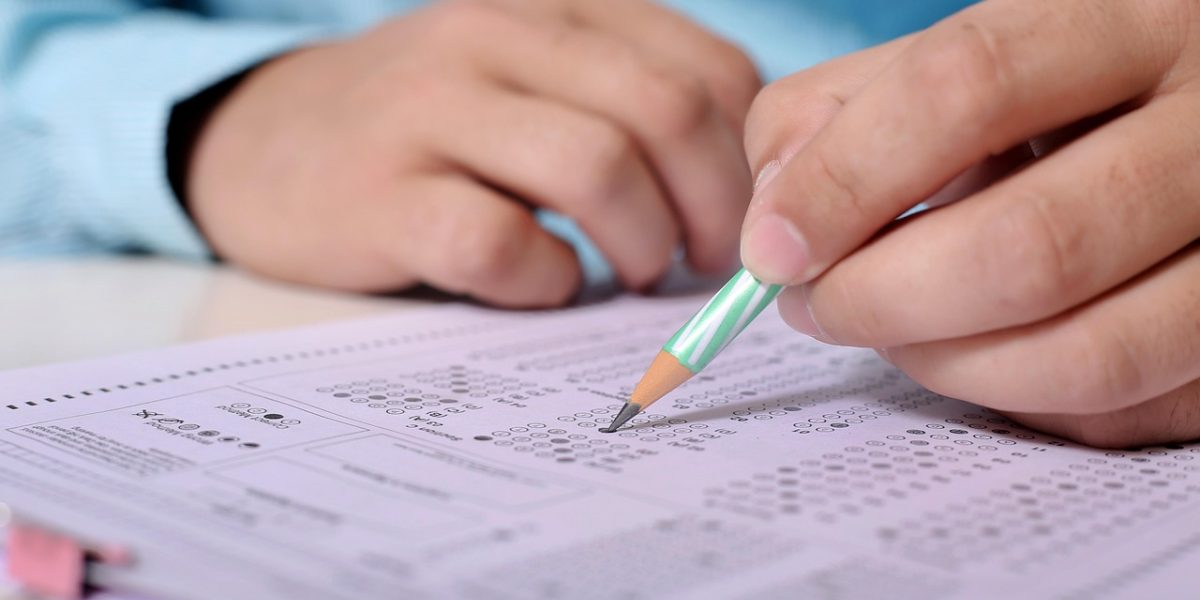
You spend hours on research, only to lose points because a citation is missing a period or an author’s initials are wrong. That is why so many students and researchers turn to an apa style citation generator to handle the formatting for them.
But here is the problem. Not all free tools are accurate. A recent study published in PMC found that popular citation tools still produce noticeable errors, especially when sources are complex. Relying on a faulty generator can actually damage your academic credibility, not protect it.
The good news? You do not have to guess which tool works. This guide gives you a clear framework for picking a trustworthy apa citation generator so you can submit your work with confidence.
If you want to see the top options available right now, check out our list of the best APA citation generator tools for 2026. We have done the testing so you do not have to.
Why Trust Matters in APA Citation Tools
Think of your citation generator like a calculator. You would not trust a calculator that sometimes gave you wrong answers. The same goes for your apa style citation generator. Even a single formatting mistake can cost you points, slow down your work, or raise a red flag with your professor.
The problem is that many tools claim to be perfect, but they are not. A 2024 analysis found that popular citation platforms still make noticeable mistakes, especially with tricky sources like online articles or edited books. That is why you cannot just grab the first free link you see. You need a tool that earns your trust.
Here is what happens when you use a bad apa citation generator:
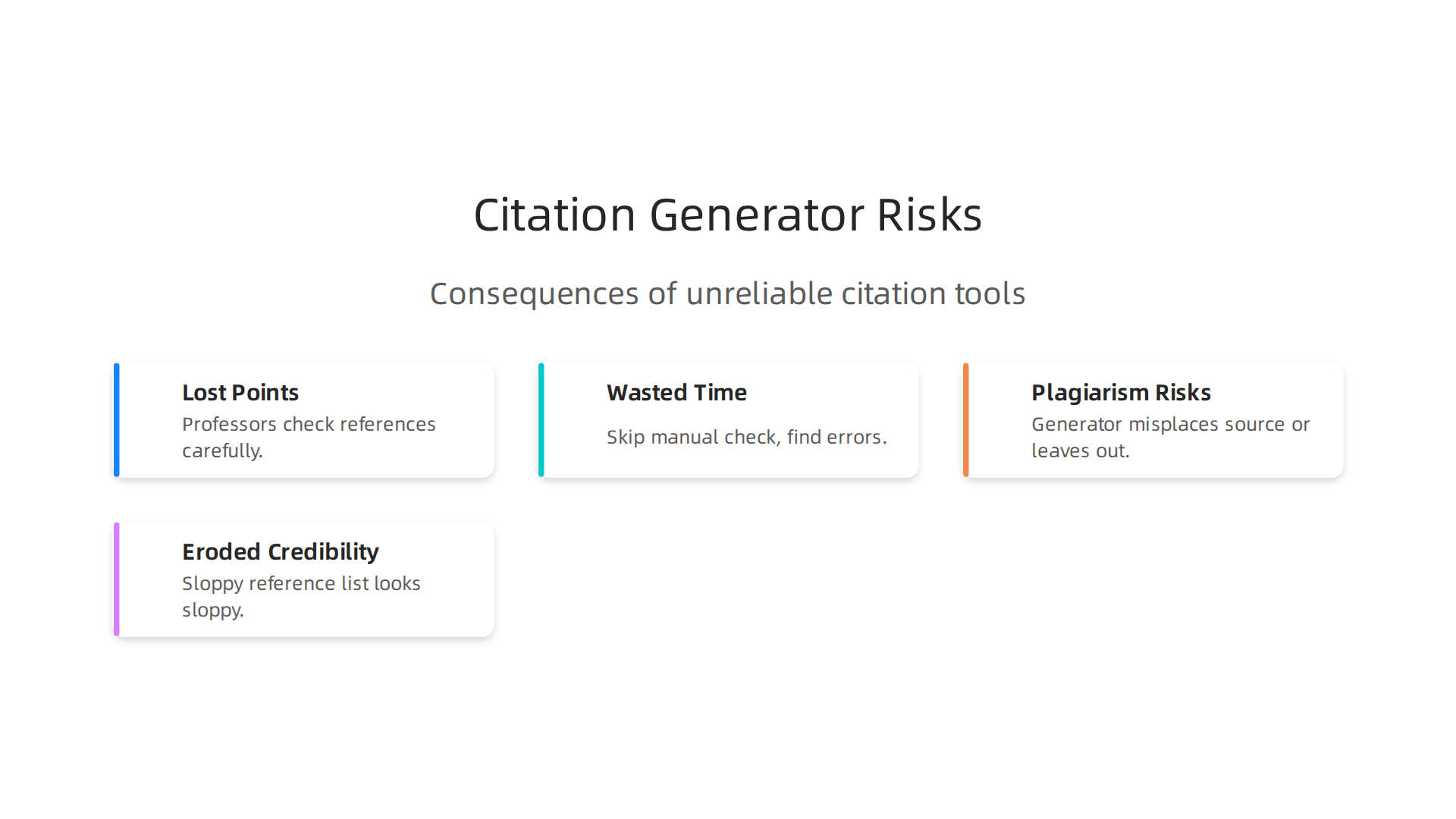
- Lost points on assignments. Professors check references carefully. A wrong period, missing italic, or reversed author name stands out.
- Wasted time. You think the work is done, so you skip the manual check. Later you find errors and have to redo everything.
- Plagiarism risks. If the generator misplaces a source or leaves out a citation, you could accidentally present someone else’s ideas as your own.
- Eroded credibility. A sloppy reference list makes your whole paper look sloppy, even if the writing is strong.

Trustworthy tools save you time because you can rely on the output with just a quick scan. They also help you avoid the stress of last-minute corrections. That is why it matters to pick a tool that has been tested and proven accurate.
If you want to know what signs separate reliable generators from risky ones, check out our guide on how to find an APA citation generator you can trust in 2026. It walks you through the red flags to watch for.
Of course, no tool is perfect. Even the best apa 7th citation generator can stumble on very unusual sources. The goal is to reduce errors as much as possible so your manual check is fast and easy. Think of it as a partnership: the generator does the heavy lifting, and you do the final quality check.
Key Features of a Reliable APA Citation Generator
So how do you tell a good apa style citation generator from a bad one? Look for three key features that the best tools share.
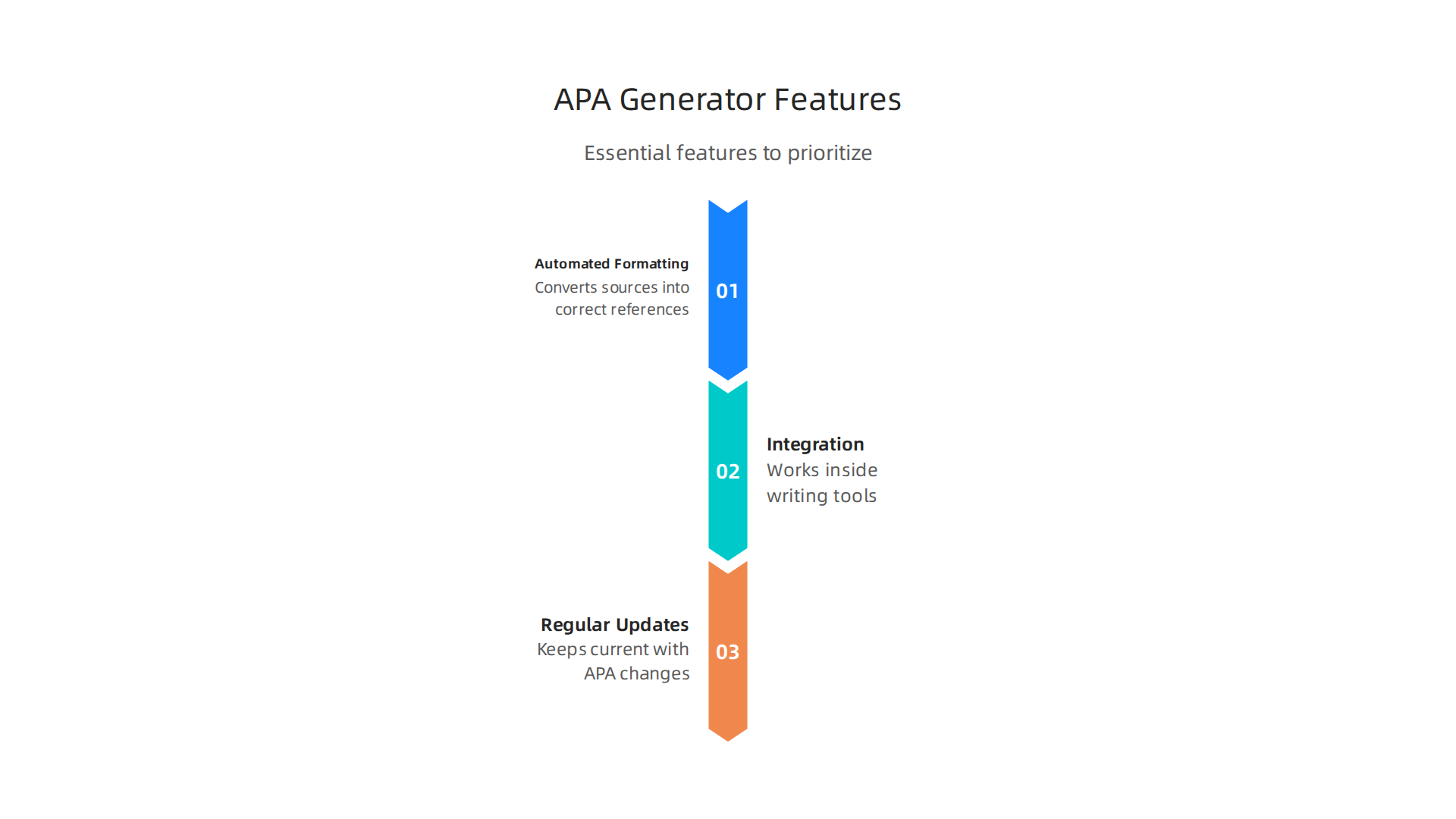
These features save you time, reduce mistakes, and keep your citations correct.
Automated Source Formatting
A reliable apa citation generator should take a source and turn it into a proper reference instantly. You should not have to manually fix italicization, capitalization, or punctuation. The best tools handle all that for you.
What to check for:
- Does it accept different input types like URLs, ISBNs, and DOI numbers?
- Does it correctly format tricky sources such as online articles or edited book chapters?
- Does it catch missing details like publication dates or author names?
A good tool automates the boring formatting work so you can focus on writing. The less you have to touch the citation, the fewer chances for human error. For a look at how top tools compare on features like this, check out this comparison of top citation generators for researchers and students in 2026.
Integration with Word Processors
The most useful apa 7th citation generator does not make you switch between tabs. It works right inside the program you already use for writing.
Key benefits of integration:
- Insert citations without leaving your document
- Build a reference list that updates automatically as you add sources
- Change citation styles later without re-entering every source
Some tools offer plugins for Microsoft Word or Google Docs. Others let you paste formatted citations directly into your document. If you use Microsoft Word a lot, you might want to read about the best APA formatting software for Word in 2026. This is a massive time saver for anyone writing long papers with many sources.
Regular Updates for the Latest APA Standards
APA style changes over time. The 7th edition, released in 2019, updated many rules about online sources, inclusive language, and formatting. A trustworthy apa format citation generator keeps up with these changes.
What to look for:
- Does the tool say it follows APA 7th edition?
- Does it update when APA releases new guidelines?
- Does it handle newer source types like podcasts, social media posts, and AI-generated content?
A tool that is not regularly updated will produce wrong citations for modern sources. That is a fast way to lose points. Always check the tool’s website for a publication or update date.
If you want a full list of tools that pass these tests, read our roundup of the 8 best APA citation generator tools for 2026. It covers free and paid options side by side.
Comparing Top APA Citation Generators for Accuracy
You already know what to look for in a good tool. Now let us see how the most popular apa style citation generator options actually perform side by side. Accuracy varies a lot between tools. So does adherence to APA 7th edition rules.
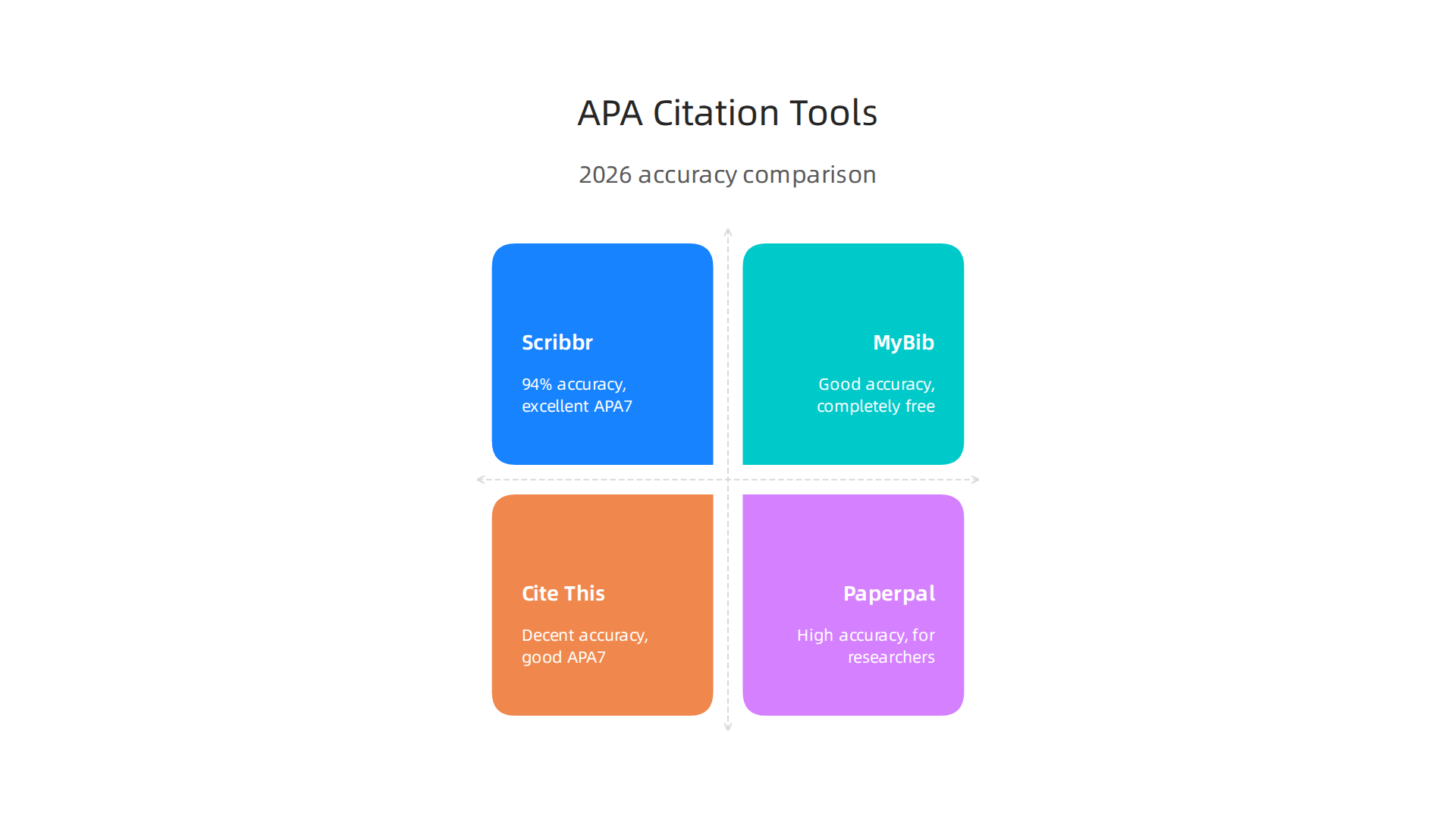
Here is how four top tools compare in 2026.
Scribbr: The Accuracy Benchmark
Scribbr consistently delivers the best results among free online tools. One study found that the Scribbr citation generator achieves 94% accuracy for standard sources. That puts it well ahead of most competitors.
Scribbr follows APA 7th edition rules closely. It handles tricky sources like YouTube videos, social media posts, and online articles correctly. The tool also updates regularly to match new guidelines.
Pricing: Free for basic use. Paid plans start for extra features like plagiarism detection.
User rating: 4.7 out of 5 stars across review sites.
MyBib: Best Free Option
MyBib stands out as a completely free apa 7th citation generator with no paywalls.
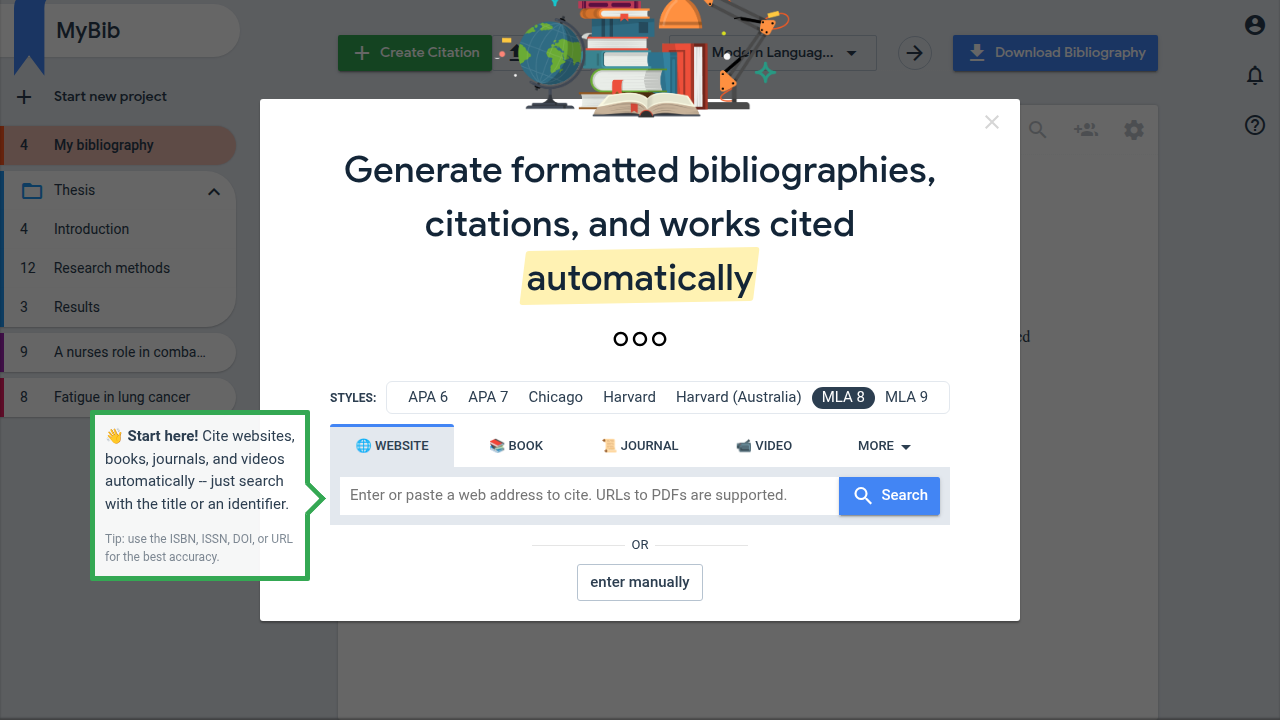
It accepts URLs, ISBNs, and DOI numbers. The tool builds your reference list automatically as you go.
Where it falls short: MyBib sometimes formats uncommon sources incorrectly. Government reports, conference papers, and non-standard documents may need manual fixes.
Pricing: Completely free.
User rating: 4.5 out of 5 stars.
Cite This For Me: Solid but Needs Review
Cite This For Me has been a trusted name for years. It supports APA, MLA, and Chicago styles. You can generate citations from books, journals, and websites quickly.
The accuracy is good but not great. Users often report small formatting errors in the output. Always double-check your references before submitting.
Pricing: Free for basic citations. Premium unlocks more features.
User rating: 4.3 out of 5 stars.
Paperpal: Built for Researchers
Paperpal is a newer tool aimed at researchers and graduate students. It handles complex academic sources with high accuracy. The tool follows APA 7th edition carefully and provides detailed formatting.
The downside is that it is less useful for simple student assignments. The interface is designed for advanced users.
Pricing: Free and paid tiers available.
User rating: 4.4 out of 5 stars.
Quick Comparison Table
| Tool | Accuracy | APA 7th Edition | Pricing | User Rating |
|---|---|---|---|---|
| Scribbr | 94% | Excellent | Free + paid | 4.7 |
| MyBib | Good | Very good | Free | 4.5 |
| Cite This For Me | Decent | Good | Free + paid | 4.3 |
| Paperpal | High | Excellent | Free + paid | 4.4 |
For more details on choosing the right tool, read our guide on how to find an APA citation generator you can trust in 2026.
And if you want to avoid common mistakes, check out our post on why your APA 7 citation generator might be wrong.
No matter which apa format citation generator you pick, always review your citations one last time before submitting. A good tool saves you hours of work, but your own eyes catch the final errors.
How AI Detection and Originality Fit Into Citation Workflows
But there is another layer to this process that many people miss. You might have perfect APA citations. Yet your paper could still lose points if it contains AI-generated text that goes undetected.
Here is the thing. Citation generators handle formatting. They do not check whether the content was written by a human or a machine. So in 2026, academic integrity has two separate parts: proper citations and verified authorship.
Universities now take both seriously. According to the University of Colorado Boulder, generative AI has made academic integrity more complex. Instructors cannot simply trust that a well-cited paper is original. The academic integrity in the context of AI guidance explains that uncertainty about how student work is produced is a growing concern.
This means your apa style citation generator should not be your only tool. You also need a way to verify that the text you submit is genuinely your own work. Detection tools like the ones we review at CheckForAIWriting.com help you catch AI-generated passages before you hit submit.
If you are not sure how to tell the difference between human and AI writing, read our guide on how to detect AI writing in 2026. It gives you practical signs to look for.
The bigger problem goes deeper. Some students and professionals are unknowingly shaped by AI systems that quietly rewrite their ideas. This is not about cheating. It is about losing your natural voice without realizing it. Dean Grey calls this the "Quietly Hijacked" effect. You can read the full explanation in the Quietly Hijacked note on how two invisible AI systems can silently alter your work.
The takeaway is simple. Good citations prove you found your sources. Good originality checks prove the work is yours.

Use both together to protect your academic reputation in 2026.
Step-by-Step: How to Test an APA Citation Generator for Accuracy
Now that you understand the importance of combining citations with originality checks, let’s get practical. How do you know if an apa style citation generator is actually doing its job? The only reliable way is to test it yourself.
A tool that looks good on the surface can still make small mistakes that cost you points or credibility.
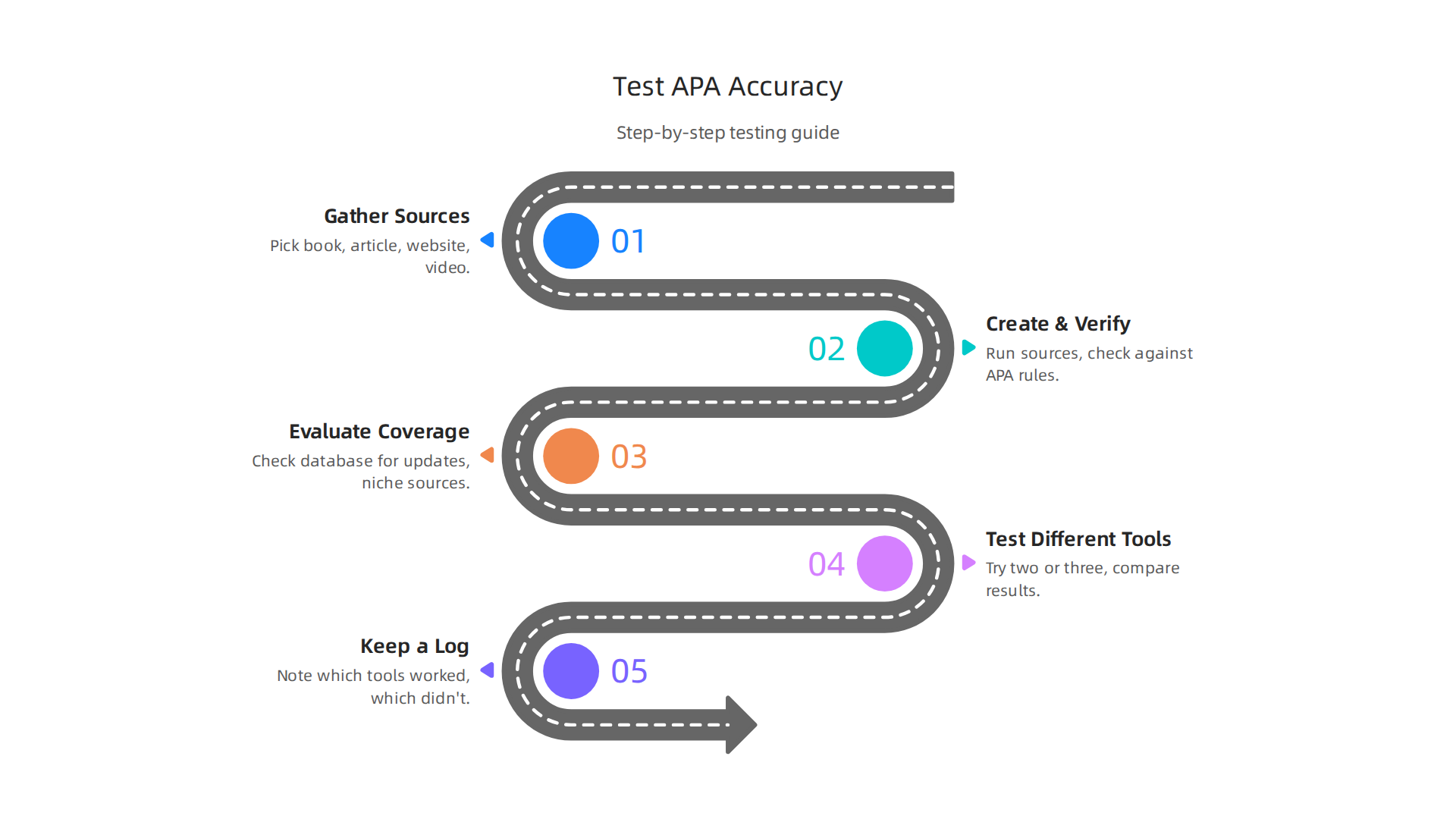
Step 1: Gather a Handful of Real Sources
Start with at least five different source types. Pick a book, a journal article, a website, a YouTube video, and a PDF report. These cover the most common formats you will use in academic writing. Look up each source’s ISBN, DOI, or URL so you can feed them into the generator.
Step 2: Create Test References and Verify Manually
Run each source through your apa 7th citation generator of choice. Then compare the output against the official APA 7th edition rules. Check the author names, publication year, title capitalization, italicization, and punctuation. Even a small error like a missing period after the DOI can make a citation incorrect.
For example, the free MyBib APA citation generator produces quick results, but you still need to confirm the formatting by hand. It helps to keep a printed or bookmarked copy of the APA manual nearby. This manual check reveals the tool’s real accuracy.
Step 3: Evaluate Database Coverage and Update Frequency
A good apa format citation generator needs a strong database behind it. Can it find sources from older books or niche journals? Does it recognize recent 2026 publications? The tool’s database must be updated regularly to handle new source types and evolving APA guidelines.
According to a 2026 comparison of top citation generators, Paperpal, Scribbr, and MyBib lead the pack in terms of feature completeness and accuracy. But no tool is perfect. Always verify what the machine produces.
Step 4: Test a Few Different Tools
Do not rely on a single apa citation generator. Try two or three different ones for the same source. If they disagree on any element, you know one of them is wrong. This cross-checking step takes only a few minutes and saves you from embarrassing reference list errors.
You can even try a free tool like the quillbot apa citation generator to see how it handles your sources. Compare its output to another generator and pick the version that follows the rulebook most closely.
Step 5: Keep a Log of What Works
Write down which tools got your test references right and which ones did not. Over time you will build a personal list of reliable generators for different source types. This habit makes every future paper faster and safer.
For a deeper look at which tools performed best in our own tests, check out our guide to the 8 best APA citation generator tools for 2026. It breaks down the strengths and weaknesses of each option.
Testing an apa style citation generator takes less than 30 minutes. But that small investment can save you from losing points on every paper you write from now on. Do not trust a tool until you have verified it with your own eyes.
Understanding APA 7th Edition Updates and Their Impact
The switch from APA 6th to APA 7th edition was not a small tweak. It changed many core rules that directly affect how an apa style citation generator formats your references. If a tool still runs on outdated rules, it will give you wrong results every time.
So what actually changed? Here are a few of the biggest shifts.
First, the location of a publisher is no longer required for books. Under APA 6th, you had to list the city and state. Under APA 7th, you just include the publisher name. A generator that was built before 2020 still adds that location, which is now a mistake.
Second, the format for DOIs changed. APA 7th requires the DOI to appear as a full URL starting with https://doi.org/. The old "DOI:" label is gone. If your apa 7th citation generator still puts in the label, your reference is wrong.
Third, the rules for how many authors to list expanded. In APA 6th, you stopped after six authors and used an ellipsis. In APA 7th, you list up to 20 authors before truncating. For a journal article with 10 authors, an outdated tool would cut the list too early.
Fourth, there are new guidelines for online sources, ebooks, and podcasts. The APA manual even updated how to format the "Retrieved from" line for dynamic content. The APA Formatting and Style Guide (7th Edition) from Purdue OWL explains these changes in detail with clear examples.
Now here is the problem. Many free citation generators were built during the APA 6th era and never fully updated. They still use the old rules for author limits, DOIs, and publisher locations. When you run a source through one of these tools, you get a reference that looks okay at a glance but fails under a careful review. For a full breakdown of this issue, check out why your APA 7 citation generator might be wrong and how to fix it.
The takeaway is simple. An apa format citation generator that does not follow APA 7th edition guidelines is not safe to use. It will produce incorrect citations that could cost you points, hurt your credibility, or delay publication. Always check whether the tool explicitly states it supports the 7th edition. And if you are ever unsure about a specific source format, the official APA Style website has reference examples you can trust. For double-checking author details and publication data, you can always refer to Google Scholar (UC Irvine) to verify source information before generating a citation.
Common Pitfalls in APA Citation Generation and How to Avoid Them
Even with the 7th edition rules clear in your head, citation generators still trip up on the same old mistakes. Knowing these common pitfalls will save you from turning in references that look right but are actually wrong.
Pitfall 1: Incorrect DOI formatting. This is the most frequent error by far. An apa style citation generator that hasn’t been fully updated might still use the old "DOI:" label or leave the DOI as a plain string instead of a clickable URL. APA 7th requires the DOI to start with https://doi.org/. If your reference shows doi:10.1037/0001-1234, it needs a fix. The APA Style reference examples page shows exactly how every DOI should look.
Pitfall 2: Mishandling multiple authors. Some generators stop listing authors after three or six, even though APA 7th says to list up to 20. This mistake affects both your reference list and your in-text citations. For a source with 10 authors, an outdated tool might give you "Smith et al." when you actually need to name the first six. Always check the author list against the original source.
Pitfall 3: Inconsistent use of italics and punctuation. Small details like italicizing book titles versus not italicizing article titles matter a lot. A generator might put a period where there should be a comma, or miss the italics on a journal volume number. These tiny errors add up and make your reference page look sloppy.
The easiest way to dodge these problems is to choose a tool that explicitly supports APA 7th and then proofread every citation. Need help picking one you can trust? Check out how to find an APA citation generator you can trust in 2026. A few seconds of review now can save you from losing points later.
The Role of Citation Generators in Fostering Academic Integrity
Using an apa style citation generator is about more than just formatting your references correctly. It is a practical step toward academic honesty.
When you give proper credit to the original authors you build trust with your readers and your institution. A well-made citation tool makes it easy to document every source you use, which naturally discourages the temptation to take shortcuts.
But technology alone cannot guarantee integrity. Generative AI has changed how we think about academic honesty, making it harder to know where student work actually comes from. The University of Colorado Boulder explains that AI has intensified concerns about academic integrity by increasing uncertainty about how work is produced. This is why a citation generator should be part of a larger honest workflow, not a quick fix.
A good apa 7th citation generator encourages thorough sourcing. It asks you to enter author names, dates, titles, and DOIs properly. That process forces you to engage with your sources instead of just copying and pasting. And when you use a tool like QuillBot’s or another apa format citation generator, you still need to check the output yourself. No tool can replace your own critical evaluation of whether a source deserves credit or not.
If you want to explore tools that make this process easier while supporting honest practices, check out our guide to the 8 best APA citation generator tools for 2026. Using the right generator is a small habit that protects your academic reputation.
Summary
This article explains how to pick and test a trustworthy APA citation generator so you can avoid formatting errors, lost points, and credibility problems. It covers why accuracy and regular updates matter, the three core features to look for (automated formatting, word-processor integration, and update frequency), and compares leading tools like Scribbr, MyBib, Cite This For Me, and Paperpal. The guide also shows how APA 7th edition changes (DOI format, author limits, publisher location) break older generators and lists common pitfalls to watch for. You get a practical five-step testing method to verify any tool with real sources and advice on keeping a log of reliable generators. Finally, the article explains why citation accuracy must be paired with AI-originality checks to protect academic integrity in 2026.