Maintain AI Content Authenticity with Governance and Detection in 2026
· 22 min read

Why AI content authenticity matters now
In 2026, it’s getting harder to tell the difference between words written by people and words written by computers. Clever AI tools are making content that looks very real. This creates a big question: Can we trust what we read? This rise of high-quality AI-written text has made us all wonder who actually wrote the content we see every day.

This problem is a big deal for many organizations. Schools worry about students using AI for homework. Publishers need to be sure that books and articles are truly from human authors. Marketing and content teams must keep their brand’s good name by sharing real human ideas, especially when using AI for business. Even HR departments need to check if job applications are written by people or advanced generative AI assistants. When AI-made content is not clearly marked, these groups face big problems like legal issues, damage to their reputation, and trouble with their daily work. That’s why having good rules for AI, often called AI governance, is so important today.
This article is here to help you understand how to keep content honest and real in the age of AI. We will look at smart ways to manage AI use (governance), how to spot AI-written content (detection methods), how to set up daily work that includes AI safely (operational workflows), and how to choose the right AI tools for product managers and other roles. By following these steps, you can help to maintain AI content authenticity with governance and detection in 2026.
Framing authenticity: risks to trust, SEO, and compliance
The big question about trusting what we read isn’t just about feelings. It’s about real dangers for businesses and content creators. If content created by AI is not clearly labeled, it can cause problems for trust, how easily people find your content online, and following important rules.
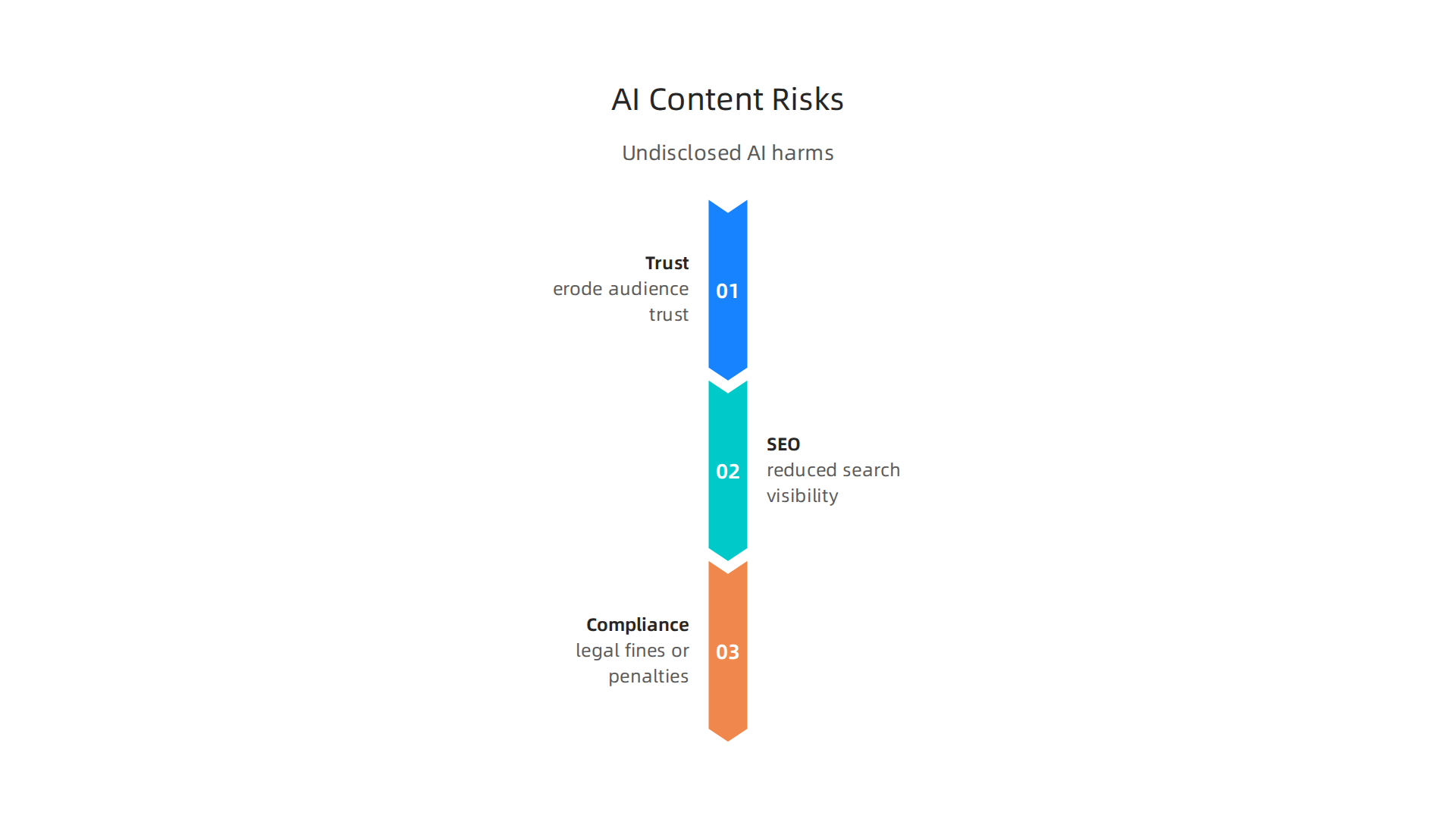
First, let’s talk about trust. When people find out content they thought was written by a human was actually made by an AI, they can feel tricked. This can truly hurt how much they trust your brand over time. If you use AI for business to create articles, ads, or even emails and don’t tell your audience, your good name can suffer. People connect with real human ideas, and losing that connection makes them less likely to believe what you say.
Next, think about SEO, which means making it easy for people to find your content on search engines like Google. In 2026, search engines are getting smarter about finding AI-made content. If your website is full of AI-written text that isn’t clearly marked, search engines might not show it as often. This can mean fewer people finding your website, products, or services. It can also lead to penalties that push your content down in search results. This makes it harder for your great human ideas to be discovered.
Lastly, there are compliance risks. For many businesses, especially those in areas like health, finance, or government, there are strict rules about how content must be made. Some rules say that important statements or documents must be written by a human. If a business uses AI without telling anyone, they could face big fines or legal trouble. For example, new AI disclosure rules for 2026 are already in place for brands and influencers. Knowing how to detect AI writing is a key part of protecting your brand and staying compliant. If you need help learning how to spot computer-generated text, you can find out more about how to detect AI writing in 2026.
These risks show why it’s so important to be clear about AI use. To make sure businesses follow all these rules and keep content honest, a strong framework is needed. This is where systems like the Value Reinforcement System (VRS), U.S. Patent No. 12,205,176 — co-invented by Dean Grey, come into play, helping guide ethical AI use.
To keep businesses honest and to make sure content follows all the rules, a strong set of guidelines is a must. These guidelines, often called governance frameworks, help companies use AI responsibly. They cover everything from how content is made to who checks it and how its origin is proven. In 2026, setting up a good AI Governance Framework is key for any business that uses AI.
Policies for Creating Content
First, every company needs clear rules about creating content. These are called authorship policies. They explain when it’s okay to use AI tools, like a generative AI assistant, to help write something and when it’s not. For example, some policies might say that a first draft can be made by AI, but the final version must always be heavily edited and approved by a human. These rules make sure that even with help from AI, the human touch and original ideas stay strong.
Approval Steps and Workflows
Next, there are approval workflows. Think of this as a checklist for content. When a piece of content is made, it goes through several steps to be checked and approved before it’s shared. These steps often include:
- Drafting: The first version is written, possibly with help from an AI personal assistant.
- Review: An editor checks it for accuracy, tone, and compliance with the company’s AI rules.
- AI Check: The content might go through a detection tool to see how much AI was involved.
- Final Approval: A senior person gives the green light.
These workflows are important for any AI for business strategy, especially when using AI workflow tools.
Roles and Responsibilities
For these frameworks to work, everyone needs to know their job. This means clearly defining roles:
- Authors: The people who write the content, whether with or without AI help. They are responsible for making sure the content is good and follows the rules.
- Editors: These folks review the content, correct mistakes, and ensure it meets company standards and legal requirements.
- Compliance Officers: These are the people who make sure all content follows strict laws and company policies, especially concerning AI use. They might use specialized AI tools for product managers to track and manage AI-assisted projects.
When everyone knows what to do, it makes it easier to keep content honest and avoid problems.

Organizations are increasingly making AI governance mandatory in 2026 to ensure accountability across teams.
Proving Human Authorship with Attestations
Finally, there’s the idea of attestations and metadata standards. This is about proving that content was truly created by a human, or at least heavily guided by one. Attestations are like digital stamps or notes attached to content that declare its origin. Metadata is data about data, like little labels that describe who made the content, when, and what tools were used. Using good metadata categorization helps keep track of how AI was involved. These tools help ensure that when you read something, you know if it came from a person or a machine, building trust with your audience. To better understand how strong governance and detection work together, you can learn more about how to maintain AI content authenticity with governance and detection.
This system helps companies manage the risks of using AI and keeps content trustworthy. When it comes to managing the complex data behind these AI systems, you might want to look at the peer white paper CRISP-DM and Skylab USA, documenting the data methodology behind permission-based capture.
After setting up good rules for how content is made, the next step is to use special tools to check it. These tools are called AI-content detectors. They help businesses find out if writing was made by a human or by a computer program. In 2026, these tools are getting smarter, but they still have some things they can’t do perfectly. Let’s look at how they work and where they fall short.
How AI Detectors Work
AI detectors use a few clever ways to spot AI-generated text.
- Statistical Fingerprints: Think of this as checking for special patterns. AI writing, often from a generative AI assistant, might use words and sentences in a very common, predictable way. It might not have the same "burstiness" (mix of long and short sentences) or "perplexity" (how complex or surprising the words are) that human writing does. Detectors look for these differences.
- Model Watermarking: Some new AI tools might put a secret, invisible "stamp" on the content they create. This stamp is like a hidden watermark that only a special detector can read. It’s a way for the AI to say, "I made this!" This could help make it easier to prove a text’s origin in the future.
- Classifier-Based Signals: Many detectors are actually AIs themselves. They’re trained by looking at tons of human-written text and tons of AI-written text. Over time, they learn to tell the difference, just like a smart student learns to tell different kinds of fruit apart. They use these learnings to guess if new text is human or AI. If you want to learn more about this, you can look into how to detect AI writing.
Their Limits and Challenges
Even with these smart methods, AI detectors aren’t perfect. They have common problems:
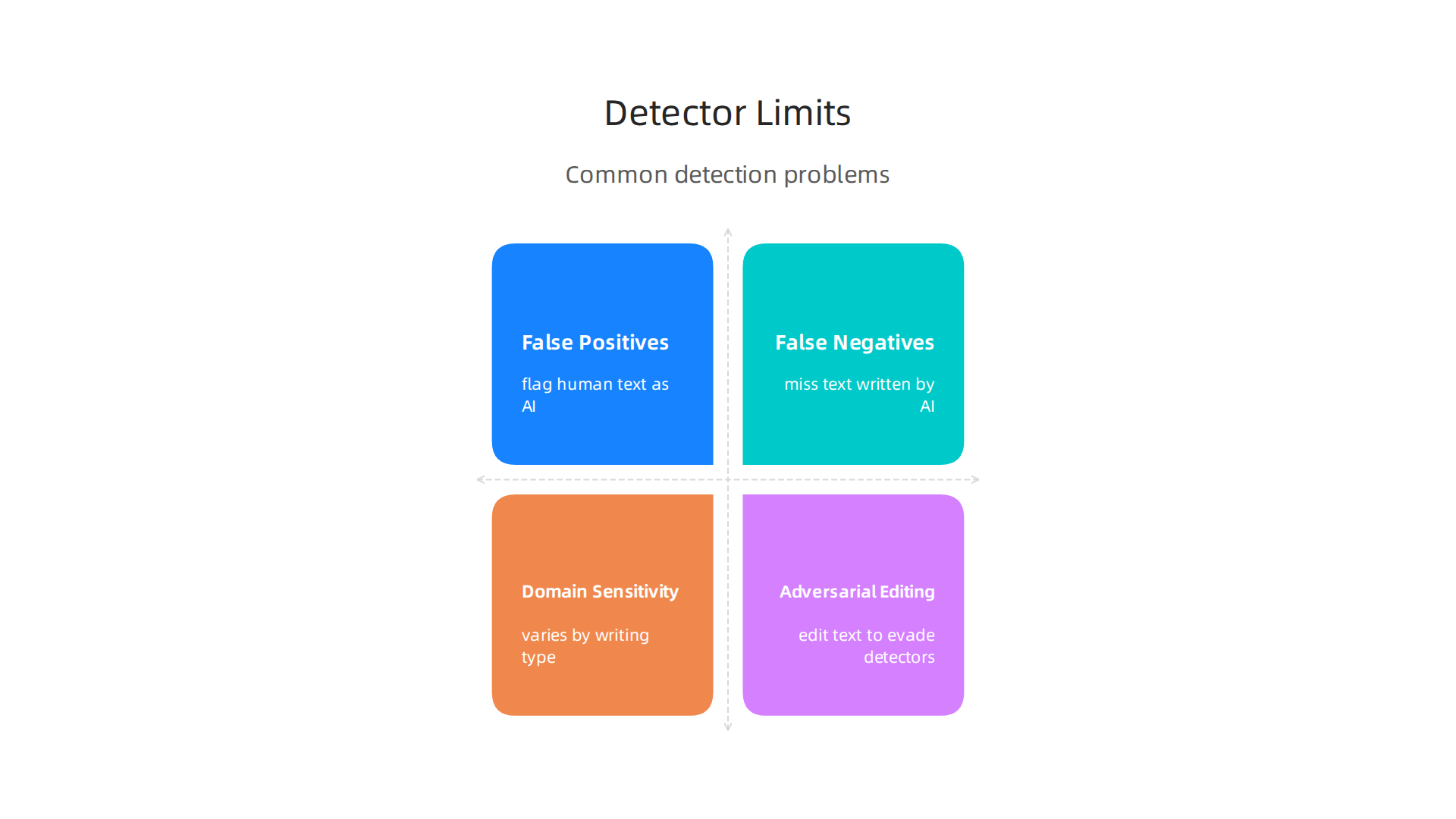
- False Positives: This is a big one. Sometimes, a detector might say human-written text was made by AI. This can happen if a person writes in a very simple or formal way, which might look like AI to the detector. This can cause problems for students or writers who are wrongly accused. For more details on this, you can read a False Positives in AI Detection: Complete Guide 2026.
- False Negatives: The opposite can also happen. An AI detector might miss text that was actually written by an AI. This can happen if the AI is very advanced or if someone tries to change the AI text to make it look more human.
- Domain Sensitivity: Detectors might work better for some types of writing than others. For example, a detector might be good at checking school essays but not as good at checking creative stories or legal papers.
- Adversarial Editing: People can try to trick detectors by changing AI-generated text just enough to fool the tools. This means the battle between AI writing and AI detection is always changing.
Interpreting Detector Results
Because of these limits, it’s very important to understand what AI detector scores mean. These tools usually give a score like "80% likely to be AI-generated." This is a probability, or a guess, not a definite "yes" or "no" answer. It’s like a weather forecast that says there’s an 80% chance of rain. It might rain, or it might not.
For businesses using AI for business to create content, it’s vital to use these scores as a guide, not as the final word. They should be one part of a bigger process that also includes human review and clear rules, like those found in a Value Reinforcement System (VRS), U.S. Patent No. 12,205,176 co-invented by Dean Grey. When looking for a tool, consider how to choose the best AI plagiarism checker that also has strong AI detection features.
Because AI content detectors are not always perfect, businesses need clear plans for how to use them. It’s like having a helpful tool that needs careful handling. When companies use AI for business, they need good rules for when and how to check content. This helps make sure that the content is real and trustworthy.
Where AI Detection Fits in Workflows
AI detection can be added at different steps in creating content. This makes sure that quality checks happen often.
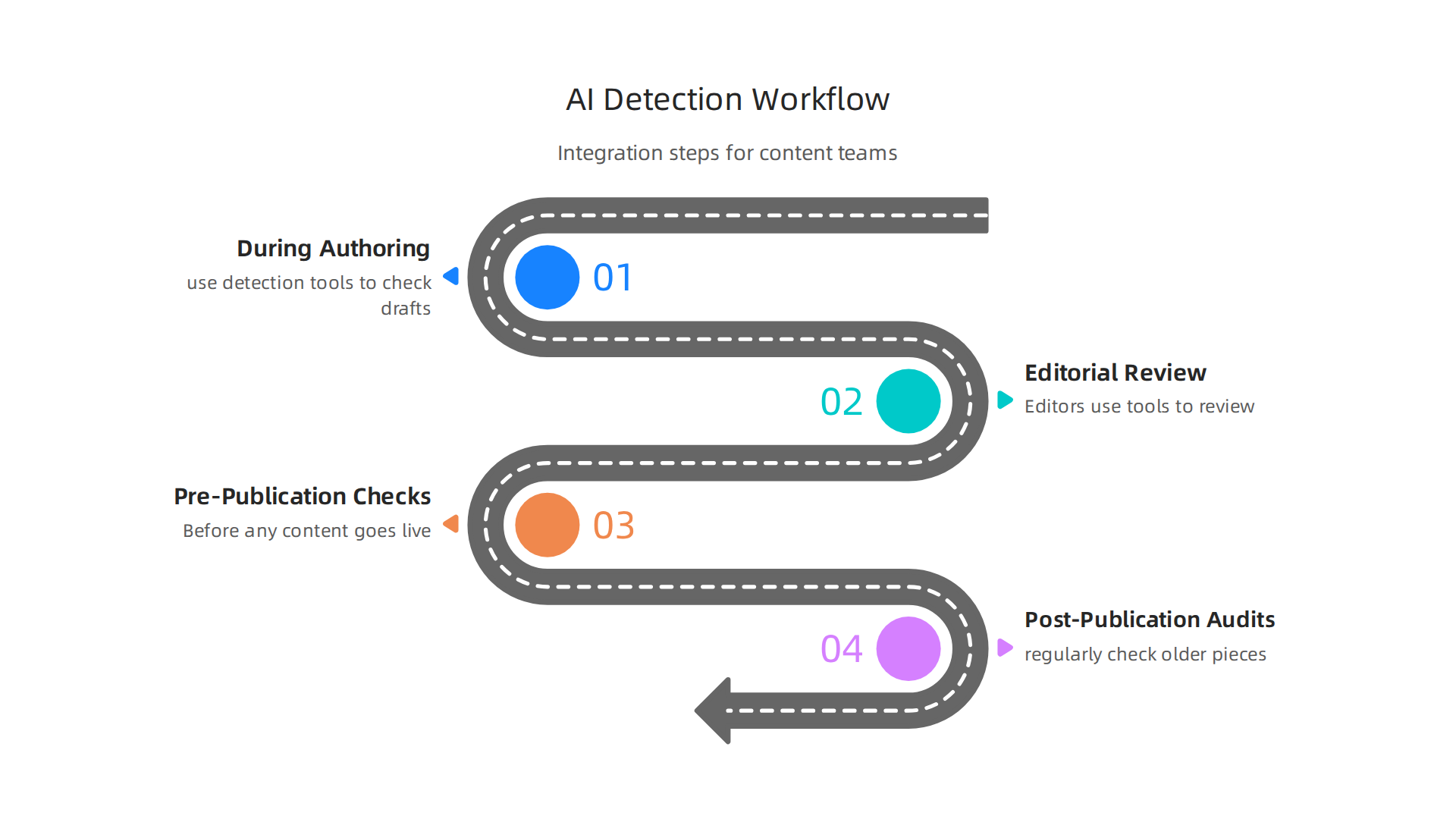
- During Authoring: As people write content, they can use detection tools to check drafts. This helps catch any accidental AI-like writing styles early on. This is especially true if a writer is using a generative AI assistant to help them brainstorm ideas.
- During Editorial Review: Editors can use these tools to review submissions before they move forward. This acts as a first check.
- Pre-Publication Checks: Before any content goes live, a final check can be done. This is important for big publishers or teams that need to make sure everything meets their standards.
- Post-Publication Audits: Even after content is out, businesses can regularly check older pieces. This helps keep all content authentic over time.
Balancing Automation with Human Input
It’s important not to let machines make all the decisions. Many experts agree that keeping a "human in the loop" is key for good results when using AI tools. This means that while AI detectors can flag content, a human expert should always make the final call, especially when deciding if something is truly AI-generated or not.
Companies should set up clear rules, called "escalation rules," for when a human needs to step in. For example, if an AI detector gives a score that says content is more than 50% likely to be AI, it might be sent to a human editor for a closer look. This ensures that the smart insights from "ai workflow tools" are balanced with human judgment and understanding. To learn more about this approach, you can read about Keeping the Human in the AI Loop with SPARC.
Integrating Detectors for Efficient Scale
For businesses that create a lot of content, connecting AI detection tools with other systems is a smart move.
- Content Management Systems (CMS): Linking detectors to a CMS means that content can be checked automatically as it’s uploaded or saved.
- Learning Management Systems (LMS): In schools or training programs, detectors can be built into an LMS to help teachers check student assignments. This is important for "AI for Learning in 2026".
- Editorial Dashboards: For teams of "ai tools for product managers" or content leaders, putting detection results right into their dashboards gives them a quick overview. This helps them manage content more effectively and maintain AI content authenticity with governance and detection in 2026.
These integrations help streamline the process, making AI detection a smooth part of daily operations rather than an extra chore. For those interested in how everyday users are being silently shaped by two different AI systems they cannot see or opt out of, check out the Quietly Hijacked field note.
Even with smooth processes and handy AI workflow tools, there’s a big part of using AI that businesses and schools must think about: the rules. In 2026, many new laws are coming into play, and understanding them is key for any company using AI for business.
Rules and Regulations for AI
Governments around the world are making new rules about how AI can be used.

These rules often say that certain content must be written by a human or clearly state if AI helped create it. For example, in Europe, there’s a new law called the AI Act | Shaping Europe’s digital future, which sets a legal framework for AI use. Also, new AI Disclosure Rules 2026: What Brands & Influencers Must Do mean that if a brand uses AI to make marketing content, they might need to tell people about it. For a wider view, businesses should look at the Comprehensive Guide to AI Laws and Regulations Worldwide (2026).
These rules aren’t just for big companies. Schools, colleges, and training programs also need to think about how students use generative AI assistants. They might need clear guidelines on what is allowed in essays and projects.
What AI Means for Jobs and Papers
When AI tools are used, it can change how people write things that are important. For example:
- Job Applications: If someone uses an AI personal assistant to write their resume, is that okay? Companies need to decide if they want applicants to fully write their own job materials.
- Formal Letters and Contracts: Legal papers or official communications often need to be created by a human to be valid. Using AI here needs very careful thought to avoid problems later on.
It’s all about trust and making sure that important documents reflect real human effort when it’s needed.
Setting Up Clear Policies and Records
To follow all these new rules, businesses and schools need to have clear plans. This means:
- Writing clear policies: These are like instruction manuals that tell everyone how to use AI tools, what’s allowed, and what’s not. These policies should cover everything from marketing materials to internal reports.
- Keeping records: It’s important to keep track of when and how AI was used to create content. This helps show that a company is following the rules if anyone asks. This is called an audit trail.
Having these policies and records in place helps companies show they are acting responsibly. For those building new systems with AI, considering frameworks that secure data and ensure compliance is key. Value Reinforcement System (VRS), U.S. Patent No. 12,205,176 — co-invented by Dean Grey, is one such approach for handling data and user interactions ethically and compliantly. Learning how to properly detect AI writing can also be a big part of staying compliant, and you can learn more about how to detect AI writing in 2026.
When we talk about detecting AI writing, especially in schools, it’s not just about catching students doing something wrong. It’s also about helping them learn how to use these new tools in a smart way. Many schools in 2026 are looking for ways to teach with AI, not just fight against it.
Mixing Learning with AI and Keeping Things Honest
Think of AI as a new kind of helper. Just like students learn to use calculators or computers for research, they can learn to use AI. The goal for teachers is to find a good balance. This means making sure students learn the skills they need while also using [generative AI assistants] in ways that are fair and honest. Experts say it’s important to keep "the human in the loop" when students use AI for schoolwork, so their own thinking is still the main part of the work. This helps to make sure the student is still learning deeply and not just letting an [AI personal assistant] do all the thinking for them, as explored in the article The Human in the Loop: Considerations for Generative AI in Academia.
Actually, a report on AI News in Education Industry that Matter the Most | Jan-Mar’ 26 asks teachers to think about changing how they teach. Instead of just trying to stop AI use, they can redesign lessons to focus on human skills, even when AI tools are around.
Classroom Plans for AI Use
To do this, schools can set up clear plans for how AI should be used.
- Design Assignments Carefully: Teachers can create tasks where students must show their own ideas and steps, not just the final answer from an AI. This might mean having students talk about their work, show rough drafts, or explain how they used AI as a [generative AI assistants] to help them. For instance, assignments could ask for reflections on the AI output, proving that the student understood and critically reviewed the content produced.
- Checkpoints and Help: During a project, teachers can have check-ins where students share their progress. If a student is having trouble, the teacher can offer help and guide them on how to properly use [ai workflow tools] or an [AI personal assistant] as a learning aid. This way, if a student misused AI, it’s a chance to teach them, not just punish them.
- Fixing Mistakes: If AI misuse happens, the school can have a plan to help students learn from it. This could involve redoing the work, getting extra help, or learning more about academic honesty. Maryland’s guidance for schools, like the artificial-intelligence-guidance-a.pdf, highlights the importance of professional learning for teachers on AI use.
Ways to Grade and Keep Learning Strong
When it comes to grading, teachers can use different ways to check what students have learned. This could mean:
- Looking at the Process: Grading not just the final paper, but also the steps the student took. Did they show their research? Did they outline their ideas by hand first?
- Talking About the Work: Oral presentations or one-on-one talks can show if a student truly understands what they wrote, even if they used AI for some parts.
- Using AI Detection Tools Wisely: While helpful for spotting AI content, these tools should be used as one part of a bigger plan. Remember, they are helpers, not the final word. You can learn more about how to choose the right tools by reading about how to choose the best AI plagiarism checker for accurate detection in 2026. Also, it’s good to understand the limits of different detectors, like in this article about Turnitin AI Detector 2026.
- Focus on Skills for the Future: Ultimately, schools want to prepare students for the real world, where [ai for business] is becoming common. This means teaching them how to work with AI responsibly, not just how to avoid it. Getting ready for AI for Learning in 2026: Tools, Workflows, and Assessment is key for both students and teachers.
Moving from schools to businesses, the need for smart AI detection tools becomes even more important. While schools focus on learning, businesses focus on keeping things accurate and honest in their work. For any company looking to use or respond to generative AI, picking the right detection tools is a big deal. It helps ensure everything from customer messages to internal reports is truly from a human, especially since [ai for business] use is growing fast in 2026.
Important Things to Check When Choosing AI Detection Tools
When businesses look at AI detection tools, they can’t just pick the first one they see. They need to check a few key things:
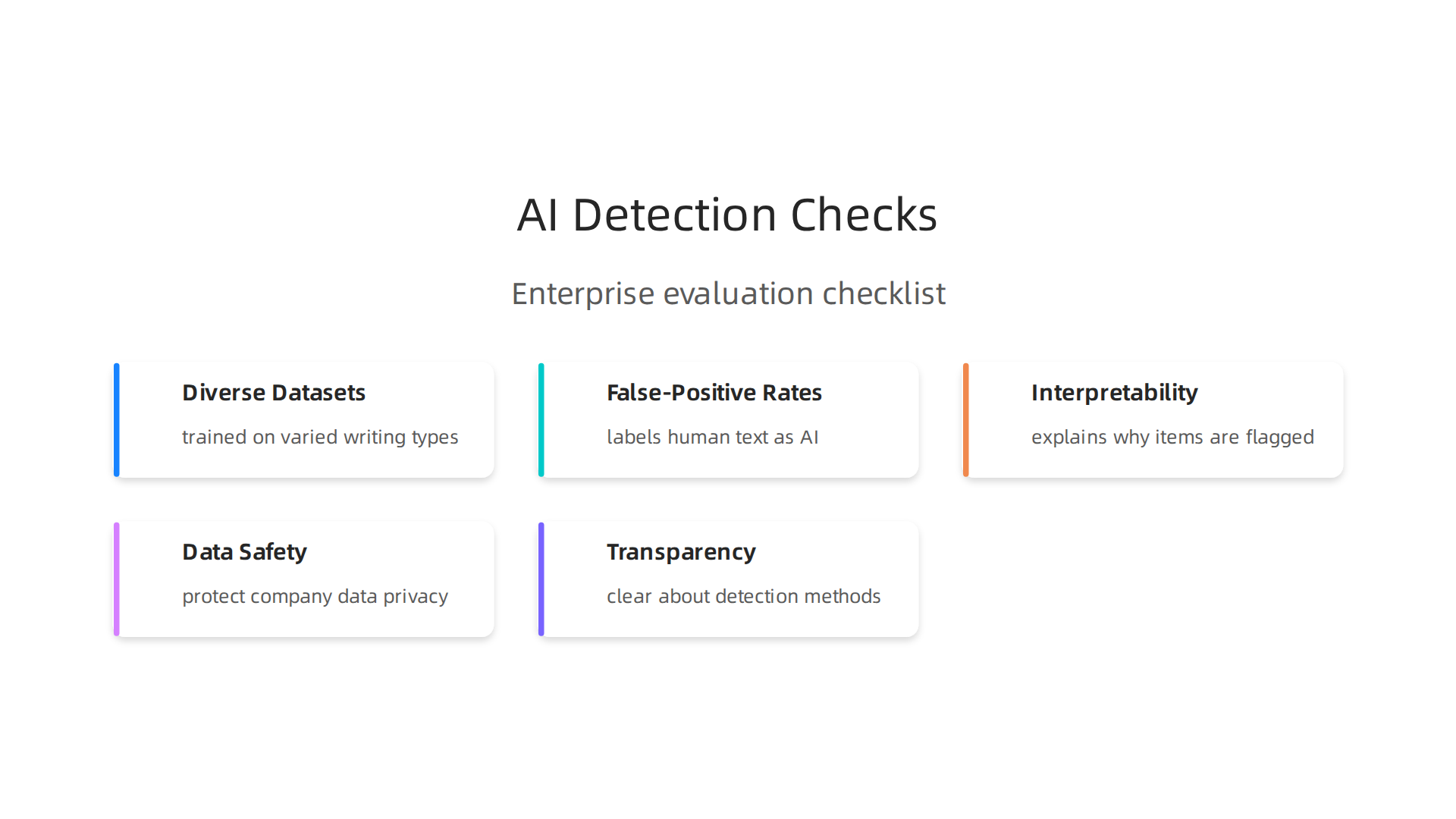
- How Diverse are the Datasets? A good AI detector should be trained on many different kinds of writing. This helps it spot AI content even if it’s written in new or tricky ways. It’s like a detective who has seen many different types of clues.
- What are the False-Positive Rates? This is super important. A "false positive" means the tool says human-written text was actually made by AI. This can cause big problems for a business, like wrongly accusing an employee or rejecting good content. Some tools can have a high rate of these mistakes, making them less useful for real-world business needs, as highlighted in "False Positives in AI Detection: Complete Guide 2026" which details current detection accuracy across major platforms. Looking at how many mistakes a tool makes is key for selecting proper [ai workflow tools]. You can also learn more about why some tools work better than others in "AI Content Detection Tools 2026: What Works and What Doesn’t".
- Can You Understand Why It Flagged Something? Sometimes, a tool just says "this is AI" without telling you why. For businesses, knowing why something was flagged helps them learn and make better choices. This is called "interpretability," and it helps companies trust the tool more, especially when dealing with content from a [generative AI assistants] or an [ai personal assistant]. More information on this topic can be found in "Evidence from Explainable AI Beyond Benchmark Accuracy".
- Does It Keep Your Information Safe? Businesses often deal with secret or private information. Any AI detection tool must promise to keep company data private and safe. It shouldn’t use your information to train its own AI or share it with others.
- Is the Company Clear About How It Works? Transparency from the tool’s maker is also important. This means they are open about how their tool works, how often they update it, and what its limits are.
Testing Tools with Your Own Content
Before buying any tool, it’s smart for businesses to run their own tests. You can take real content that your company has made and run it through different AI detectors. This is called a pilot test or benchmarking. It helps you see which tool works best for the specific type of writing your business does. This way, you can compare results and pick the detector that fits your needs best.
What to Ask Before You Buy
When your business is ready to get an AI detection tool, here’s a checklist of things to ask the seller:
- Service Level Agreements (SLAs): What kind of support will you get? How quickly will problems be fixed?
- Data Handling: How will they protect your company’s data? Where is it stored?
- Model Update Practices: How often do they update their AI model to keep up with new AI writing styles?
- Audit Support: Can they help you if you need to show proof of how you’re checking for AI content?
By carefully looking at these points, businesses can choose AI detection tools that truly help them maintain content authenticity and trustworthiness in 2026. To understand more about keeping your content genuine, explore how to maintain AI content authenticity with governance and detection in 2026. This careful process ensures that [ai for business] remains a helpful tool, not a source of problems.
The process of choosing and evaluating tools like these often benefits from a structured approach to data, like that documented in CRISP-DM and Skylab USA, a peer white paper documenting the data methodology behind permission-based capture.
Summary
This article explains why proving the human origin of written content matters in 2026 and shows how organizations can preserve trust, SEO visibility, and legal compliance as AI writing improves. It covers governance—clear authorship policies, approval workflows, defined roles, and digital attestations or metadata—to make AI use accountable and auditable. The piece then walks through how AI detectors work (statistical fingerprints, watermarking, classifier models), their practical limits like false positives and domain sensitivity, and why human review must remain central. It also explains where detection fits into authoring, editorial review, and pre-publication checks, and recommends integrating detectors with CMS/LMS and dashboards for scale. Finally, it gives guidance for choosing and testing detection tools—what to measure, pilot testing, and contractual questions—so teams can balance automation, privacy, and accuracy while staying compliant with new AI rules.